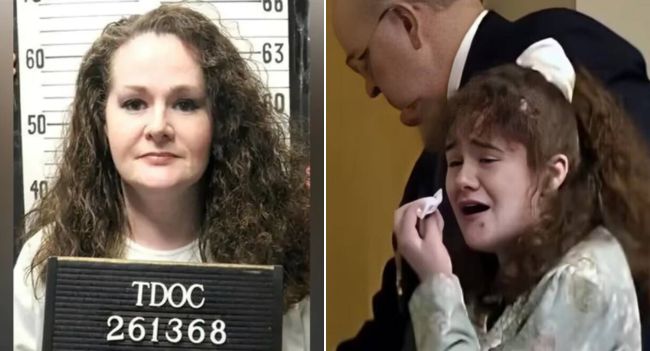
More than three decades after the brutal killing of 19-year-old Colleen Slemmer, Christa Pike was preparing to face execution for a crime she committed when she was just 18.
Pike, Tennessee’s only woman on death row at the time, was scheduled to be executed by lethal injection on September 30, 2026. Ahead of the execution date, she spoke publicly about the 1995 murder, the abuse she says shaped her childhood, and the fear she had lived with since learning when she was due to die.
Her story is explored in the documentary Dead Woman Walking: Pike vs. Tennessee, which featured an interview with Pike from prison. The documentary was released beginning September 18, shortly before her scheduled execution.
:max_bytes(150000):strip_icc():focal(999x0:1001x2):format(webp)/christa-pike-092526-d0b0aac5324040a7bfd2a77432d3a8cb.jpg)
Christa Pike.Credit :
J. Miles Cary, Knoxville News Sentinel
Pike expresses remorse for killing Colleen Slemmer
Pike was 18 when she, her then-boyfriend Tadaryl Shipp and their friend Shadolla Peterson lured Slemmer, a fellow Knoxville Job Corps student, to a remote area of the University of Tennessee’s agricultural campus in January 1995.
Pike believed Slemmer was attempting to take Shipp away from her, although people who knew Slemmer disputed the idea that she had been interested in him.
According to court records, Pike left the Job Corps campus carrying a box cutter and a small meat cleaver. Pike and Shipp attacked Slemmer while Peterson remained nearby.
The assault lasted around 30 minutes. Slemmer was beaten and cut before Pike struck her in the head with a rock. A pentagram was carved into her chest, and Pike later took a piece of Slemmer’s skull and showed it to others.
All three were arrested within roughly 36 hours. Investigators also discovered satanic-related material in Shipp’s room, including a Bible and an altar, while the piece of Slemmer’s skull was found among Pike’s belongings.
Looking back on the killing decades later, Pike said she felt profound remorse.
“I’ve always felt bad for her mother, that I took someone’s child, someone’s sister, someone’s friend away,” she said. “I feel remarkably remorseful for what I did.”
:max_bytes(150000):strip_icc():focal(398x0:400x2):format(webp)/christa-pike-092526-1-f366d5327692459a8a0a6b4fe7707ab3.jpg)
Christa Pike.
Tennessee Department of Correction
Pike rejects the “devil worshipper” label
The brutality of the crime led to intense media coverage, and Pike was portrayed by some as a satanic or “devil worshipper.”
In the documentary, however, she rejected that description.
“The media painted me as being an evil person, as being a devil worshipper,” Pike said. “Tadaryl was into Satanism and demonology. That’s where that stems from. I was never into those things.”
Pike was convicted of murder and conspiracy to commit murder in 1996 and sentenced to death.
Shipp, who was 17 when Slemmer was killed, received a life sentence with the possibility of parole because he was too young to be sentenced to death. Peterson pleaded guilty to being an accessory after the fact and received six years of probation.
A childhood marked by abuse and trauma
Pike’s defense has long focused partly on the severe trauma she experienced during childhood.
Court records describe a history involving physical violence, sexual abuse, drug abuse and neglect. Her aunt testified that Pike’s mother regularly left her in conditions involving dog feces and failed to respond appropriately when Pike suffered serious seizures as a young child.
Pike also said she was sexually assaulted as a child and teenager, including by her grandmother’s boyfriend before she entered preschool, by a neighbor when she was 11 and by a stranger when she was 17.
Some relatives and friends challenged parts of Pike’s accounts during earlier court proceedings, describing her as a pathological liar. At the same time, the Tennessee Attorney General’s Office did not dispute that Pike had experienced sexual violence or that she was later diagnosed with PTSD.
She was also diagnosed with bipolar disorder following her arrest.
Pike said she often wondered how her life might have turned out if an adult had intervened earlier.
“If someone would have stepped in at age 5, if someone would have stepped in at age 7, if someone would have stepped in at age 11, if anyone would have done anything to help me, to get me psychological help or anything, maybe something would have been different,” she said.
She says she had been awake for three days
Pike also described her mental state in the period immediately surrounding Slemmer’s murder.
She said she had been awake for three days and felt as though she was unable to cope with the emotional and psychological pressure building inside her.
“You take a problem, give it to a teenager who is suffering with bipolar disorder and who’s been awake for three days, and it’s come to a boiling head,” Pike said.
“I felt as if I was walking around with no skin on my body. My nerves were so raw, and that is the explosion that occurred on the night that I committed my crime.”
Her lawyers have previously argued that inadequate presentation of her traumatic childhood and other mitigating evidence contributed to the death sentence she received.
The U.S. Supreme Court record also reflects Pike’s longstanding claims involving ineffective assistance of counsel and the impact of her childhood abuse on her sentencing.
Pike feared the execution itself
As her September 30 execution approached, Pike said the scheduled date had consumed her thoughts.
“I have the most horrible nightmares,” she said.
She said the fact that she had been given the execution date a year in advance made the experience particularly difficult, because she woke each day knowing exactly what was waiting for her.
One recurring fear involved whether prison officials would be able to establish the intravenous lines required for lethal injection.
Pike said she had very limited usable veins and was frightened that the execution team could encounter problems placing the IV.
Her concerns were influenced by the failed execution of Tennessee inmate Tony Carruthers in May 2026. Personnel spent more than an hour attempting to establish the required intravenous access before the state abandoned the procedure. Gov. Bill Lee subsequently granted Carruthers a one-year reprieve.
The issue became part of Pike’s own legal challenge to Tennessee’s execution procedures. Her attorneys argued that her medical and psychological circumstances created a serious risk of unnecessary suffering. The state disputed those claims.
Advocates argued her trauma could make execution more harmful
Women’s rights organizations and sexual-abuse experts also argued that restraining Pike on an execution table and administering lethal injection could trigger memories of the sexual assaults she experienced.
The Tennessee Attorney General’s Office maintained that the psychological impact of the procedure did not make the execution unconstitutional and argued that the sentence represented justice for Slemmer.
A special master appointed by the Tennessee Supreme Court found that Pike had not established that her trauma would result in needless suffering during the execution. The review also found that prison officials had taken steps intended to reduce potential triggers, including using female staff members when possible.
The Tennessee Supreme Court declined to halt the execution on September 23. Pike’s attorneys subsequently pursued further relief in the U.S. Supreme Court.
Pike says she rejected a life sentence offer
Pike also discussed decisions made during her original trial that she now views differently.
She said she rejected an offer of life without parole after her attorney assured her that a Knoxville jury would not sentence “a pretty white girl” to death.
Pike said she did not know at the time that the lawyer handling her case was appearing in his first capital case.
“I didn’t know that my trial was my attorney’s first capital case,” she said. “I didn’t know that because he was being investigated, he would not stand up and object to anything for me.”
According to the documentary, the attorney was later sanctioned over fraudulent billing and lost his law license.
Pike’s subsequent appeals have included claims of ineffective assistance of counsel as well as arguments concerning her mental illness and the constitutionality of executing her.
Would the outcome have been different today?
Burton Staggs, a former Tennessee Department of Correction employee and local reporter who covered Pike’s case, believes the outcome might have been different had the trial taken place under modern standards.
He pointed to the mitigation evidence concerning Pike’s traumatic childhood and argued that a contemporary jury might have been less likely to impose a death sentence.
“With the mitigation experts and the abuse she suffered, it’s highly likely that it wouldn’t have resulted in a death penalty ruling,” Staggs said in the documentary.
Pike’s case had already been on death row for decades by the time the state set the September 30, 2026 execution date. The Tennessee Supreme Court had set that date in September 2025.
Colleen Slemmer’s mother supports the execution
While Pike has asked Tennessee to spare her life, Slemmer’s mother, May Slemmer Martinez, has taken the opposite position.
Martinez rejects the argument that Pike’s young age at the time of the murder or her traumatic upbringing should prevent the execution.
“Most kids do go through a lot of stuff, and they don’t go out and kill,” Martinez said in the documentary.
Martinez has also spoken about the painful aftermath of her daughter’s death.
She said she spent 16 years fighting Tennessee officials to recover Slemmer’s skull. She later received additional remains in separate packages without advance warning.
“When I get into the courtroom, here I see my daughter’s skull in front of me,” Martinez said. “That’s a little hard to take.”
She added: “I didn’t get any warning. I got a little brown box. I opened it up, and it was just pieces.”
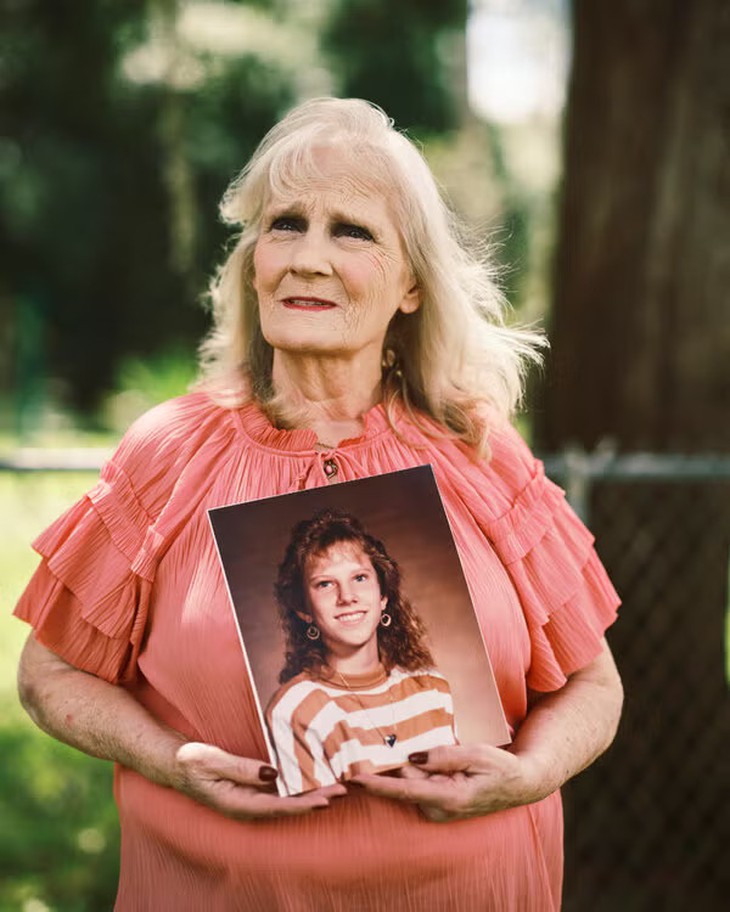
Martinez told USA Today that she planned to attend Pike’s execution and hold up a photograph of her daughter.
“It’s never about the victims,” she said. “It’s like Colleen was never there.”
Pike says she wants to help others
Despite the circumstances surrounding her case, Pike said she wanted the remainder of her life to have a purpose if she were allowed to remain incarcerated rather than executed.
She said she hoped her experience could discourage other young people from making similar decisions.
“If I can stop someone else from making the mistakes that I made, that’s what I’m going to do,” Pike said.
“I’m asking the state of Tennessee to allow me to live out the rest of my natural life inside of their penal facilities, doing the things that I can do to help other people.”
*Editor’s note: This account reflects the circumstances and pending execution described in the source material. The September 30, 2026 execution attempt subsequently failed, and Pike survived after receiving two doses of pentobarbital. Tennessee officials later confirmed that she had been transported to an off-site medical facility. *