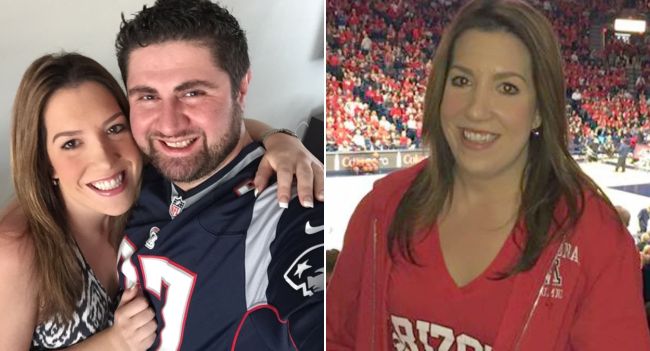
For more than a decade, the murder of Allison Feldman remained one of Scottsdale, Arizona’s most haunting unsolved cases.
The 31-year-old medical sales representative was found dead inside her home in February 2015 after suffering fatal blunt-force trauma. Investigators recovered DNA from the crime scene, interviewed hundreds of people and pursued more than 100 potential suspects, but the identity of the killer remained a mystery.
It took an unprecedented use of familial DNA testing in Arizona to finally point police toward Ian Mitcham.
Mitcham was arrested in 2018 and, after years of legal battles over the DNA evidence, was found guilty in April 2026 of first-degree murder, sexual assault and second-degree burglary in connection with Feldman’s death.
The case is now being revisited in an ABC 20/20 episode that aired Oct. 2.
:max_bytes(150000):strip_icc():focal(984x397:986x399):format(webp)/allison-feldman-intruder-100126-dbdd91979d5d4260ac8b408408fda296.jpg)
Allison Feldman; Allison Feldman’s home.Credit :
Facebook; ABC News/YouTube
Allison Feldman was preparing for a future she never got to live
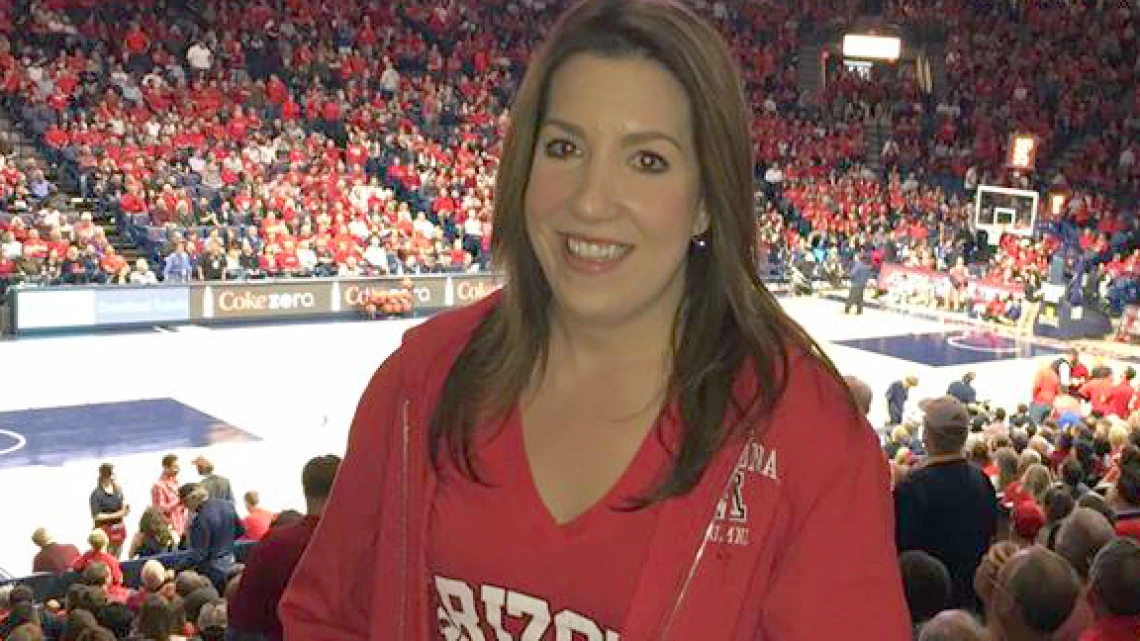
Feldman was originally from Minneapolis and moved to Arizona to attend the University of Arizona in Tucson. She remained in the state after graduating and built a career as a medical sales representative in Scottsdale.
Friends remembered her as a loyal, strong and vibrant woman who was full of life. She also volunteered with young burn patients.
At the time of her death, Feldman was in a relationship with Alex Stone and was reportedly close to getting engaged.
Her family and friends were left devastated when that future abruptly disappeared.
:max_bytes(150000):strip_icc():focal(524x594:526x596):format(webp)/allison-feldman-100126-904660fdba5240cb9c432be3ff1c08e0.jpg)
Allison Feldman.
Scottsdale Police Department/AP Photo
A horrifying discovery inside her Scottsdale home
On Feb. 18, 2015, Feldman’s father became concerned after several hours passed without hearing from his daughter and requested a welfare check.
Around the same time, Stone went to Feldman’s home to check on her.
Instead, he discovered her bloodied, nude body on the floor and called 911.
Authorities determined that Feldman had died from blunt-force trauma. Investigators also documented other injuries, while evidence collected at the scene would eventually become the key to identifying her killer.
There was no obvious sign that someone had forced their way into the house.
Investigators also noticed the smell of bleach near Feldman’s body. Items were missing from the home, including credit cards, a Tiffany bracelet and an iPhone 6.
The circumstances suggested that whoever entered the property had attempted to conceal evidence.
:max_bytes(150000):strip_icc():focal(399x0:401x2):format(webp)/ian-mitcham-1-1-6cacd037c8374c9aafe3bfaf345351fe.jpg)
Ian Mitcham.Maricopa County Sheriff’s Office
Hundreds of pieces of evidence, but no suspect
The investigation quickly became extensive.
Police collected more than 400 pieces of evidence and conducted hundreds of interviews. Investigators spent thousands of personnel hours pursuing leads, but the case continued to resist a solution.
A male DNA profile was developed from biological material found at the scene.
The problem was that the profile did not immediately match anyone in the available database.
Stone was also investigated and ultimately cleared when his DNA did not match the evidence recovered from the crime scene.
For years, detectives had no name to attach to the unknown DNA.
The breakthrough came through a relative
In 2017, investigators received approval to use familial DNA searching, a technique designed to identify close biological relatives of the person whose DNA was found at a crime scene.
The search produced a significant lead.
The unknown male profile appeared to be closely related to Mark Mitcham, who was already incarcerated at the time of Feldman’s murder. Because Mark had three brothers, investigators knew the DNA match did not necessarily identify the killer himself.
One of those brothers was Ian Mitcham.
Police already had a potential source of Ian’s DNA because he had been arrested for DUI in January 2015, roughly six weeks before Feldman was killed. Two blood vials had been collected during that arrest.
Investigators eventually developed a DNA profile from Mitcham’s blood, and it matched the previously unidentified DNA from Feldman’s home.
The development was historic for Arizona: familial DNA had been used to help identify a suspect in a criminal investigation for the first time in the state.
Mitcham was arrested in April 2018.
At the time, however, the case was far from over.
Mitcham fought the DNA evidence in court
The DNA evidence that led investigators to Mitcham became the subject of a lengthy legal battle.
Mitcham’s lawyers argued that police had improperly used blood that had originally been collected during his DUI investigation to create a DNA profile without first obtaining a warrant.
The issue eventually reached the Arizona Supreme Court.
In December 2024, the state’s highest court ruled that although police had violated Mitcham’s Fourth Amendment rights by conducting the DNA analysis without a warrant, the evidence could nevertheless be admitted under the inevitable-discovery exception. That decision cleared a major obstacle to the murder prosecution.
The case could finally proceed to trial.
Eight years after his arrest, Mitcham was convicted
Mitcham’s trial lasted nearly five months before jurors began deliberating in April 2026.
On April 9, the jury found him guilty of first-degree murder, sexual assault and second-degree burglary.
Mitcham had denied knowing Feldman or ever being inside her home.
The defense also pointed to another man who had been investigated during the original case, but prosecutors maintained that the evidence supported Mitcham’s conviction. ABC News reported that the defense argued investigators had been too quick to eliminate other potential suspects when their DNA did not match.
The verdict ended more than a decade of uncertainty for Feldman’s family.
The murder sentence remains unresolved
Although Mitcham was convicted of first-degree murder, the sentencing process has taken a separate path.
A jury deadlocked during the penalty phase concerning the death penalty. Mitcham was subsequently sentenced on the sexual assault and burglary charges to a combined 10½ years in prison.
Judge Sunita A. Cairo imposed seven years for sexual assault and 3½ years for second-degree burglary, with the sentences to run consecutively. Mitcham also received credit for 2,328 days already served and was ordered to register as a sex offender.
The murder sentence has not yet been finalized. The Maricopa County Attorney’s Office is expected to retry the penalty phase or agree to a life sentence, while Mitcham is appealing his conviction.
A family finally heard a guilty verdict
For Allison Feldman’s relatives, the April 2026 conviction brought a long-awaited measure of justice after years of uncertainty.
Her father, Harley Feldman, attended the trial and had spent years waiting to see the case reach a courtroom. He died shortly after the guilty verdict.
Her sister, Kelly Weinblatt, has continued to speak about Allison’s life and the lasting impact of her death.
“This loss is not something we just move on from,” Weinblatt said. “It’s something we carry with us every day for the rest of our lives.”
Allison’s case began with a brutal killing inside her own home, followed by years in which investigators had evidence but no identity.
Ultimately, it was not a conventional DNA match that broke the case. It was the genetic connection to a relative that gave detectives the lead they needed—and eventually brought Ian Mitcham before a jury more than 11 years after Allison Feldman was killed.