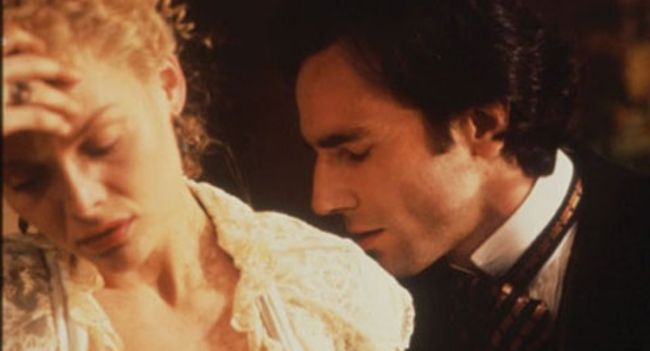
A MARTIN SCORSESE’S MOVIE – A MASTERCLASS IN VISUAL OPULENCE
Stepping away from the mean streets of his iconic crime epics, legendary director Martin Scorsese delivers a breathtaking, emotionally devastating portrait of high-society New York.
NEW YORK — Throughout cinematic history, Martin Scorsese has solidified his status as a legendary filmmaker primarily through the gritty, high-octane lens of the crime genre. However, masterpieces like Kundun, The Last Temptation of Christ, Hugo, and The Aviator prove his boundless versatility. Standing proudly at the absolute apex of his non-crime filmography is “The Age of Innocence” (1993)—a film that trades traditional weapons for sharp social etiquette and heartbreaking romance.
The Anatomy of Gilded Age Desires
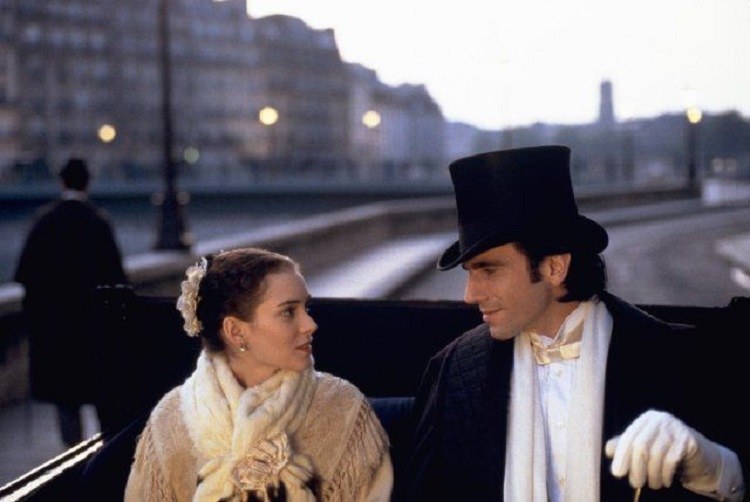
Adapted from Edith Wharton’s Pulitzer Prize-winning novel, the film boasts an elite powerhouse trio: Daniel Day-Lewis, Michelle Pfeiffer, and Winona Ryder. Set against the rigid backdrop of 1870s New York high society—a time when the city was a fiercely guarded promised land for wealthy families—the narrative charts a devastating emotional conflict.
                    [ The Gilded Age Love Triangle ]
                                   │
         ┌─────────────────────────┼─────────────────────────┐
         ▼                         ▼                         ▼
【 Daniel Day-Lewis 】     【 Michelle Pfeiffer 】       【 Winona Ryder 】
- Newland Archer (Lawyer). - Countess Ellen Olenska.   - May Welland (The Fiancée).
- Bound by rigid societal  - Ostracized, free-spirited - Innocent, pure, and the
  traditions and duty.       divorcée breaking rules.     perfect aristocratic match.
         │                         │                         │
         └──────────┬──────────────┘                         │
                    ▼                                        ▼
          [ Forbidden Passion ] ◄───────────────────────── [ Societal Vow ]
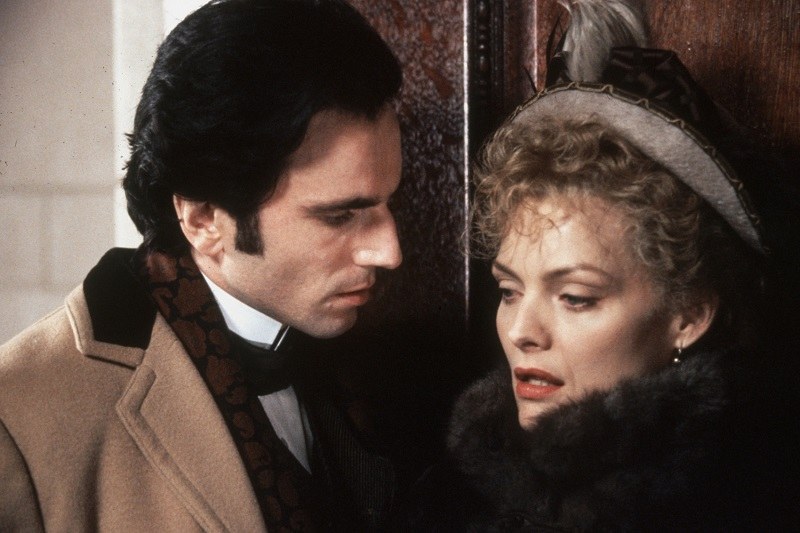
Prominent lawyer Newland Archer (Day-Lewis) is safely on track to marry the perfectly poised aristocrat May Welland (Ryder). However, the social order is shattered by the return of May’s cousin, Countess Ellen Olenska (Pfeiffer), who is fleeing a scandalous, toxic marriage in Europe. Ostracized by the elite, Ellen finds an ally in Newland. As the two fight for her social acceptance, they accidentally fall into a consuming, forbidden passion—leaving Newland trapped between the warmth of true desire and the icy chains of duty.
A Masterpiece of Period Production and Cinematography
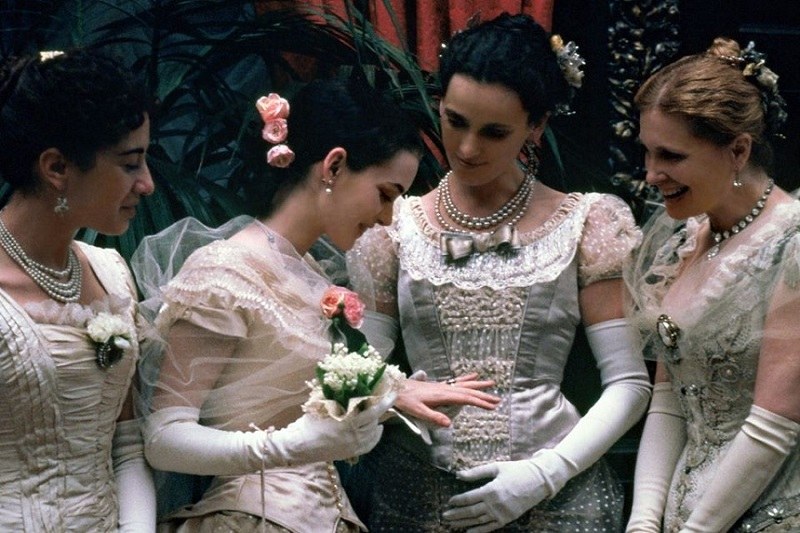
Scorsese’s reconstruction of 19th-century New York is nothing short of meticulous. Every detail—from the exquisite china, culinary spreads, and opulent jewelry to the heavy drapery—is treated with historical reverence. The visual palette is saturated with deep crimson reds, rich browns, and warm, dark golds, reflecting the suffocating luxury of the era’s elite. This astonishing dedication earned the film an Academy Award for Best Costume Design, alongside nominations for Best Art Direction, Best Original Score, and Best Adapted Screenplay.
The film’s technical execution relies heavily on two powerhouse collaborators:
-
Michael Ballhaus (Cinematography): The late German cinematographer infuses the film with innovative camera work. During lavish ballroom scenes, the camera sweeps seamlessly across the room using wide, tracking pan shots and soaring bird’s-eye views to capture the grand scale of aristocratic theater.
-
Thelma Schoonmaker (Editing): Scorsese’s long-time editing partner masterfully crafts a deliberate, slow-burning pacing. The rhythmic, elegant transitions perfectly mimic the unhurried, calculated poise of Gilded Age high society.
The Technical Highlight: The film’s structural zenith occurs near the finale, where a sweeping timeline tracking decades of the Archer family’s future is seamlessly connected within a single, continuous, and breathtakingly uninterrupted camera sequence.
Flawless, Emotionally Charged Performances
The acting across the board is a masterclass in subtlety. Daniel Day-Lewis and Michelle Pfeiffer display incredible emotional depth, executing highly complex psychological shifts through fleeting glances, suppressed sighs, and stiff posture.
Meanwhile, Winona Ryder delivers a brilliant, unforgettable performance as May Welland, perfectly embodying the delicate grace, gentle nature, and tactical innocence of a young woman raised to survive society’s unspoken wars. The role rightfully earned Ryder an Academy Award nomination for Best Supporting Actress. To wrap the production in absolute prestige, the graceful, deeply expressive narration by Joanne Woodward adds a layer of literary solemnity to the entire experience.
The Verdict: The Age of Innocence remains an essential, deeply transportive cinematic experience for anyone who appreciates sweeping historical romances and slow-burning psychological tension. Decades after its release, it stands as a definitive testament to Martin Scorsese’s unmatched directorial genius, proving that a sharp glance over a dinner table can be just as lethal as any gangster’s bullet.