Congratulations!
You've earned 1 point
THE NURSE FOUND TINY HOLES IN MY SON’S SEALED HOSPITAL DRINKS—THEN SECURITY FOOTAGE REVEALED WHAT HIS FATHER HAD BEEN DOING EVERY TIME I LEFT THE ROOM
The security guard stopped my husband before he reached the elevator.
“Sir, we need you to remain on this floor.”
My husband turned around slowly.
“This is ridiculous. My son is sick, my wife is hysterical, and now you’re treating me like a criminal?”
Nobody answered.
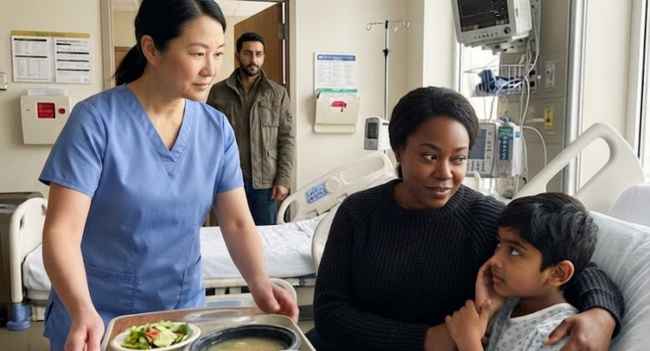
The nurse had already placed the untouched drinks in separate evidence bags.
The pharmacist was documenting the medication record.
And I was sitting beside my son with the little plastic bottle in my hand.
The handwritten date on it was three days away.
My next overnight shift.
“Where did you get this?” I asked him.
My son stared at the blanket.
“Dad’s bag.”
My husband immediately spoke.
“He doesn’t know what he’s saying.”
The nurse stepped between him and the bed.
“Please let him answer.”
My son began crying.
He told us he’d seen his father carry bottles like that at home.
Sometimes they were hidden in the garage.
Sometimes in the bathroom cabinet behind his shaving supplies.
But this one had been inside the black backpack my husband brought to the hospital.
My son had taken it because he was scared his father would put something in his drinks again.
That explained why he’d refused everything.
He wasn’t nauseated.
He was terrified of falling asleep.
I felt sick.
“How long has this been happening?”
He shrugged.
“A long time.”
Then he said something I hadn’t expected.
“Mostly when you work nights.”
I looked at my husband.
He stopped arguing.
The hospital contacted law enforcement while staff moved my son to another room.
My husband was not permitted to follow us.
A physician ordered additional testing to determine whether there were substances in my son’s system that weren’t explained by his legitimate treatment.
Meanwhile, security began reviewing the hallway footage.
The first clip showed me leaving the room to get coffee the previous morning.
Less than two minutes later, my husband stepped into the hallway.
He looked both directions.
Then returned carrying his black backpack.
Another camera captured me leaving to speak with the billing office.
Again, he waited.
Again, the backpack appeared.
But the third recording was the one that made the security supervisor stop the video.
My husband was standing at the doorway.
He watched me disappear around the corner.
Then he removed something small from his pocket.
He walked inside.
Four minutes later, he came back out carrying one of my son’s drink cups.
The lid had already been punctured.
My husband stared at the monitor.
“That proves nothing.”
The security supervisor didn’t argue.
He simply preserved the footage.
Then an officer asked my husband whether he would consent to the backpack being examined.
He refused.
That was when I remembered something.
The backpack wasn’t his.
It was mine.
I’d bought it for work and lent it to him when the zipper on his bag broke.
I told the officer that immediately.
From there, the hospital and police handled what they were legally permitted to do.
I stayed with my son.
For the first time since admission, he asked for something to drink.
The nurse brought a sealed bottle of water directly from the medication area.
She opened it in front of him.
He watched every movement.
Only then did he drink.
Seeing that nearly broke me.
My child had spent days thirsty because he was more frightened of his father than he was willing to admit.
Later that evening, a detective came into the room.
He asked whether we could speak privately.
My son immediately grabbed my hand.
“No.”
The detective pulled a chair farther from the bed instead.
“Okay. Mom stays.”
He asked my son what his father meant when he said I couldn’t know what happened after he fell asleep.
My son went completely still.
For several seconds, I thought he wouldn’t answer.
Then he whispered:
“Dad leaves.”
“Leaves where?”
“The house.”
That wasn’t what I expected.
My husband had always told me he stayed home whenever I worked overnight.
According to him, our son went to bed around eight-thirty and he spent the rest of the evening watching television.
But my son told a different story.
After giving him the “sleepy drink,” his father waited until he became tired.
Then he changed clothes.
Put cameras around the house.
Locked the doors.
And left.
“Where did he go?”
“I don’t know.”
“How do you know he left?”
“Because sometimes I woke up.”
My son said he would call for his father.
Nobody answered.
Once, he became frightened during a thunderstorm and searched the entire house.
His father wasn’t there.
Another time he became sick and couldn’t wake him because there was nobody to wake.
My husband had apparently been leaving our young son unconscious or heavily sedated and alone while I worked overnight.
I covered my mouth.
Then another thought hit me.
“Why?”
My son looked toward me.
“Dad said he had another family.”
The room went silent.
I thought he’d misunderstood.
But then he described a photograph he’d seen on his father’s phone.
My husband standing beside a woman.
Two children.
Birthday balloons behind them.
My son said he’d asked who they were.
His father became furious.
That was when the drops became more frequent.
Suddenly everything began connecting.
The overnight shifts.
The unexplained mileage on our car.
The evenings when my husband showered immediately before I left for work.
The second phone I’d once found charging in the garage.
I had suspected an affair.
I had never imagined what he might have been doing to conceal it.
The detective asked for the address of our home.
Then he asked whether I consented to investigators securing anything relevant there through the proper legal process.
“Yes.”
My husband heard about that request before investigators even left the hospital.
His attorney called soon afterward.
From that point forward, my husband stopped speaking directly to me.
Two days later, investigators told me they’d recovered several items potentially relevant to the case.
I wasn’t given every detail immediately.
But one discovery changed everything.
There was a camera system in our house.
Not the normal security cameras my husband had mentioned.
Small interior cameras.
One faced my son’s bedroom hallway.
Another covered the kitchen.
Stored recordings showed enough of the household routine that investigators could begin comparing dates with my work schedule.
My attorney later helped me obtain the records relevant to the family proceedings.
The pattern was difficult to look at.
On nights when I worked late, my husband frequently left the house after our son had gone to bed.
Sometimes he returned after midnight.
Sometimes much later.
And investigators were examining whether the substances found in the hospital evidence could explain why my son had been so difficult to wake on those nights.
Then came the second phone.
Messages on it appeared to connect my husband to another woman.
But she wasn’t his wife.
And according to what she later told investigators, she didn’t know I existed.
He had apparently told her he was divorced.
He told her his son lived primarily with his “unstable ex-wife.”
The same description he’d started giving hospital staff the moment he realized our son might talk.
That wasn’t coincidence.
It was preparation.
My husband had created two versions of his life.
In mine, he was the devoted father staying home with our son while I worked.
In hers, he was a divorced man whose child rarely stayed with him.
And between those two stories was a little boy who had apparently learned that drinking the wrong cup meant waking up with no adult in the house.
The hospital tests became part of the investigation.
So did the sealed cups.
The bottle.
The surveillance footage.
The recordings of my husband’s calls.
And my son’s statements to trained professionals.
I filed for emergency custody through my attorney and followed the hospital’s recommendations about keeping contact controlled while authorities investigated.
My husband sent one message through counsel.
He claimed everything had been misunderstood.
He said he’d only ever tried to help our son sleep.
That sentence destroyed whatever tiny part of me still wanted an innocent explanation.
Because our son had never been prescribed those “sleepy drops.”
Weeks later, my son finally came home.
The first night, he stood in the kitchen staring at a glass of juice I’d poured.
Then he asked:
“Did you open it?”
“Yes.”
“Can I watch next time?”
I swallowed the lump in my throat.
“Every time you want.”
For months afterward, he wanted to watch bottles being opened.
He checked lids.
He smelled drinks before tasting them.
And whenever I worked late, he called me before bed just to make sure I was really where I said I was.
We worked with professionals to help him rebuild the sense of safety that had been taken from him.
As for my husband, the legal process became something I refused to turn into a family argument.
There were records now.
Hospital documentation.
Preserved evidence.
Video.
Statements.
Whatever consequences followed would be decided through the appropriate investigations and courts—not through whatever story he could tell me in our kitchen.
Months later, my son asked me something while we were making breakfast.
“Mom?”
“Yes?”
“Do you remember when I wouldn’t eat at the hospital?”
“Of course.”
“I wasn’t trying to be difficult.”
I put down the knife in my hand.
“I know.”
He looked relieved.
Then he said:
“I was trying to stay awake until you came back.”
That was the sentence that stayed with me.
Because the nurse had initially thought my son was refusing lunch because he felt sick.
But he hadn’t been refusing food.
He’d been doing the only thing a frightened child knew how to do.
He was protecting himself.
And those tiny holes in two sealed hospital cups were the first visible sign that finally made the adults around him stop explaining his fear away—and start listening to what he had been trying to tell us.