Comprehensive Analytical Review: Missing Vulnerable Adult (MVA) Search Protocols, Canine Behavioral Forensics, and Waterway Immersion Dynamics in the Radcliffe Case
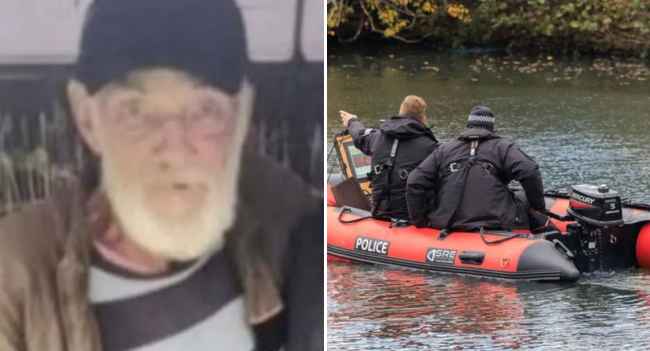
The disappearance of 69-year-old Anthony in Radcliffe, Bury, illustrates a critical-risk Missing Vulnerable Adult (MVA) investigation characterized by a rapid transition from a routine neighborhood routine to an aquatic search operation. By analyzing the forensic significance of canine behavior, the geographic choke points of Radcliffe’s canal infrastructure, and the specific mechanics of underwater recovery operations, this review breaks down the investigative trajectory deployed by Greater Manchester Police (GMP).

1. Forensic Significance of Canine Separation and Missing Leash
-
Canine Attachment Dynamics:
-
Domestic dogs, particularly those accustomed to habitual daily walking routes with elderly owners, rarely abandon their handlers willingly in familiar environments unless separated by sudden physical trauma, environmental barriers (steep embankments, swift water), or severe owner disorientation.
-
The discovery of the dog roaming unaccompanied at the junction of Higher Ainsworth Road and Bury and Bolton Road establishes a definitive spatial anomaly: the animal was found geographically displaced from the primary pedestrian corridor along Water Street and the Royal Oak pub.
-
-
The Missing Lead (Leash) as Physical Evidence:
-
GMP’s explicit note that the dog lead was missing while the dog was loose is an ominous forensic indicator:
-
If the dog broke free during a sudden event (e.g., a trip and fall or water entry), the lead may have slipped from the handler’s grip or snagged on underwater debris/riprap;
-
Alternatively, if the dog slipped out of its collar/harness, the lead would remain with the handler; but if the collar and lead were deliberately detached or torn, it suggests high mechanical tension or frantic owner disengagement.

-
-
2. Geographic Vulnerability: Canal Networks and Topographical Choke Points
-
Radcliffe’s Waterway Infrastructure:
-
Radcliffe and the surrounding Bury/Bolton border are heavily intersected by waterways—specifically the River Irwell and the Manchester, Bolton and Bury Canal.
-
These corridors present steep, unlit, muddy embankments and stone towpaths that degrade rapidly in wet November conditions. For an elderly individual wearing smooth-soled street shoes and heavy winter outerwear (such as a blue puffer jacket), a single misstep near the water’s edge can lead to an unrecoverable slide into cold water.
-
-
Thermal Shock and Outerwear Encumbrance:
-
In early November, UK canal and river water temperatures drop significantly, inducing the immediate cold shock response (involuntary gasping, hyperventilation, and rapid cardiac strain) within 60 to 90 seconds of immersion.
-
Puffer jackets and heavy denim absorb immense volumes of water rapidly. While initial air trapped in synthetic fibers provides fleeting buoyancy, waterlogged insulation quickly acts as an anchor, dramatically reducing swimming capability and pulling an adult beneath the surface within minutes, even in low-flow canal waters.

-
3. Procedural Escalation to Underwater Search Units (UWMSU)
-
Deployment of Specialist Marine Assets:
-
The transition from standard ground search (canine tracking and foot patrols) to the GMP Underwater Search & Marine Unit indicates that detectives have exhausted immediate terrestrial avenues and identified an acute water hazard along the projected route between Water Street and the canal basin.
-
-
Sonar and Sub-Surface Sonar Profiling:
-
Modern canal searches utilize side-scan and high-frequency sector-scanning sonar mounted on rigid inflatable boats (RIBs) to map zero-visibility silt beds.
-
Canals present complex acoustic environments due to submerged shopping carts, metallic scrap, and decaying vegetative matter. Once potential anomalies are tagged acoustically, commercial-standard police dive teams deploy tethered divers conducting tactile sweep patterns in near-total darkness.
-
4. Urban CCTV Mapping and Temporal Windowing
-
The 3:00 PM – 4:00 PM Timeline:
-
Disappearing in the mid-afternoon transition toward twilight (sunset occurring around 4:30 PM in northern England in early November) compresses the effective visual window.
-
Detectives focus heavily on time-stamped CCTV from commercial premises around the Royal Oak pub on Water Street to establish his exact heading: was he moving north toward Ainsworth, tracking the canal path, or disoriented?
-
-
Public Video Canvassing:
-
By releasing incident log 4055 of 01/11/26 and specifically targeting motorists who traveled along Bury and Bolton Road and Higher Ainsworth Road between 3:30 PM and 6:00 PM, investigators aim to retrieve dashcam footage showing either Anthony walking or the dog loose on the roadway, effectively bracketing the exact window of separation.
-