Utah Man Released After 41 Years Behind Bars as New DNA Evidence Undermines 1985 Murder Case

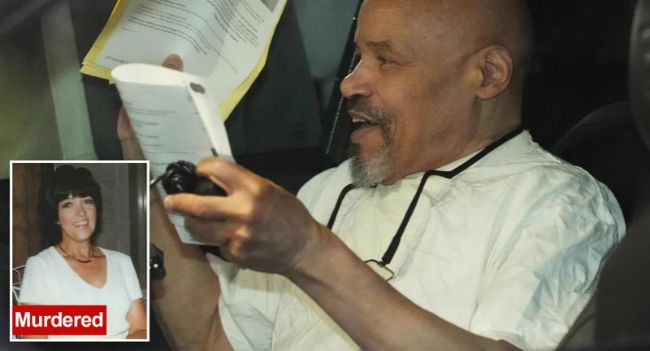
Douglas Stewart Carter sits in a car after he was released from the Utah County Jail as a Utah judge ordered his release on Sept. 28, 2026, in Spanish Fork, Utah.AP Photo/George Frey
A 71-year-old Utah man who spent much of the past four decades on death row walked out of jail Monday after newly analyzed DNA evidence excluded him as a possible match to genetic material recovered from key pieces of evidence in a 1985 murder.
Douglas Stewart Carter had been imprisoned for 41 years following his conviction in the killing of Eva Olesen, the aunt of a police chief. Carter has consistently maintained his innocence and has long argued that the confession used against him was coerced.
Fourth District Judge Derek Pullan ordered Carter released on bail while he awaits a new trial. He must wear a GPS monitor and is prohibited from contacting Olesen’s family.
The release came despite objections from members of the victim’s family, who stressed that they still want the case fully resolved.
DNA Results Add a Dramatic New Development

Carter had been imprisoned for 41 years, with much of that time spent on death row, before Fourth District Judge Derek Pullan ordered his release after prosecutors dropped the death penalty.AP Photo/George Frey
The latest turning point arrived with DNA results received on Sept. 22.
Testing excluded Carter as a possible match to blood recovered from a doorknob and genetic material found on the handle of a knife used in the crime.
Pullan said the results further weakened the prosecution’s case, although he noted that a reasonable jury could still potentially conclude Carter was responsible.
Prosecutors are now reassessing the remaining evidence.
Utah County prosecutor Erwin Petilos told the court that reconsidering Carter’s bail was “necessary and fair” while authorities continue reviewing the case.
A retrial lasting approximately two months had been planned for next year. Prosecutors also recently withdrew their notice that they intended to seek the death penalty again.
Carter Walks Free After Four Decades

Carter left the Utah County Jail late Monday wearing a white shirt and gray sweatpants, accompanied by his son and defense attorney.
His son pushed a cart carrying pillows, blankets and Carter’s belongings.
Carter occasionally smiled but did not speak to journalists waiting outside. He then entered a vehicle with his son and lawyer.
“This is going to be a lot for him,” his son, Tyler Anger, said while waiting for his father’s release.
Anger had been adopted by another family as an infant and did not learn about his father’s conviction until years later.
Carter is expected to initially stay at an extended-stay hotel near his son. His attorney, Neal Hamilton, said Carter will also need therapy as he adjusts to life outside prison following his extraordinarily long incarceration.
Hamilton urged prosecutors to dismiss the aggravated murder charge that remains pending.
No Physical Evidence Originally Connected Carter to Scene
Eva Olesen was killed in her Utah home on Feb. 27, 1985.
Carter, originally from Chicago, was living with his mother in Utah at the time. Investigators eventually focused on him as a suspect in what authorities believed was a robbery-related killing.
Carter later left Utah while believing he was suspected in an unrelated assault case. He was apprehended in Nashville, Tennessee, in June 1985.
During questioning by a Provo detective, Carter signed a confession.
He later maintained that the confession was false and alleged investigators repeatedly threatened him during the interrogation.
At trial, prosecutors also relied on testimony from two witnesses who claimed Carter had bragged about killing Olesen.
Carter was convicted and sentenced to death. His defense called no witnesses during that trial.
Following another trial in 1992, Carter was again sentenced to death. Numerous appeals were subsequently rejected.
Two Crucial Witnesses Later Recanted
A major shift in the case came in 2011 when investigators located the two witnesses from Carter’s original trial in Mexico.
Both recanted their earlier testimony.
They alleged they had been instructed to lie in court and claimed police gave them cash and gifts that they were told not to disclose. The witnesses also alleged authorities threatened them and their son with deportation unless they implicated Carter.
Years of additional litigation followed.
In 2025, the Utah Supreme Court ordered Carter to receive a new trial after identifying “multiple instances of intentional misconduct” involving police and a prosecutor.
DNA testing was subsequently conducted as part of the renewed proceedings, eventually producing the results that contributed to Carter’s release.
Defense Points to Other Possible Suspects
Carter’s attorneys have also argued that evidence pointing away from their client was suppressed.
They say witnesses reported seeing a white man fleeing the scene and allege investigators possessed information pointing toward other potential suspects, including Olesen’s husband, Orla Olesen.
According to the defense, prosecutors had at one stage been close to charging the husband before a Provo police lieutenant asked them to hold off while the investigation continued. Carter emerged as a suspect soon afterward, according to court documents cited in the report.
Orla Olesen, who died in 2009, had told police that he discovered his wife inside their home.
No determination in the current proceedings has established that he was responsible for her death.
Victim’s Family Still Wants Answers
Members of Eva Olesen’s family opposed Carter’s release and emphasized that the new DNA results do not, in their view, definitively resolve who was responsible.
Theresa Olesen, Eva’s daughter-in-law, told the court that the family had hoped the new testing would produce a conclusive DNA match.
“It doesn’t mean he wasn’t there,” she said.
The family’s priority, she added, remains finding justice for Eva and determining whether Carter played any role in what happened.
For Carter, however, Monday marked an extraordinary change after 41 years of incarceration and decades spent facing the possibility of execution.
He is now outside prison, but his legal case is not over. An aggravated murder charge remains pending, prosecutors are reassessing the evidence, and Carter could still face a new trial unless the state ultimately decides to dismiss the case.