Lindsay Clancy Trial Hits New Crisis as Defense Seeks Removal of Juror Accused of Ignoring Reasonable-Doubt Instructions

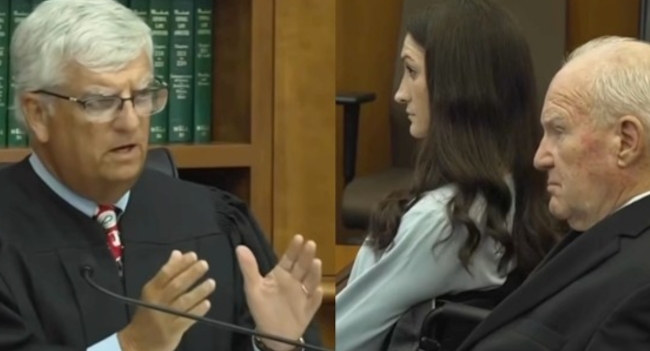
Lindsay Clancy’s lawyer, Kevin Reddington, has called for one juror to be removed after it was revealed they allegedly “refused” to listen to the law on reasonable doubt.Greg Derr/The Patriot Ledger
PLYMOUTH, Mass. — After six days and roughly 36 hours of deliberations without a verdict, Lindsay Clancy’s closely watched murder trial took another dramatic turn Thursday when a dispute involving a single juror spilled into open court.
A note from the jury foreperson indicated that one member of the 12-person panel was allegedly refusing to follow the law concerning reasonable doubt. The development prompted an immediate challenge from Clancy’s attorney, Kevin Reddington, who asked Judge William Sullivan to remove the juror and replace that person with an alternate.
Sullivan declined to do so, saying it would be inappropriate for the court to effectively take sides in the jury’s private deliberations.
The extraordinary dispute came after jurors had already informed the judge twice that they were unable to reach a unanimous decision. They are scheduled to return Friday morning for a seventh day of deliberations, with the possibility of a mistrial looming if the impasse cannot be resolved. Independent local coverage has likewise reported that Thursday ended without a verdict and that Reddington unsuccessfully sought the juror’s removal.
One Juror Becomes the Focus of the Courtroom Battle

The trial of Lindsay Clancy on Thursday, September 3, 2026.A
Clancy, 36, is charged with three counts of first-degree murder in the deaths of her children — Cora, 5, Dawson, 3, and Callan, 8 months — at the family’s Duxbury home on Jan. 24, 2023.
Clancy does not dispute that she strangled the children. The central question for jurors is whether she was criminally responsible for her actions.
Her defense maintains that she was experiencing severe postpartum psychosis and hallucinations and therefore should be found not guilty by reason of insanity. Prosecutors dispute that account, arguing that although Clancy was severely depressed, she understood right from wrong and deliberately carried out the killings.
After days of deliberations, however, the jury has struggled to reach agreement.
On Thursday, the situation became more complicated when the foreperson alerted the court to an apparent disagreement involving one juror and the legal standard of reasonable doubt.
The jurors were brought before the court individually to take an oath and answer a question from Sullivan at sidebar. The full panel was then brought back into the courtroom, where the judge again explained the law governing reasonable doubt.
For Reddington, that was not enough.
Defense Demands Further Inquiry

Judge William Sullivan ultimately denied Reddington’s bid to have the juror removed, saying he couldn’t intervene in the process.AP
Reddington argued that the court needed to investigate more deeply whether the juror was actually following the judge’s instructions.
“If we come back here in a half an hour with a mistrial because of the juror who has just spurned the instructions of this court, that’s a shame, that’s a real shame,” Reddington told the court.
He formally requested that the juror be removed, arguing that the person was refusing to listen to Sullivan’s instructions concerning reasonable doubt.
Assistant District Attorney Jennifer Sprague opposed the request.
Sprague argued that the court could not determine from the jury’s internal disagreement which juror was right or wrong without improperly intruding into deliberations. In her view, Sullivan had already taken the appropriate steps by asking whether the jurors could follow the law and then repeating the reasonable-doubt instruction.
Sullivan ultimately agreed with the prosecution and denied the defense request.
The judge explained that he did not believe it was appropriate to align himself with either side of the jury’s disagreement, saying he could not simply decide whether the lone juror or the other 11 members were correct.
Jury Has Already Reported Being Deadlocked Twice

The judge sent the jurors back to the jury room to continue deliberations before he sent them home for the day.Reuters
The confrontation was the latest sign of how difficult deliberations have become.
On Tuesday and again Wednesday, jurors informed Sullivan that they could not reach a unanimous verdict. After the second notification, Sullivan delivered what Massachusetts courts call the Tuey-Rodriguez instruction, sometimes described as a “dynamite charge.”
The instruction urges jurors to continue examining their positions and attempt to reach a verdict if they can do so conscientiously, without requiring anyone to abandon an honestly held belief merely for the sake of agreement. Local reporting confirmed that the jury had twice reported being deadlocked before Thursday’s dispute emerged.
Earlier in the deliberations, on Aug. 28, jurors had also requested to examine Clancy’s prescription medication bottles and the knife involved in her suicide attempt.
By Thursday afternoon, however, the problem was no longer simply that the jury had failed to agree. For the first time, the court had been given some indication of the disagreement occurring inside the jury room.
The deliberating panel consists of nine women and three men. No identifying information about the juror at the center of Thursday’s dispute was disclosed.
Defense Says the Juror Issue Is Not Finished

The exterior of the Plymouth County Trial Court building is seen as jurors deliberate a verdict for Lindsay Clancy on September 3, 2026, in Plymouth, Mass.AP Photo/Rodrique Ngowi
Clancy appeared visibly concerned as attorneys argued over the matter, at times furrowing her brow and briefly closing her eyes. She and Reddington watched as Sullivan repeated the reasonable-doubt instruction to the jury.
Once the panel left the courtroom and the arguments concluded, Reddington was seen rubbing Clancy’s back.
The jury returned to deliberations before being dismissed for the day at approximately 4 p.m.
Outside the courthouse, Reddington made clear that he did not consider the dispute resolved.
He told reporters he expected the issue surrounding the juror to return to open court Friday and said there would likely be further argument about what inquiry, if any, the judge should conduct.
A Mistrial Is Now a Real Possibility
The prolonged deadlock raises the possibility that the trial could end without a verdict.
If all 12 jurors ultimately cannot agree, Sullivan could declare a mistrial because of a hung jury. That would not end the criminal case permanently; prosecutors could choose to try Clancy again.
Reddington has already indicated that he expects the Plymouth County District Attorney’s Office would pursue another trial if that happens, adding that the defense would be prepared to proceed again.
Legal observers have noted that Massachusetts law places limits on how judges handle juries that repeatedly report being deadlocked. After the jury’s second deadlock notice, Sullivan gave the Tuey-Rodriguez instruction, making the continuing impasse particularly significant.
Still, a mistrial is not the only possible outcome.
Although Clancy faces first-degree murder charges, jurors have also been instructed that they may consider lesser offenses, including second-degree murder and manslaughter. They could alternatively find her not guilty because of a lack of criminal responsibility if they accept the insanity defense.
Such a finding would not necessarily mean Clancy would simply be released. Prosecutors could seek her commitment to a mental health facility, with a judge determining whether she remained mentally ill and posed a danger to herself or others.
Two Starkly Different Explanations of What Happened
The trial has revolved around competing explanations for Clancy’s mental state on Jan. 24, 2023.
Reddington argues that his client had deteriorated psychologically after the birth of her third child and was failed by the medical care she received. The defense contends that Clancy was experiencing postpartum psychosis and heard a voice ordering her to kill her children and then herself.
Prosecutors have challenged that explanation.
They maintain that Clancy was depressed but remained capable of understanding her actions and distinguishing right from wrong. The state’s case argues that the killings were deliberate and that Clancy intended to die afterward.
After the children were strangled, Clancy attempted suicide by injuring herself, taking prescription medication and jumping from a second-story bedroom window. The fall severely injured her spine, leaving her paralyzed. She has appeared throughout the trial in a wheelchair.
The competing interpretations of her mental state have left jurors with the central question that has defined the trial: whether Clancy should be held criminally responsible for the deaths of her children.
All Eyes Turn to Friday
The jury is scheduled to return to Plymouth Superior Court at 9 a.m. Friday for what will be its seventh day of deliberations.
Until Thursday, the public knew only that the panel had repeatedly failed to reach a unanimous decision. The foreperson’s latest note offered the first glimpse of a more specific dispute inside the jury room — and immediately triggered a fight over whether one juror should remain.
Sullivan has so far refused to remove that juror, emphasizing the court’s obligation not to interfere improperly with deliberations.
Reddington, however, has signaled that he intends to raise the issue again.
That leaves the Clancy trial at perhaps its most uncertain point yet: a jury divided after days of deliberation, a defense challenging the continued participation of one member, and the possibility that weeks of testimony could end not with a guilty or not-guilty verdict, but with no unanimous verdict at all.