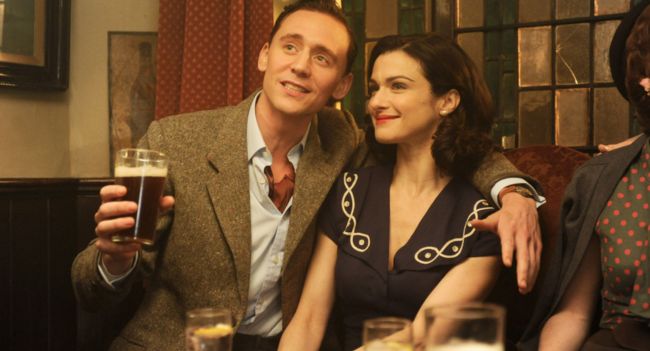
Throughout his career, the late Liverpudlian filmmaker Terence Davies often returned to the ruins of Postwar Britain. In both a literal and figurative sense, films like his 1988 diptych Distant Voices, Still Lives or his 2008 documentary Of Time and the City, excavate scarred geographies in the immediate aftermath of Britain’s darkest hour. Desire and heartbreak play out in a bleak, shell-shocked purgatory, still shackled by wartime austerity. Nearly two decades after his last midcentury-set feature, he directed The Deep Blue Sea (2011). Based on the 1952 Terence Rattigan play of the same name, and released in time for the playwright’s centenary, Davies infuses the tale with his trademark penchant for picturesque melancholia.
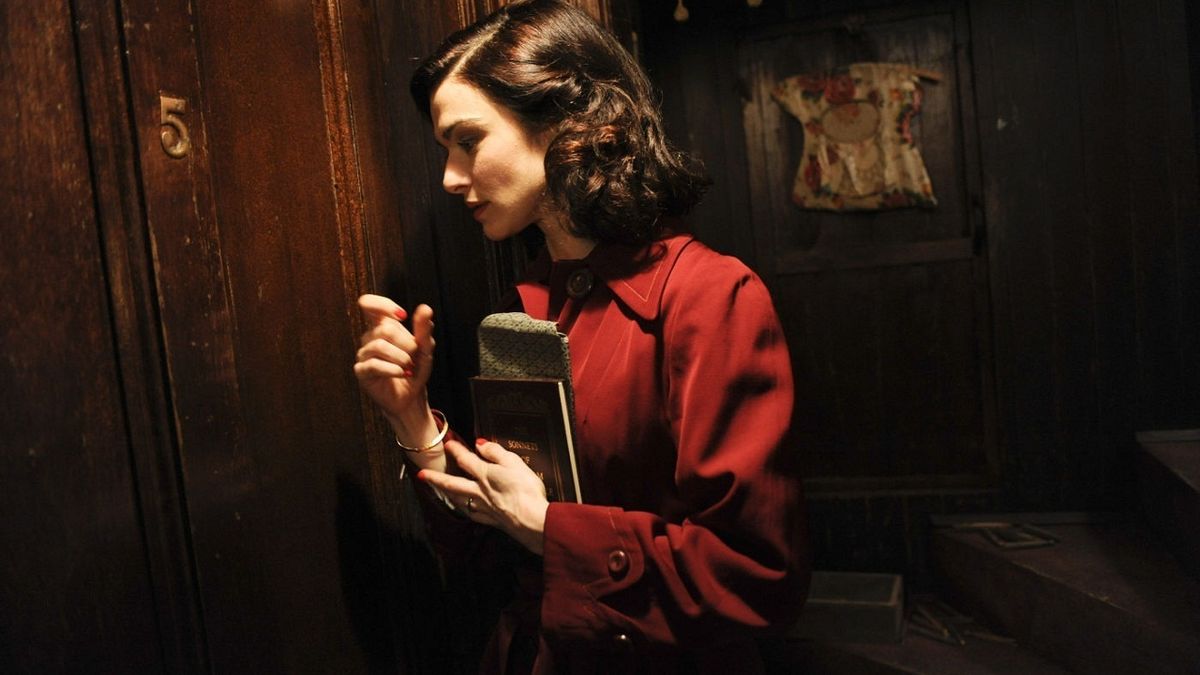
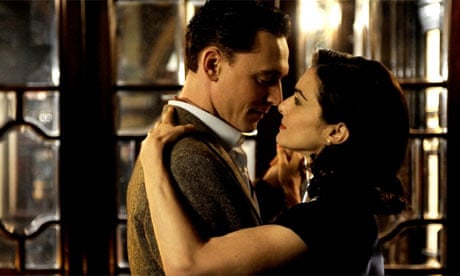
Hester (Rachel Weisz) is a suicidal, upper-class Londoner in an affair with a man who she knows will never reciprocate her intense love for him. Her lover, Freddie (Tom Hiddleston), a charming ex-RAF pilot, may be a relief from her likely sexless marriage, but is too fixated on the “excitement and fear” of his soldierly glory days to stay a committed partner. Despite the lack of sex in her marriage, Hester seems to be more emotionally and intellectually compatible with her older jurist husband William (Simon Russell Beale). But desire dictates otherwise. To the tune of Samuel Barber’s pulsing, melodramatic violin score, Davies and his ensemble of performers produce a heart-rending portrait of dislocation. Weisz in particular delivers an impressive performance. Surrounded by a spectral incandescence throughout the film, she drifts between impulsive mania and composed eloquence, trading subtle glances of despair and passionate tirades alike.
Davies’s adaptation narratively deviates from the source material, as well as director Anatole Litvak’s 1955 version. That version largely takes place over the course of a single day, in a single apartment. In contrast, Davies makes full use of the cinematic medium’s temporal flexibilities, rhythmically flowing between past and present, fading from one gorgeously composed frame to the next. As in most of his work, the troubled present is always intertwined with a traumatic past. The film’s final sequence mirrors its opening shot, panning downwards from Hester’s West London apartment window, sweeping across the street and ending its trail on the debris of a bombed-out building. This lingering image of a collapsed home is not only indicative of a fractured domesticity, but also of a nation that has failed to recover from its wounds.
The Deep Blue Sea screens this evening, Saturday 20, at the Museum of Moving Image on 35mm as part of the series “Terence Davies: Time Present and Time Past.”