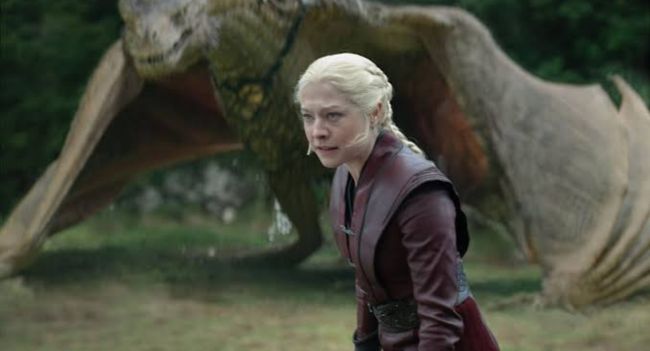
‘House of the Dragon’ Finale: Rhaenyra’s Crash-Out Is Here
The Season 3 finale felt like the beginning of the end for both the civil war and the dragon queen’s long run of patience and forgiveness
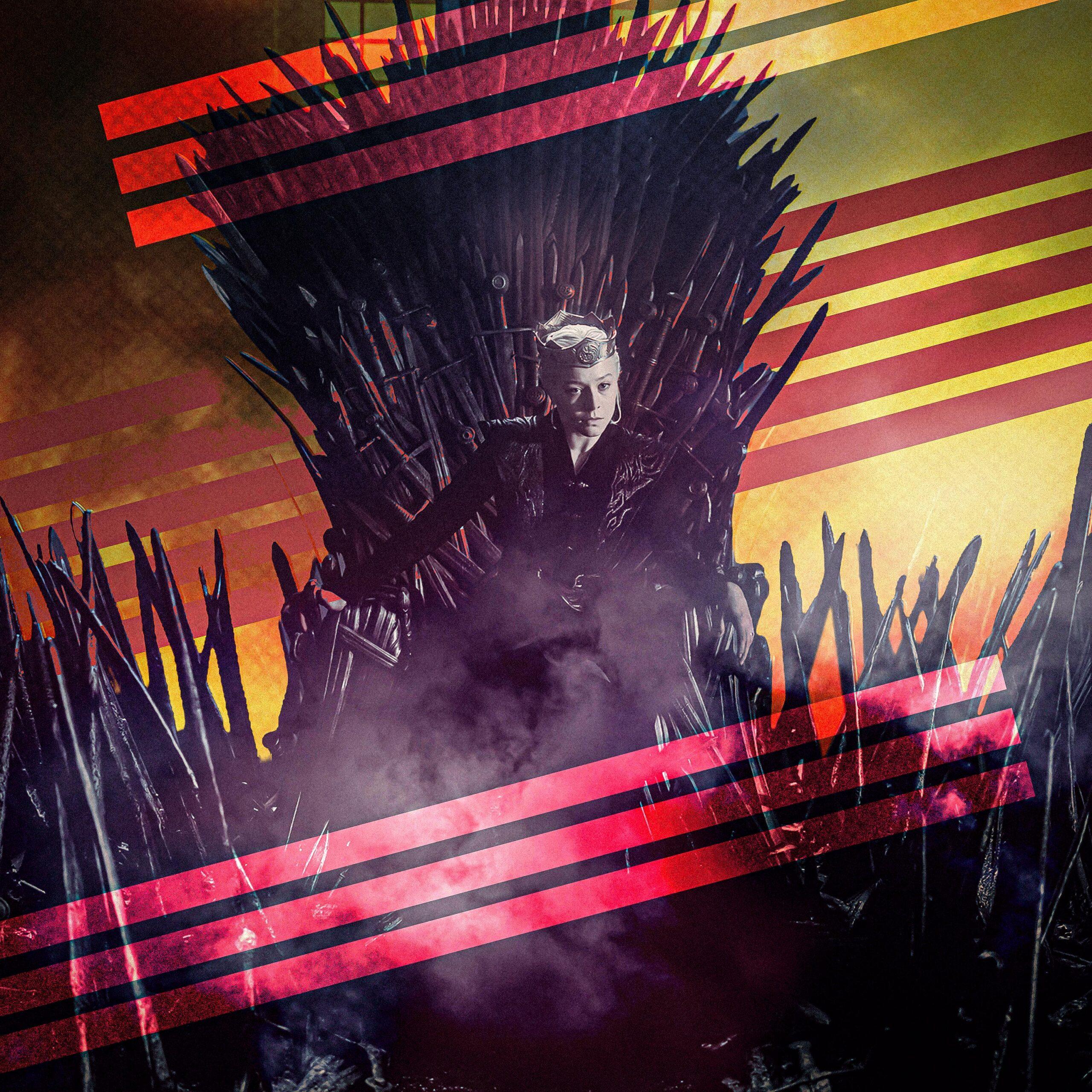

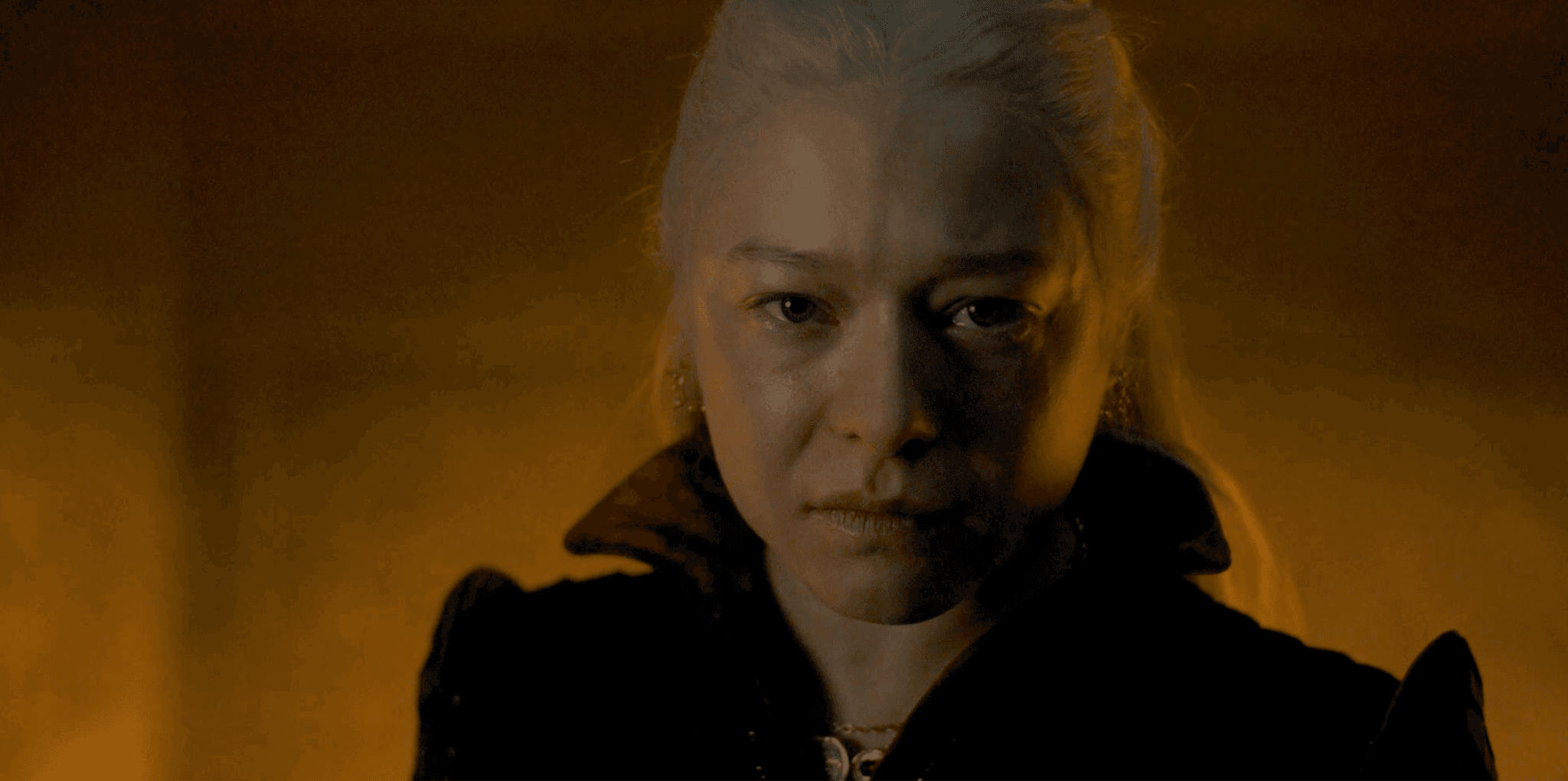
In the final scene of Season 1 of House of the Dragon, Rhaenyra is informed that her son Lucerys is dead. In a long slow-motion shot with a somber score wailing over it, Daemon approaches her as she stands at the end of the painted table on Dragonstone. He takes her hand and whispers in her ear. She stares into the fireplace burning behind her, the camera pans in close, and then she turns, looking directly at the audience:
As a book reader, I thought this would be the beginning of Rhaenyra’s breaking-bad arc. After an episode in which Rhaenyra had considered peace with the greens, what forgiveness could there possibly be now with her son dead? George R.R. Martin called his novel describing these events Fire & Blood for a reason. It seemed it was time for fire and blood.
Well, I’d jumped the gun a bit. Rhaenyra spent virtually all of Season 2 dithering on Dragonstone, wondering whether there was a way to claim the throne without starting a war. Then she spent most of Season 3 similarly trying to avoid bloodshed, just in King’s Landing now. For example, in Episode 2 this season, when she killed Otto Hightower—the single person most responsible for this war, and thus for the deaths of two of her sons—she did so only reluctantly, with tears in her eyes. Repeatedly this season, she sought the counsel of Alicent, despite Alicent’s own role in these events. For so many episodes, Rhaenyra has been the model of restraint and forgiveness, despite so many deep personal tragedies that would have others seeking only vengeance.
Well, no more! The finale of Season 3 brought us back to Rhaenyra’s book characterization. Her magnanimity is gone. Her heel turn has arrived.
It’s somewhat surprising that it is the news of Aegon’s resurrection on Sunfyre that fully sends Rhaenyra over the edge, but it was also the culmination of a season of setbacks that have threatened her short ascension. “The smallfolk name it a sign from the gods that Aegon is ordained to rule,” Rhaenyra explains to Daemon. “That he and his dragon have been resurrected to reclaim the throne.”
“You have an absolute power within your grasp,” Daemon reminds her. “You have only to wield it.”
This is the episode in which Rhaenyra stops being a bystander to the plot and begins driving it. Finally, we are done with Small Council meetings that go nowhere!
Rhaenyra’s pivot begins with her ordering Daemon to go to Tumbleton, to “root out every Hightower, and kill them to the last man.” She reminds him that the realm is watching and to “not make a monster of me,” but that feels perfunctory, as she then continues by saying that when she finds Aegon, she wants to kill him herself.
She immediately follows up this conversation with a tense interaction with Baela in which Baela pleads with the queen to be careful with Tumbleton, as Corlys is still held hostage there. In response, Rhaenyra grabs Baela’s face and calls her an insolent child. “Insolence runs in your blood,” she tells Baela. “As your sister has lately reminded us.” We later learn that she has “grounded” Baela, confining her to the Red Keep.
Next we find out that Rhaenyra has dismissed her mistress of whisperers, arranging immediate passage for Mysaria to Pentos. Their relationship deteriorated quickly, as they had a sexual liaison just last episode, although Rhaenyra had picked up on some of Mysaria’s manipulations in that final on-screen conversation.
Then we get another tense conversation, with Rhaenyra once again fishing for information from Helaena. “All the things you care about are ugly,” Helaena tells her. Minutes later, Rhaenyra is having her guards force-feed Helaena to keep her—and more importantly, the child inside her—alive and healthy.
Then she sets off to the sept, to force the High Septon’s hand and be anointed as the one true ruler of Westeros. She travels in full chain mail and plate armor, showing clearly that while she may sit the Iron Throne, she is far from comfortable in King’s Landing. But the High Septon refuses her, saying that Aegon’s resurrection proves that the gods have chosen him to rule. Rhaenyra says she has six dragons, but the septon responds that he has a seven-faced god. Rhaenyra orders Alyn to execute the High Septon, and he complies, despite the septon’s warning that “to harm me is to declare war on the Starry Sept.”
Rhaenyra exits the sept and faces a crowd of smallfolk, and here she’s reached a state of complete belligerence. She begins a speech about how her father named her his heir, publicly, requiring lords to swear fealty to his daughter. But she goes further—she says that her rule was prophesied before Viserys was even born. She references Aegon the Conqueror’s dream, saying that Aegon had a duty to “shield the realm from an ancient and sinister darkness that looms in the far north, beyond the Wall.” Torrhen Manderly and Grand Maester Orwyle exchange a look during this—what in the world is she talking about? “If your world is to survive, I must light the way,” she shouts into the crowd, co-opting the motto of House Hightower before dubbing herself “Rhaenyra the Chosen.”
Rhaenyra then switches to High Valyrian and declares herself the Prince That Was Promised, even though there’s surely no one in the crowd who speaks High Valyrian. The response from the citizens gathered before the sept is stunned silence.
In 2026 parlance, this is a crash-out. It took us nearly two seasons longer than expected to get here, but Rhaenyra is fully over the edge. Whether she’s experiencing a classic bout of Targaryen madness or whether this is the natural result of so many deep personal traumas she’s suffered throughout this series is up to the audience to interpret, but the result is the same: The woman who was once known as “the Realm’s Delight” is gone.
In the final moments of the episode, Rhaenyra learns that Helaena has killed herself by jumping out one of the Red Keep’s towers and onto the battlements below. She finds the tapestry Helaena was working on, depicting her own suicide, by the window. It also depicts something else: Rhaenyra, sitting the throne, with blood streaming down all around her.
This image is reminiscent of Rhaenyra’s book characterization. Earlier this season, we saw Rhaenyra cut herself on the Iron Throne, something that serves as an omen in Westeros. It’s said that Aegon the Conqueror built the throne out of the swords of his enemies so that no king (or queen) could sit easy upon it, and the throne can also reject monarchs who are unworthy. When Rhaenyra cut herself earlier this season, it went unnoticed by those present, but when Rhaenyra first cuts herself on it in Fire & Blood, it is during the long ceremony after she first takes King’s Landing and is seen by those in the throne room: “Wise men looked at one another, though none dared speak the truth aloud: the Iron Throne had spurned her, and her days upon it would be few.” In the novel Rhaenyra cuts herself on the throne repeatedly: “Yet every time she sat the Iron Throne, its cruel blades drew fresh blood from her hands and arms and legs, a sign that all could read.”
That image on the tapestry, though, depicts more than just a few cuts. There are ribbons of blood running down her from head to toe. It reminded me a bit of a previous king of Westeros, Maegor the Cruel. Maegor’s terrible reign came to an end when he was found mysteriously impaled on the throne. How Maegor died was never discovered—some say he was murdered, either by one of the Kingsguard knights or by Queen Elinor, one of his many brides. Others say he killed himself. And still others say it was the throne itself that killed him.
The Maegor comparison feels intentional here by the showrunners, as in the novel the smallfolk begin to compare Rhaenyra to Maegor not long after she takes King’s Landing. The lack of gold that has plagued Rhaenyra all season also affects her in the novel, and in Fire & Blood her master of coin, Bartimos Celtigar, extracts heavy taxes from the merchants and shopkeepers in the city. Bartimos also makes public executions into a source of coin—he has executions of the various “traitors, rebels, and murderers” in the city performed in the dragonpit and charges anyone who wants to watch three pennies. The remains of those executed are fed to the queen’s dragons, making it quite a spectacle.
The plan replenishes the queen’s coffers, but at the cost of her reputation. Here’s how it’s described in Fire & Blood:
Neither Aegon nor his brother, Aemond, had ever been much loved by the people of the city, and many Kingslanders had welcomed the queen’s return … but love and hate are two faces of the same coin, as fresh heads began appearing daily upon the spikes above the city gates, accompanied by ever more exacting taxes, the coin turned. The girl that they once cheered as the Realm’s Delight had grown into a grasping and vindictive woman, men said, a queen as cruel as any king before her. One wit named Rhaenyra “King Maegor with teats,” and for a hundred years thereafter “Maegor’s Teats” was a common curse amongst Kingslanders.
Perhaps we’ll still get the “King Maegor with teats” nickname in the show, but I could also see them skipping it. Helaena’s tapestry was already a creative nod toward this part of the novel. Regardless of any nicknames, the result is the same: Rhaenyra’s reign of terror has begun.
And this is only the beginning. Elsewhere in this episode, there are so many things going wrong for Rhaenyra that she doesn’t even know about.
Rhaenyra doesn’t know that Ulf the White has abandoned her side, spurned by the constant disrespect shown to him by her and Daemon. She doesn’t know that Hugh abandoned his post and that his wife is now dead, in part because of an attack that she sanctioned. She doesn’t know that Aemond is alive and Alicent’s assassination attempt failed. She doesn’t know that Aegon and Aemond have made amends and are working together again. She doesn’t know that Addam is having doubts about her. She doesn’t know that Mysaria escaped from the retinue taking her to Pentos and is staying in King’s Landing. She doesn’t know that Corlys, who is still technically her hand, has proposed an alliance with Daeron that would let her half brother be Warden of the South, noting as he did so that many great houses are hesitant to accept a female ruler.
And she doesn’t know that the battle of Tumbleton was a certified shit show, resulting in the death of Ormund, yes, but also in the loss of Roderick Dustin and of many of the Northern troops he’d brought that had proved so useful in the Riverlands. Ulf burned much of the town, killing many of its citizens, and since he was previously known to be on Rhaenyra’s side, the result of this battle may be to paint her as the monster she’d wanted to avoid being seen as. Worse yet, Daeron escaped (along with Gwayne), so she didn’t even manage to take a dragon or a rival claimant off the board. When you consider that she lost Ulf’s allegiance and likely Hugh’s as well, this is a bona fide disaster for her.
Just think about where the dragon math stands now. Daemon is as loyal to Rhaenyra as ever, and his dragon, Caraxes, is one of the most formidable in the realm. But Rhaenyra’s own Syrax appeared to get injured last week in the scuffle with Sheepstealer, Baela is “grounded” in the Red Keep, Addam’s loyalty is uncertain, Ulf has fled, and Hugh abandoned his post. Rhaenyra began this episode with six dragons; she’s now down to a single truly healthy, reliable one and a bunch of question marks.
Aegon, meanwhile, is back on Sunfyre, who looks to be in solid shape even though he’s missing half his face. Vhagar is out there, ready for Aemond to reunite with her. And if those two brothers can rope in Daeron—who, to be fair, Aegon called a “little twat” this episode—the greens will suddenly be looking far more like a match for Rhaenyra’s forces than they have since at least Season 2. In fact, if those threads come together, they may even have the upper hand. With just one more season left before House of the Dragon reaches its conclusion, the “absolute power” Daemon noted at the top of the episode has evaporated.
Season 1 ended with that shot of Rhaenyra looking directly into the camera. It felt like the beginning of the war. This season ended again with Rhaenyra, but with her facing away from the camera, silently closing the window that Helaena had just thrown herself out of. It felt like the beginning of the end.