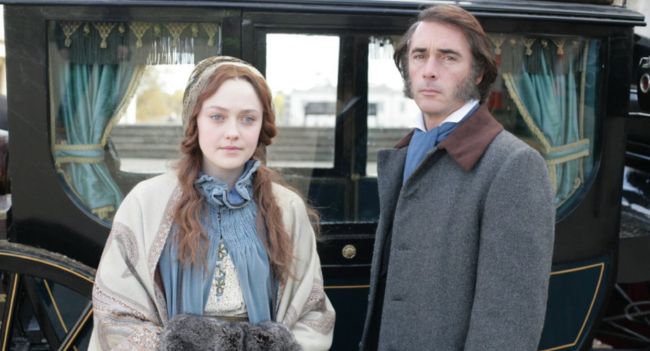
In 1854, the disintegration of the marriage between esteemed art critic and painter John Ruskin and his Scottish bride of six years, Euphemia ‘Effie’ Gray, was the talk of London. Although many had known that the couple were unhappy, they had not expected anything to follow from that, and certainly not in the manner that it did. Many suspected the scandalous involvement of another figure, the younger artist John Everett Millais. A great deal has been written on the subject over the years. Emma Thompson’s handsomely shot heritage piece, in which she plays an older member of society who takes the lonely young woman under her wing, sticks close to the established facts but is upfront about its aim to restore Effie’s reputation.
Much of what the film has to say is summed up by its title. Thompson is appalled by the way that tradition robs women of their names upon marriage – and, indeed, there are other examples of such practices here. Though the film does not touch on the frequent claim that Ruskin was a paedophile (in his attractions if not in his actions), it does hint at this in the way that it presents his reaction on that unfortunate wedding night, when the small, doll-like Effie first reveals her naked body to him. Director Richard Laxton refrains from showing us anything beneath her shoulders – it is not only unnecessary but would require judgement on a matter long shrouded in mystery – but we see all we need to through Ruskin’s face, and there is no holding back from the depiction of the rejection and cruelty that follow. Though this was notorious in its time, one does feel somewhat bludgeoned with it as a viewer, and it might have been more interesting to see the film try and understand Ruskin more, rather than making him such a monster.
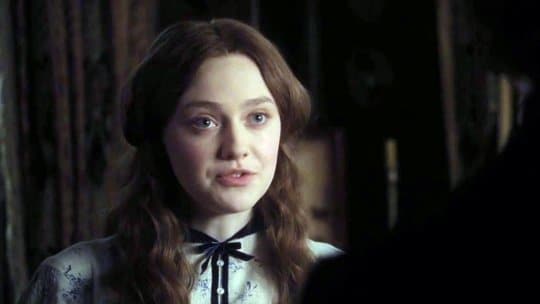
To his credit, Greg Wise does a good job of bringing humanity to the role, in a somewhat befuddled way. Aside from the eyes, he also conjures up a remarkable physical resemblance to Ruskin. By now it should go without saying that Dakota Fanning is excellent as Effie – she has yet to deliver a poor performance. Tom Sturridge’s Millais is a little too well groomed to capture the artist as recalled from life, despite the otherwise excellent costuming and the quaint garret in which we see him living. We don’t get to know him very well. His main role in the story seems to be to demonstrate to Effie that not all men are toxic (a matter on which Elizabeth Siddal might have ventured a few words). The suggestion that the two might have had a physical relationship whilst Effie was with Ruskin is carefully downplayed. Although certain lingering glances, especially towards the end, suggest that Thompson wanted to have it both ways, the main drive of the narrative (despite what would happen later) is towards Effie reclaiming her personhood and recognising herself as somebody possessed of will, somebody deserving of respect.
In a story that captures the stuffiness and uglier aspects of high society very effectively – thanks n part to a marvellous supporting turn from Julie Walters as Ruskin’s mother (who comes across like Waterhouse’s Soul Of The Rose gone to seed) – Thompson’s character acts as a reminder that some of its members retained a bit of humanity, letting much-needed light into a succession of dark drawing and dining rooms. There’s real anger in the presentation of Effie’s thinning hair, in the way we see little bottles of sedative slipped onto her bedside cabinet when she seems apt to waste away. A much more substantial women’s history is glimpsed here. It enriches the film and reminds us that Effie was not alone in being injured by the restrictions and expectations placed on women at the time.
In contrast to suffocating London, Scotland – presented just as it looks in Ruskin and Millais’ paintings – offers a kind of freedom. There’s a suggestion that Effie finds strength in returning to her roots, even though she’s evidently far from Perth. This makes the decision to give her a prim English accent seem all the stranger, however. It’s perfectly delivered by the American star but just not how she would have sounded, and it removes a layer of difference that would have further complicated her ability to fit in.

Such curious little details aside, this is a beautifully rendered film with oodles of character. Though it will appeal most strongly to those with an interest in the pre-Raphaelites, it stands up well on its own as a period piece with, sad to say, plenty of lingering relevance today. Re-released a year into a pandemic which has seen many people cooped up without much control over their lives, it’s likely to connect with audiences in a way that it struggled to before.