The Quiet Power of a Woman Getting Ready to Be Seen

There is something strangely intimate about this scene. On the surface, it is only a simple moment: two young women in a room, one helping the other with her hair before she steps out into society. But the softness of the scene hides a much deeper tension. This is not just about beauty. It is about preparation, expectation, and the quiet fear of being seen by the wrong person — or perhaps by the right one.

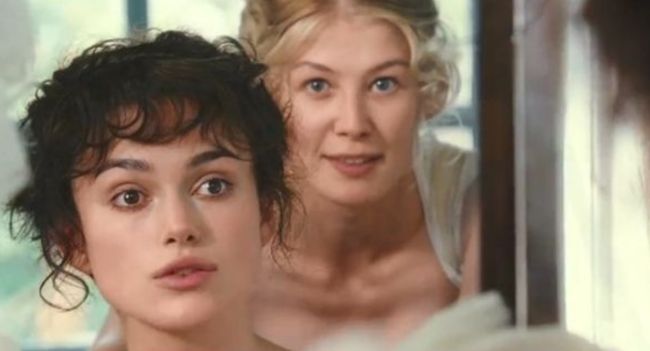
The female lead sits in front of the mirror, her face calm but not empty. She is beautiful, undeniably so, but her beauty is not the polished, untouchable kind. It feels alive. Her dark curls are slightly loose, her eyes are wide and alert, and there is a natural sharpness in her expression that makes her more interesting than simply pretty. She does not look like someone waiting to be admired. She looks like someone thinking faster than everyone around her.
That is what makes her beauty so striking. It is not passive. It carries intelligence.
The woman behind her, likely helping her dress and prepare, brings a completely different energy. She is brighter, softer, more open. Her face seems to hold excitement, curiosity, and maybe even a little teasing. While the female lead appears guarded, the other woman seems to understand that something is happening beneath the surface. She may not say it directly, but her expression suggests she knows this evening matters more than the heroine wants to admit.
That is where the hidden meaning of the scene begins.
In period dramas, getting ready is never just getting ready. A hairstyle, a dress, a glance into the mirror — all of these become part of a woman’s negotiation with society. Before she even enters the room, she is already being prepared to be looked at. The mirror becomes almost symbolic. It does not only reflect her face; it reflects the version of herself the world is about to judge.

And yet, the female lead does not seem eager to perform. Her eyes hold a certain resistance. She may be dressed for a social occasion, but she does not look as if she wants to become decorative. There is a quiet refusal in her expression, as if she knows the rules of the room she is about to enter, but does not fully respect them.
That is why the scene feels so full of subtext. Any dialogue between the two women would likely sound light on the surface — remarks about hair, appearance, the evening, who might be present. But underneath, the real conversation is different. It is not “Do I look pretty?” It is: What will happen when I walk into that room? Who will notice me? And what will I do if his eyes find me first?
The companion’s role is important because she softens the heroine without weakening her. Her hands move through the heroine’s hair with care, turning a private moment of dressing into a form of emotional support. There is affection in the gesture. She is not transforming the heroine into someone else. She is helping her step into the world while still remaining herself.
The close-up of the heroine is especially powerful. Her face is delicate, but her gaze is not fragile. The camera lingers on the contrast: soft skin, loose curls, quiet lips — but eyes that seem almost impossible to fool. This is why her presence feels magnetic. She does not need dramatic movement to hold attention. Her stillness is enough because her inner life is visible.
The scene also understands something very specific about feminine beauty: sometimes the most beautiful moment is not the finished appearance, but the moment before. The half-pinned hair. The lowered gaze. The private hesitation before entering public life. It is beauty caught in transition, before it becomes performance.
That is what gives the scene its emotional pull. We are not just watching a woman being made beautiful. We are watching a woman preparing to be vulnerable, even if she would never call it that. She may enter the evening with wit, pride, and composure, but here, in this quiet room, we glimpse the person behind all that control.
Her beauty lies in that contradiction. She is soft but not submissive. Elegant but not ornamental. Young, but already deeply aware of how people judge, misunderstand, and desire. The camera does not simply admire her face; it studies her intelligence, her restraint, and the thoughts she refuses to say aloud.
And perhaps that is the real secret of the scene: the most important words are not spoken. They are hidden in the way she looks at herself, in the way the other woman watches her, and in the silence before she steps out to be seen.
Because sometimes, before a love story begins in public, it starts here — in a quiet room, in front of a mirror, with a woman trying to decide how much of her heart she is willing to reveal.