When Two People Are Trying Too Hard Not to Feel Anything

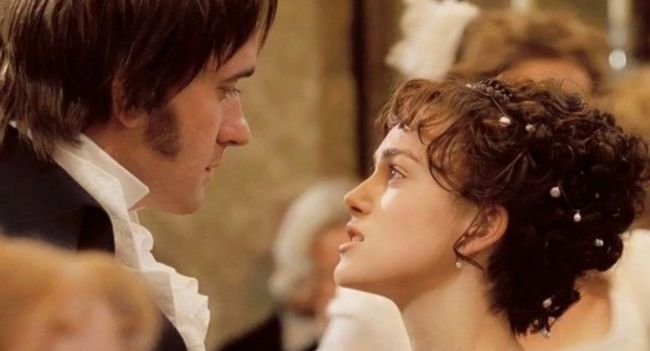
This scene is powerful because almost nothing obvious happens. They are standing in a crowded room, surrounded by music, manners, and social rules. Everyone else seems to be part of the occasion. But these two feel as if they have been pulled out of it, caught in a private tension that neither of them wants to admit.
The young woman’s face says more than any line of dialogue could. She is not simply shy, nor is she simply angry. There is something sharper there: alertness. She is watching, measuring, protecting herself. She knows what it means to be looked at in a room like this. Women are not just present at these gatherings; they are judged. Their beauty, their family, their manners, their marriage prospects — everything is silently weighed.

So when she senses his attention, she does not receive it softly. She meets it with suspicion.
That is what makes her so compelling. She is not waiting to be chosen. She does not want to be admired by a man who has already made her feel small. Her pride is not vanity; it is armor. She uses intelligence, irony, and distance to defend the part of herself that refuses to be humiliated.
Across the room, he is just as guarded, but in a different way. He stands among other men, yet he looks emotionally separate from them. His face is controlled, almost severe. At first glance, he may seem cold. But the coldness feels less like emptiness and more like restraint. He is a man trained to master himself, to hide discomfort, to let class and manners speak louder than emotion.

And that is exactly why she unsettles him.
She is not the woman he expected to notice. She does not flatter him. She does not bend herself into something more pleasing. She sees through him too quickly, and that makes him uncomfortable. His attraction to her is not easy for him because it threatens the version of himself he is used to presenting to the world.
He is drawn to her, but he almost resents being drawn to her.
That is the real tension of the scene. Their chemistry does not come from harmony. It comes from resistance. They do not relax around each other; they sharpen. She brings out his pride. He brings out her prejudice. Both of them are intelligent enough to judge the other, but not yet humble enough to question their own judgment.
In the final moment, when she turns to look at him, the room seems to shrink. Her gaze is direct, almost challenging. It is not the look of a woman easily impressed. It is the look of someone saying, without speaking: I know you are watching me, but do not think that gives you power over me.
His stillness is just as revealing. He does not know how to approach her without carrying all his pride with him. He wants to move closer, but he does not yet know how to be vulnerable. He wants her attention, but he has not learned how to deserve it.
That is why this moment feels so charged. Neither of them is ready for love. Not yet. What begins here is not romance in its softest form, but disturbance. Each of them has entered the other’s mind, and both are trying to pretend it has not happened.
She thinks she dislikes him because he is arrogant. He thinks he is merely inconveniently attracted to her. But the audience can see something deeper forming. They irritate each other because they recognize too much. They expose the parts of each other that are usually hidden: her fear of being looked down on, his fear of losing control.
The beauty of this scene is that love is not announced. It is not even understood by the characters themselves. It begins as tension, as discomfort, as a glance held a second too long. They do not yet know that they will change each other. They only know that the other person has become impossible to ignore.
And sometimes that is where the most unforgettable love stories begin — not with tenderness, but with the shock of being truly seen.