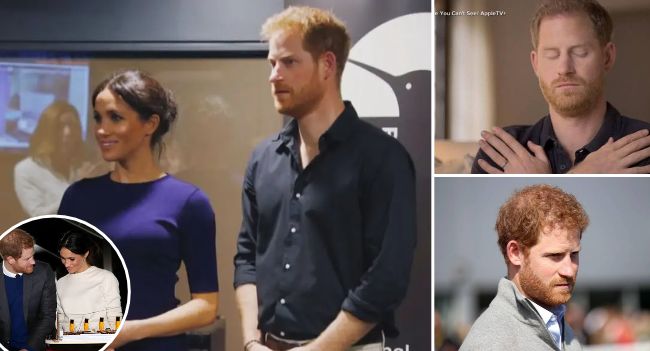
Prince Harry Reveals He ‘Slipped into Depression’ for Two Weeks After Relocating to Canada with Meghan and Archie
The Duke of Sussex has delivered an unvarnished account of the psychological turbulence accompanying his transition away from official royal life, revealing in his MasterClass episode Redefining Grief: Building Resilience Through Loss that he plunged into a severe two-week depressive slump shortly after touching down in Canada with Meghan Markle and their infant son Archie in late 2019.
The Abrupt Post-Relocation Adrenaline Crash

Conceived as a retreat to clear their heads ahead of formally stepping back as senior working royals in January 2020, the peaceful Canadian sanctuary instead triggered an unforeseen biological breakdown. Harry explained that his nervous system had adapted to operating on a continuous rush of stress hormones; when that chronic institutional pressure suddenly lifted, his body experienced an immediate physiological crash. Stripped of his high-adrenaline baseline, the Duke found himself utterly incapacitated and unable to manage basic domestic tasks, leading to two weeks of clinical depression as his brain struggled to recalibrate in a tranquil setting.
The Biological Cost of Prolonged Chronic Stress
Neuroscientist Dr. Mary-Frances O’Connor, a clinical psychology professor at the University of Arizona, framed Harry’s experience within the biology of bereavement and stress exhaustion. Likening the nervous system to a high-performance engine running permanently with the throttle pinned down, Dr. O’Connor noted that chronic cortisol demand inevitably leads to biological depletion. This physiological drain manifests as chronic morning fatigue, reduced executive functioning, and debilitating brain fog—symptoms Harry confirmed having navigated extensively during his final operational tours and official royal engagements.
Childhood Denial and Releasing Guilt Around Happiness
The underlying catalyst for Harry’s vulnerability remained his unresolved childhood bereavement following Princess Diana’s death in 1997. Harry recalled that for years his subconscious clung to an elaborate fantasy that his mother had merely staged an escape from the public eye and would eventually reappear in disguise to whisk him and Prince William away. Dr. O’Connor highlighted this denial as the mammalian brain’s natural attachment mechanism resisting the permanence of loss.
Realizing decades later that Diana’s paramount hope was for her children to flourish, Harry finally abandoned the toxic belief that lingering in despair was the only valid measure of his devotion, freeing himself to pursue long-term healing and charitable purpose.