Ten Pounds of Charity
Chapter 1: The Commercial Value of Mercy
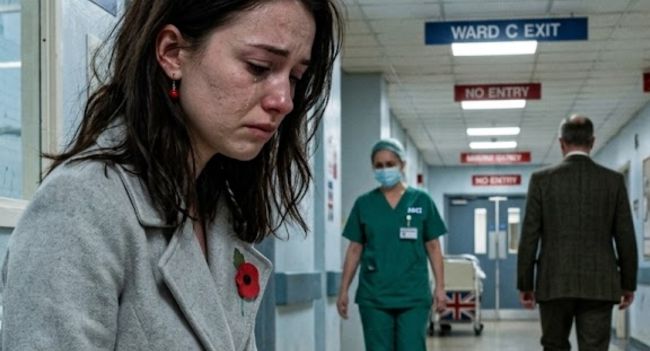
The emergency room at King’s College Hospital in London was freezing, smelling of bleach, cheap coffee, and impending death.
My nineteen-year-old brother, Leo, lay behind the double doors, his heart having stopped suddenly on a rainy Tuesday night. The doctors needed a deposit and guarantee for an immediate, specialized private cardiac transfer to save his life. The amount was exactly £13,600.
I sat on the plastic chairs, my hands shaking so violently I could barely hold my phone. I called my husband, Nicholas.
Once. Ten times. Twenty times.
It was only on the twenty-seventh call that the line finally clicked open. The background noise was filled with the low hum of jazz and clinking champagne glasses from a corporate gala in Mayfair.
“Nicholas,” I choked out, tears burning my face. “Leo’s heart stopped. He’s in the ICU. I need thirteen thousand six hundred pounds for the transfer. Please, Nicholas. I need it now.”
Silence stretched over the line before Nicholas let out a heavy, thoroughly annoyed sigh.
“Is this another emergency, Clara?” his voice was smooth, cold, and entirely devoid of emotion. “It’s only thirteen thousand pounds. Why are you calling me twenty-seven times for a pittance? The Vance family capital is used to generate commercial value, not to be thrown into the bottomless pit of your family’s misfortunes.”
“Nicholas, he is dying!” I sobbed, clutching my chest. “I’ll pay you back. Every single penny, I swear—”
“Go set up a GoFundMe page, Clara,” he interrupted smoothly. “I’ll ask my assistant to send you a link later. Adults need to take responsibility for their own lives instead of constantly relying on others to bail them out. I have a dinner to attend.”
The line went dead.
I sat there, staring at the blank screen, my body completely numb.
At 4:00 AM, the doctors managed to stabilize Leo, but the window for the specialized transfer had closed. He was alive, but barely. Leaving my mother by his bedside, I caught a night bus back to our townhouse in Belgravia to gather Leo’s medical documents.
As I walked into the quiet foyer, the lights in Nicholas’s study were on.
I walked past the door, but stopped when I heard his voice. He was speaking to his assistant, his tone warm, gentle, and filled with a tenderness he had never once shown me in our four years of marriage.
“Order a custom baby-pink Porsche Panamera for Chloe,” Nicholas was saying, a soft chuckle in his voice. “Invoice it to the corporate account as a business expense.”
“Sir?” the assistant’s voice sounded hesitant over the speaker. “Miss Chloe has only been an intern with us for seventeen days.”
“I know,” Nicholas replied, his voice softening even further. “But she fell off a public hire bike on her way to work today and scraped her knee. A girl shouldn’t have scars on her legs; it’s not elegant. From now on, that car is strictly for her commute. I don’t want her taking public transport again.”
Chloe.
A twenty-two-year-old intern. Seventeen days. A scraped knee on a hire bike was worth a ninety-thousand-pound luxury sports car.
My brother’s dying heart was not worth thirteen thousand.
Nicholas turned around and saw me standing in the doorway, my coat damp from the London drizzle, my face pale. He didn’t look guilty. Instead, he nodded with smug satisfaction.
“Ah, you’re back,” Nicholas said, closing his laptop. “Good. You see? You managed just fine. That’s what I meant—adults need to solve their own problems. By the way, I saw the GoFundMe link you posted on your Facebook. I donated ten pounds to it myself. After all, you’re my wife; I have to support you.”
I looked at him. Really looked at him.
In that quiet, terrifying moment, the fog in my mind completely cleared. It wasn’t that Nicholas was a busy man. It wasn’t that he didn’t have the money.
It was simply that I—and everything I loved—did not deserve his wealth. I was not worth his warmth.
“Thank you, Nicholas,” I said, my voice incredibly calm, empty of any anger. “I understand now.”
I walked past him, went into the guest bedroom, and pulled the pre-drafted divorce papers from my desk drawer. With a steady hand, I signed my name at the bottom.
Chapter 2: The Clean Cut
The divorce was swift because I asked for nothing.
Nicholas’s lawyers were stunned. They had prepared for a bloody battle over the Belgravia townhouse, the offshore trusts, and the art collection. Instead, I walked away with only my clothes, my laptop, and my pride.
“You’re being ridiculous, Clara,” Nicholas said, leaning against his mahogany desk when he brought the signed papers back to me. “You have no savings. Your brother is still in rehab. How are you going to pay for his medical bills? By selling your soul to a gallery?”
“I’ll manage, Nicholas,” I said, packing my final suitcase.
“You’ll be begging to come back within six months,” he sneered, his pride wounded by how easily I was letting him go. “And when you do, don’t expect me to be this generous.”
“I won’t,” I smiled gently, pulling my suitcase behind me.
I moved into a small, drafty flat in Peckham. To pay for Leo’s ongoing physical therapy, I took a grueling job as an assistant curator at a local, independent gallery, working sixty hours a week. I lived on instant noodles, black coffee, and sheer willpower.
But for the first time in four years, I slept peacefully. There was no cold husband ignoring my calls, no feeling of worthlessness hanging over my head.
Six months passed. With my background in art history and my relentless work ethic, I helped the small gallery secure an exclusive exhibition with a rising contemporary British sculptor. The show was a massive success. The commission I earned was enough to pay off the remainder of Leo’s medical debt.
One evening, as Leo took his first unassisted steps in the hospital corridor, he looked at me and smiled. “We made it, Clara.”
“Yes, we did,” I whispered, holding his hand. “We made it.”
Chapter 3: The Price of a Scar
While my life was slowly rebuilding, Nicholas’s perfect world was beginning to fray.
It started with Chloe. The pink Porsche had made waves on social media, drawing unwanted attention to Nicholas’s firm’s financial practices. Within months, Chloe’s incompetence as an intern caused a massive scheduling error that lost the firm a multi-million-pound client. When Nicholas tried to gently reprimand her, she threw a tantrum, quit, and threatened to sue the company for harassment, using the luxury car as evidence of an inappropriate relationship.
But the real void in Nicholas’s life was at home.
The Belgravia townhouse was immaculate, but it was dead. The hired housekeepers didn’t know how he liked his shirts starched. They didn’t leave fresh lavender by his bedside when he had migraines. There was no one waiting for him with a warm cup of chamomile tea when he returned from late-night board meetings.
One evening, Nicholas sat alone in his massive dining room, staring at a takeout container. He picked up his phone and instinctively searched my name.
His breath caught.
There was an article in The Times art section. The photo showed me standing in a beautifully lit gallery in Soho, wearing a stunning, minimalist black dress. I looked radiant, confident, and incredibly beautiful. The headline read:
“Clara Vance: The Visionary Curator Revitalizing London’s Independent Art Scene.”
Nicholas stared at my smile. It was a smile he had never seen during our marriage—a smile of pure, independent joy. He felt a sudden, sharp ache in his chest.
Chapter 4: The Scent of Lavender
A year after the divorce, I hosted the grand opening of my own gallery in Mayfair. The elite of London’s art world filled the room.
I was laughing, talking to a prominent collector, when I felt a familiar, heavy presence behind me. I turned around.
Nicholas stood there. He looked exhausted, his expensive suit hanging slightly loose on his frame, dark circles under his eyes. He looked like a man who had everything, yet possessed absolutely nothing.
“Clara,” he said, his voice cracking slightly.
“Nicholas,” I replied, my voice polite, professional, and entirely detached. “I didn’t think you frequented independent galleries.”
“I… I wanted to see you,” he stammered, looking around at the crowded room, at the people who looked at me with genuine respect. “You’ve done remarkably well, Clara. I always knew you had talent.”
“No, Nicholas,” I said, taking a sip of my champagne. “You thought my talent was a bottomless pit. You thought I was a charity case.”
His face flushed with shame. He stepped closer, his voice dropping to a desperate whisper. “Clara, please. I made a mistake. A horrible, arrogant mistake. Chloe was nothing—she was a distraction. I miss you. The house is empty. I’ll buy you any gallery you want. I’ll pay for your brother’s entire medical trust. Millions of pounds. Just… come back to me. Let me take care of you.”
I looked at him, feeling a profound sense of closure.
A year ago, his words would have made me cry. But tonight, they sounded like a foreign language. He still thought everything—love, respect, family—could be bought and invoiced to a corporate account.
“Nicholas,” I said softly, looking him straight in the eye. “Do you remember the day Leo’s heart stopped?”
He swallowed hard, his eyes filled with regret. “Clara, I—”
“You told me that adults need to solve their own problems,” I interrupted gently. “And you were right. I solved mine. I saved my brother, I built my career, and I found my worth. I don’t need your millions, Nicholas. And I certainly don’t need your ten pounds of charity.”
I turned my back on him, walking toward the warm, laughing crowd of my friends and colleagues.
As Nicholas stood alone in the cold corner of the gallery, he finally understood the true commercial value of what he had lost. It was priceless—and he could never buy it back.