
In another life, the German and Japanese Axis powers win World War II, and America ceases to exist. That chilling premise comes true in Prime Video’s dark sci-fi series, The Man in the High Castle. War stories are nothing new to television, and discussions around them often treat authenticity as a key factor in deciding whether a series is worth watching.
However, The Man in the High Castle breaks the rules of a traditional war show, re-shaping real-life events into an alternate reality that feels both plausible and eerie. Rather than focusing on battles or historical accuracy alone, the series examines how power reshapes morality. Although much of The Man in the High Castle centers on the aftermath of an Axis-dominated United States, the show focuses more on the people living under that rule. From working-class citizens to powerful officials, from resistance fighters to ministers, each character carries the weight of the conflict in a uniquely personal way.
What Is ‘The Man in the High Castle’ About?
The Man in the High Castle presents an alternate version of the United States, where Giuseppe Zangara successfully assassinates President-elect Franklin D. Roosevelt in 1933. As a result, the Great Depression continues, and the nation maintains its non-interventionist stance, avoiding involvement in other countries’ affairs at the start of World War II in 1939. However, this neutrality creates an opening for Nazi Germany to expand globally. From continental Europe to the Soviet Union, the Axis powers extend their control into Africa. Meanwhile, Imperial Japan wins the Pacific War and occupies the U.S. West Coast, while Nazi Germany controls the East Coast.
Fast-forward to 1962, where The Man in the High Castle begins. At this point, Imperial Japan and Nazi Germany seem to be content with their respective sides on American soil. Although the two countries maintain civil relations, Japan senses something suspicious with Nazi Germany. Amid this power struggle are resistance groups who work in secret, attempting to uproot the empires by distributing propaganda films spark rebellion. Although much of the series ping-pongs between the East and West Coast, between the two areas are the Neutral Zones — several central states where neither power holds control. These rocky, middle-of-nowhere lands often serve as a refuge for said resistance fighters, fugitives, and outlaws.
Everyone Thinks They’re Doing the Right Thing in ‘The Man in the High Castle’
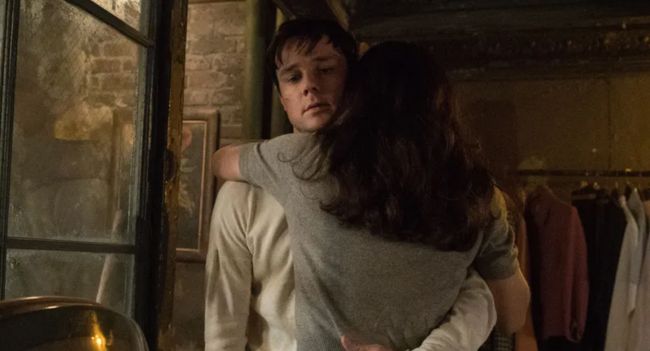
The Man in the High Castle follows a wide range of characters, each reflecting the uncertainty of living under constant political tension. There’s Juliana Crain (Alexa Davalos), a reluctant resistance fighter who’s largely assimilated into life in Japanese-occupied San Francisco. John Smith (Rufus Sewell) is a former American soldier who betrays his country to become a high-ranking Nazi official. Nobusuke Tagomi (Cary-Hiroyuki Tagawa) is a Japanese trade minister who secretly opposes his regime’s violence and pushes for peace. Finally, there’s Joe Blake (Luke Kleintank), a double agent torn between duty and conscience. Together, their stories show one thing: everyone believes they’re doing what’s right, but those beliefs don’t align in such a fractured world.
The idea of good versus bad is tested in The Man in the High Castle. Historically, Nazi Germany and Imperial Japan caused immense destruction during World War II, but life after the war tells a different story. For the Reich-worshipping Smith, war is not a means to an end. He believes there is always more power left to conquer. That is not the case for the more pacifist Tagomi. Despite his nation’s inexcusable injustices against the people it has colonized, Tagomi believes the only way to maintain political relations is through peace. Nazi Germany, however, takes advantage of this stance to further intimidate Imperial Japan, reinforcing that there will always be one party who has more power than the other.
‘The Man in the High Castle’ Takes a Sci-Fi Twist with Multiverse Travel

Apart from its Axis-winning reality, The Man in the High Castle takes its alternate history premise to new heights. In a sci-fi twist, Juliana receives a clandestine film from her younger sister, who is involved in the resistance. The film reveals another reality — one where the Allied powers win, and America remains itself. These films are labeled as dangerous propaganda and are ordered to be destroyed. However, there’s also the matter of how these alternate realities are being captured. It seems impossible that they are staged, as the footage shows strikingly realistic depictions of the fall of Nazi Germany and Imperial Japan, including detailed scenes of bombings.
As the show goes on, some characters realize they can travel between parallel universes. But moving realities isn’t harmless. It comes with real risks, along with the emotional weight of seeing that life could have been better somewhere else. That doesn’t just apply to the state of the world, but to the characters’ personal lives too. At first, this ability seems like something only a few people naturally have. But later on, others try to recreate it using technology, hoping to use it for their own gain and possibly control multiple realities.
In the end, The Man in the High Castle proves that, no matter which universe we’re in, the hunger for power remains insatiable for those blinded by it. Through its addictive what-if storytelling and morally complex characters, The Man in the High Castle is unlike any other typical war drama that relies on definite, concrete accuracy. It’s a dark, unsettling, yet thought-provoking watch — one that ultimately makes it a perfect weekend binge on Prime Video.
SOURCE: COLLIDER