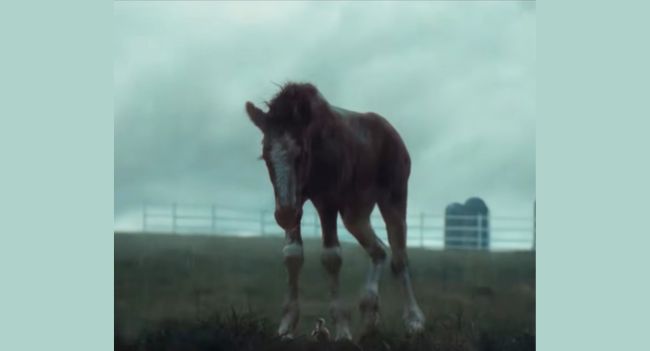
In Budweiser’s American Icons spot, the storm sequence wasn’t improvised.
It was meticulously storyboarded.
Thunder would roll in first.
Wind would rise.
Tension would build.
The young Clydesdale foal was supposed to hesitate — take a half-step back, ears flicking, uncertainty written into its posture. That pause was designed to create drama before the cut.
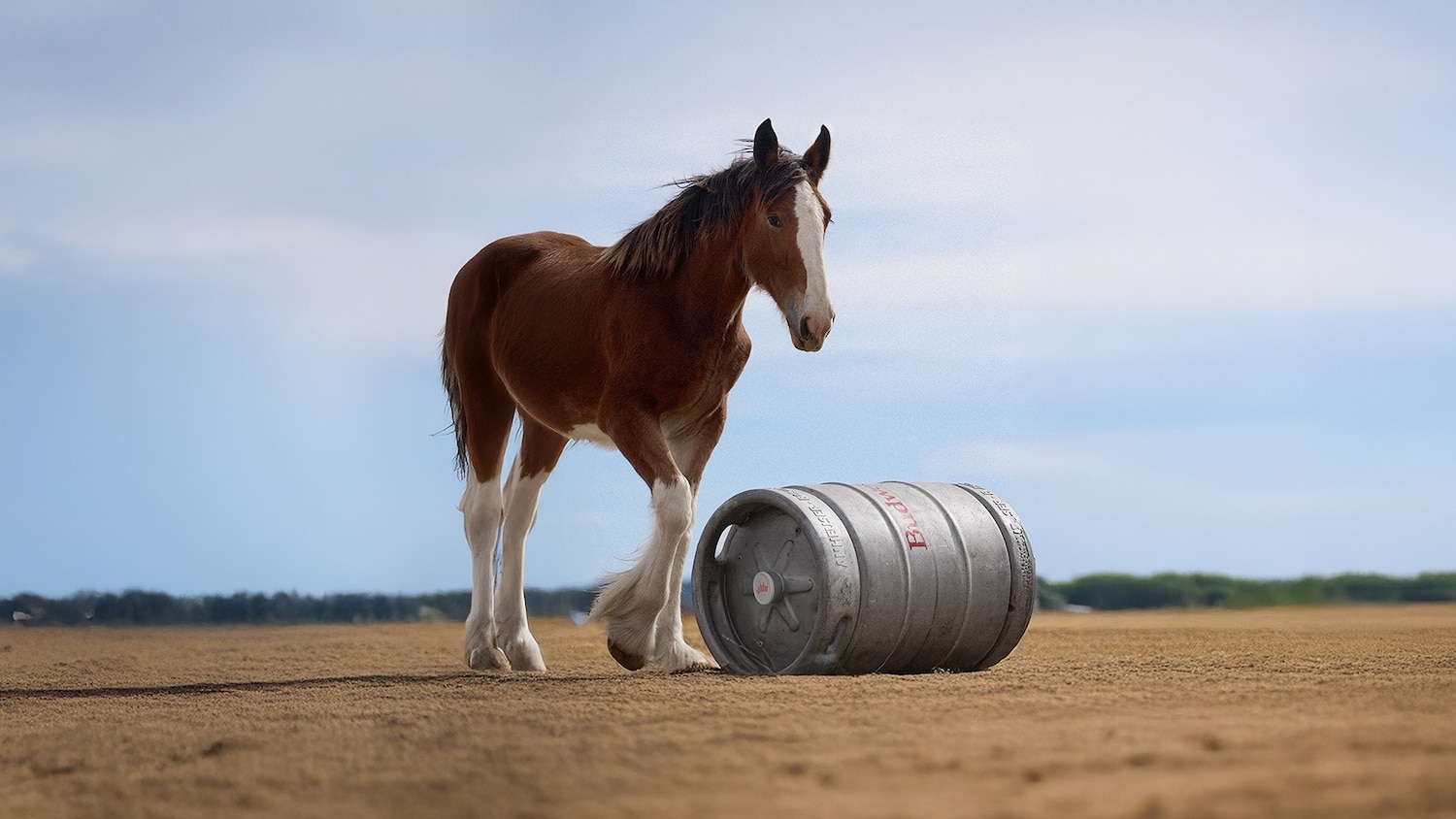
The eagle? Positioned beneath a fallen tree. Vulnerable. Separate. Exposed.
That was the plan.
Then the rain machines roared.
The cue was given.
And the foal didn’t retreat.
It stepped forward.
Not abruptly. Not spooked. Just steady. Intentional. The foal lowered its head and shifted its body toward the eagle, angling itself as if shielding it from the downpour. No visible trainer cue. No audible command captured on the track.
Just movement that felt instinctive.
Behind the monitors, the crew reportedly went silent. Because in that fraction of a second, the commercial stopped being choreography.
It became something else.
The original scene was designed to dramatize vulnerability — a fragile moment before resilience. Instead, what unfolded was protection. The emotional logic flipped in real time. What had been scripted as hesitation transformed into quiet courage.
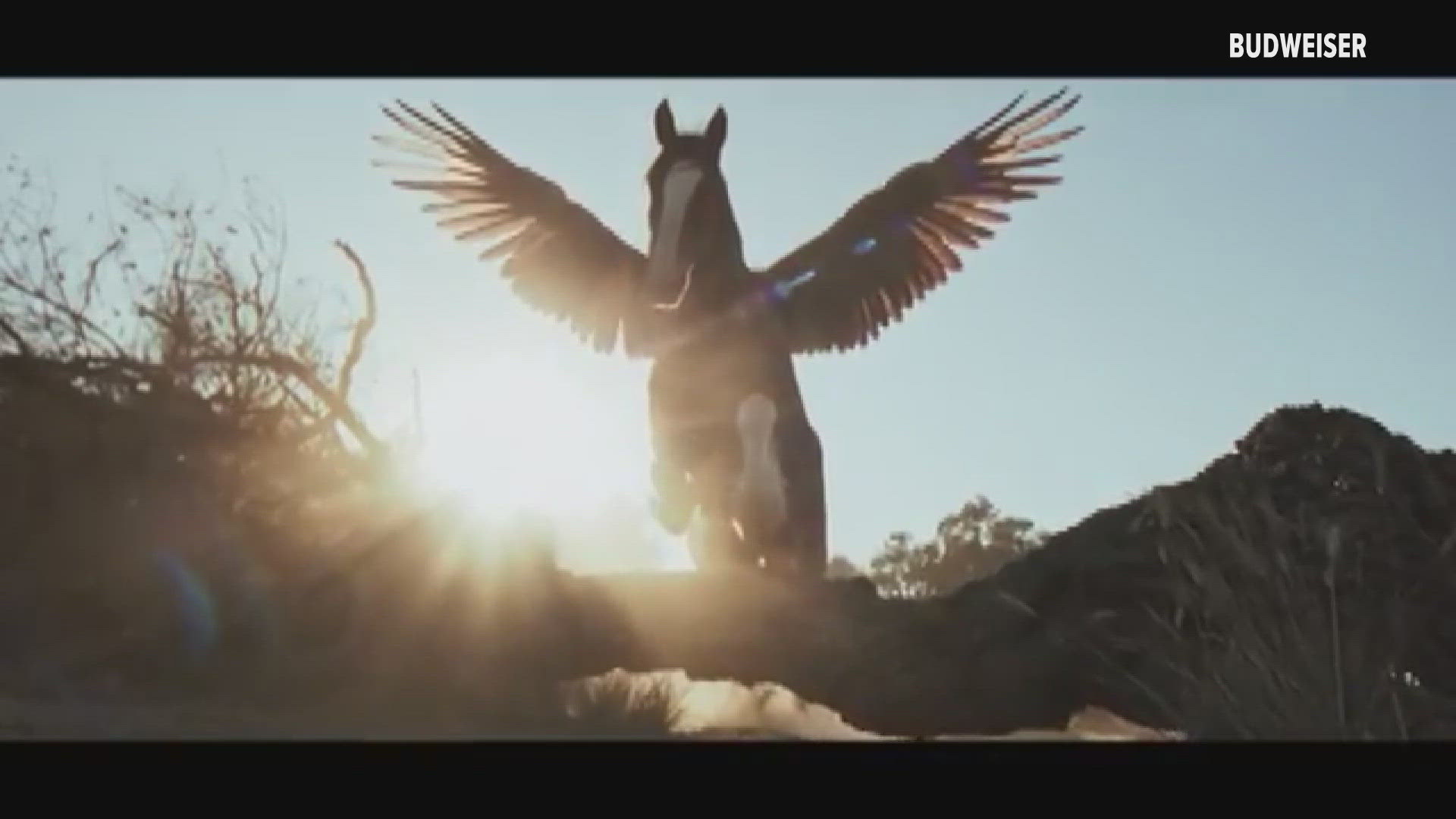
The storm still raged.
The lighting still cracked.
The frame still carried cinematic weight.
But now, the center of gravity had shifted.
The foal’s forward step reframed the narrative: not fear before strength — but strength revealed through instinct. Choosing to lean in when everything grows loud. Choosing proximity over retreat.
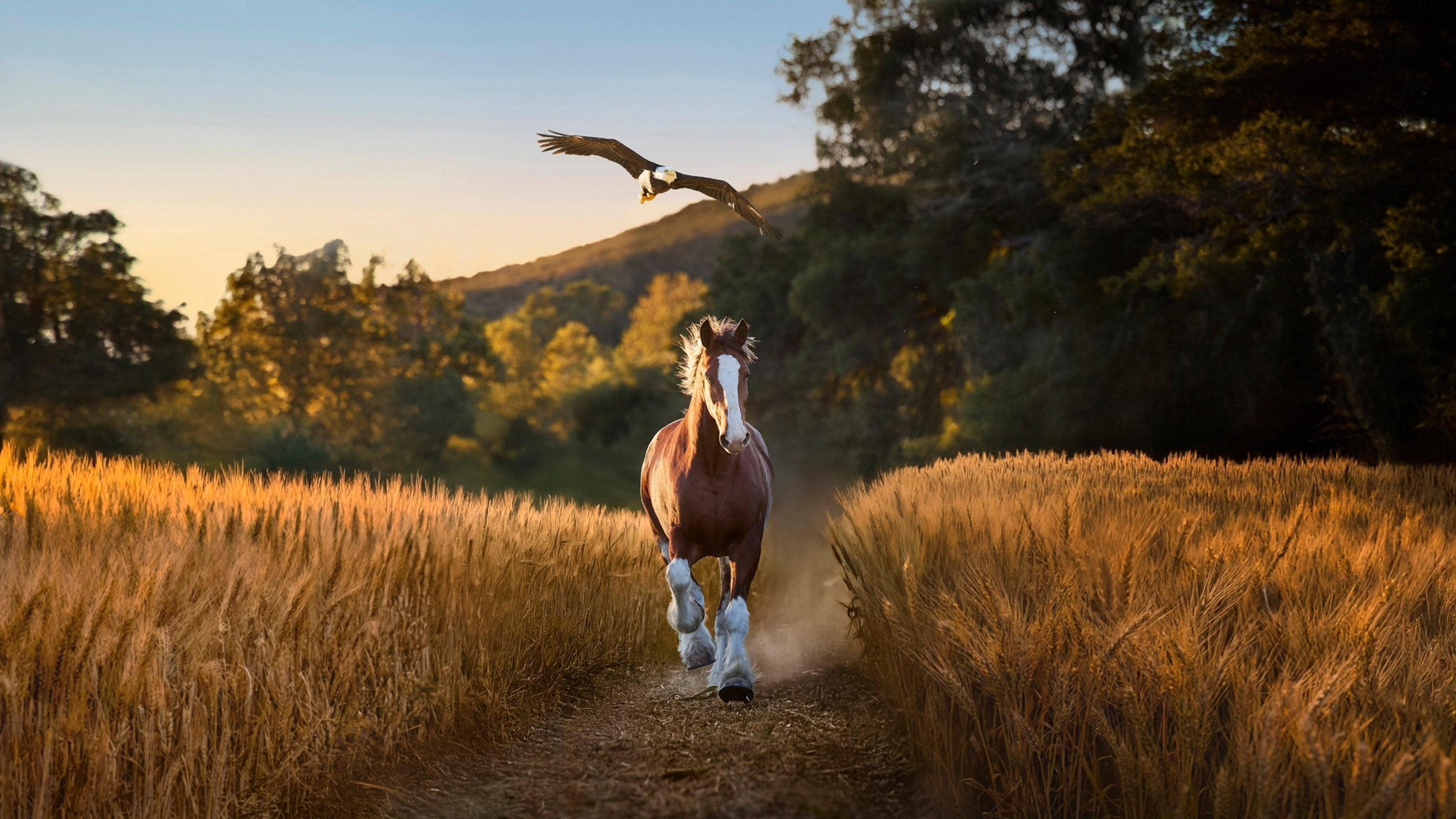
In commercial filmmaking, especially with animals, unpredictability is the risk factor everyone manages. Multiple takes. Controlled environments. Behavioral conditioning layered with patience. Yet sometimes the most controlled sequence yields something unplanned — and better.
That single unscripted movement altered the emotional architecture of the ad. It didn’t just heighten drama. It deepened meaning.
Because audiences can sense the difference between staged tension and organic response. And whether viewers consciously recognized it or not, that forward step landed with authenticity.
The storm was artificial.
The rain was engineered.
But that choice — that small, deliberate step into the chaos — felt undeniably real.
And that’s why the moment lingers.