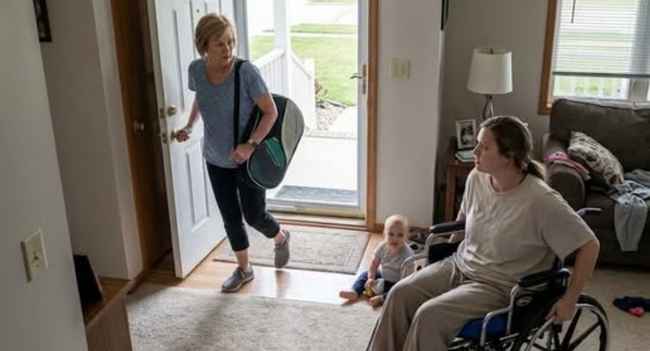
My mother chose pickleball over my one-year-old twins after a horrific crash left me unable to walk—and humiliated me for asking for help. What she didn’t know was that I owned the roof over her head, paid nearly every bill she had, and was about to erase her comfortable life with one phone call.
The first sound I remembered was metal twisting like an animal screaming.
The second was my mother’s cold voice telling me her morning pickleball games mattered more than her grandchildren.
I woke under merciless hospital lights with a fractured pelvis, multiple broken ribs, and a surgeon warning me that walking again could take months of brutal rehabilitation. Leo and Maya, my one-year-old twins, had survived because their rear-facing car seats held.
Emergency childcare would cover only twenty-four hours. My husband had died the year before. I had no partner to call, no second parent racing down the hospital corridor, no one waiting to take over when the pain medication wore off.
So I swallowed every ounce of pride I had left and called my mother.
“Mom,” I whispered, gripping the sheets as pain ripped through my hips. “Please take the babies for a few weeks. I can’t even stand.”
She sighed like I had interrupted something important.
“Elena, I have pickleball every morning. Your sister never dumps her problems on us like this.”
“I was almost killed.”
“And we are not your full-time babysitters,” she snapped. “Figure it out.”
Then she hung up.
For a moment, I just stared at the ceiling.
Not because I was surprised. Because suddenly I could see the last eight years with painful clarity.
Every mortgage payment I had covered. Every insurance premium. Every luxury vacation. The SUV. The country-club membership. My father’s new roof. The money I had poured into Seraphina’s failed boutique while my sister remained the untouchable golden child.
I had financed almost their entire comfortable life, and the first time I asked them for something that actually mattered, my mother chose pickleball.
Outside my room, Maya started crying.
I couldn’t lift her. I couldn’t reach her. I couldn’t even roll over without help from a nurse.
That helplessness hurt worse than my ribs.
Clara, my nurse, caught my phone before it slipped from my hand.
“Is there someone else I can call?” she asked.
I looked through the nursery window at my sleeping babies. Leo’s tiny hand rested beside his face. Maya had finally settled again.
Something in me changed.
For years, I had confused paying for peace with having a family.
“Daniel Cho,” I said. “My attorney.”
He answered immediately.
“Stop every payment to my family tonight,” I told him. “Credit cards, insurance, club fees, transfers, payroll—everything. No exceptions.”
Daniel paused.
“Including the house?”
“Yes.”
My parents called it their home, but the property belonged to my holding company. I had bought it. I paid the taxes. I had allowed them to live there under a renewable occupancy agreement.
Daniel lowered his voice. “They’re going to panic.”
“They should have considered that before abandoning two babies.”
Just after midnight, the comfortable life I had quietly built for them began shutting down.
The payments stopped. Their cards declined. The SUV was flagged for repossession. Seraphina’s fake consulting salary disappeared.
At 12:07 a.m., my mother called.
Then she called again.
Again.
Again.
Six calls stacked beneath her name while I lay in the same hospital bed where she had told me to figure it out myself.
Then the seventh call lit my screen, and my thumb moved toward “Answer.”