
The Diva’s Tearful Silence at the Climate Summit: When Céline Dion Refused to Play the Soundtrack for the Titanic.
It was the glitzy closing Gala at Davos. In the auditorium were the 300 most powerful people on the planet: CEOs of energy corporations, heads of state, and tech billionaires.
They invited Céline Dion – the “Queen of Power Ballads,” the voice of raw emotion and resilience – to create a moment of “transcendence.” The organizers wanted her to sing her signature anthem, “My Heart Will Go On,” to end the conference on a majestic, cinematic note. They wanted the soaring nostalgia of that song to make them feel invincible, like captains of industry steering the ship of the world.
Céline walked out. She wasn’t wearing a glittering Vegas costume. She wore a stark, structural white gown that made her look fragile yet statuesque, like an ice sculpture. She moved with the delicate, deliberate caution of someone who knows physical pain intimately, which only added to the hushed reverence in the room.

The orchestra began to play the haunting, familiar Irish whistle intro of the Titanic theme. The audience smiled, misting up, ready to be swept away by the drama of her legendary voice.
But Céline raised a trembling hand to her chest.
“No.”
She signaled the conductor with a sharp, desperate wave. The music cut out. The silence that followed was brittle, like glass about to shatter. Céline stood there, her eyes shimmering with unshed tears, looking out at the sea of tuxedos.
“You invited me here tonight,” Céline spoke, her voice breathless and thick with emotion, the French-Canadian lilt distinct. “You wanted me to sing about a love that survives anything. You wanted to hear that the heart will go on.”
She took a step closer to the edge of the stage, her hands clutching the microphone as if it were a lifeline.
“But look at us,” she whispered, her voice cracking. “You ask me to sing the song of a sinking ship… to a room full of the people who are steering us straight into the iceberg.”
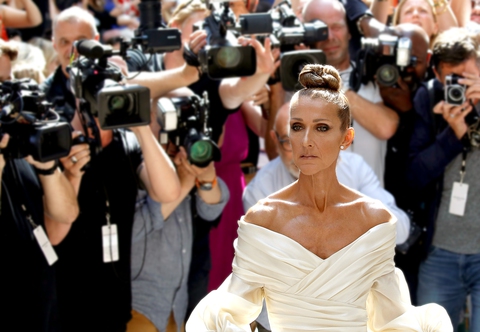
A shockwave of realization hit the room. The metaphor landed with devastating precision.
“You want the melody to make you feel brave?” she asked, a tear finally escaping and tracing down her cheek. “You want to feel that no matter what you destroy, the music will keep playing? That the luxury will keep floating?”
Céline placed a hand over her stomach, her expression shifting from sadness to a fierce, maternal intensity.
“I sing for love. I sing for my children. I sing for the future.” She pointed a shaking finger at the table of oil tycoons. “But there is no love in what you do. There is no future in this room. You are drowning the world my children have to live in.”
She stepped back, looking small against the massive stage, yet radiating an overpowering emotional force.
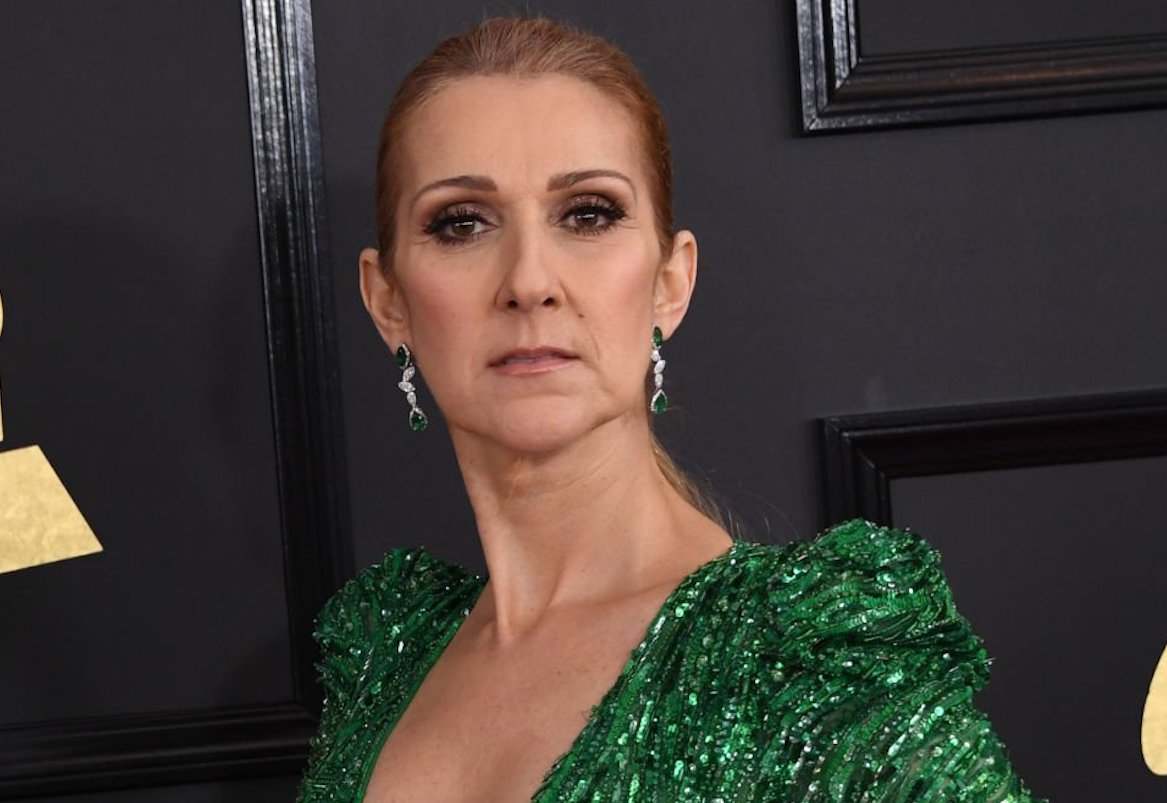
“I cannot sing for you. My heart… it cannot go on if there is no world left to beat in.”
Céline Dion looked up at the ceiling lights, closed her eyes, and let out a shaky breath, refusing to deliver the high note they paid for.
“The song is over,” she whispered. “Unless you change the course.”
Céline turned, gathering her white gown, and walked off the stage with the fragility of a bird and the dignity of a legend.
No one dared to clap. No one dared to boo.
The President of a major power sat motionless, the wine glass in his hand tilted, spilling onto the pristine white tablecloth like a dark, spreading stain.
The next morning, a secretly filmed video of that scene spread like wildfire. Céline Dion didn’t sing a single note that night, but her tearful refusal became the most heartbreaking plea for the planet ever witnessed.
It wasn’t a performance. It was the reality check of a lifetime.