
Fans of The Pitt looking for another gripping medical drama may find their next binge-watch in an unexpected place: a British dark comedy that explores the exhausting, heartbreaking and often absurd realities of life inside a hospital.
This Is Going to Hurt, based on former NHS doctor Adam Kay’s memoir of the same name, offers a very different experience from HBO’s acclaimed medical series. Yet both shows share a willingness to portray healthcare as it really is, with relentless pressure, difficult decisions and emotionally devastating consequences for the people working on the front lines.
While The Pitt follows an intense hospital shift in near real time, this British miniseries combines uncomfortable comedy with deeply personal storytelling to examine the human cost of working in an overstretched healthcare system.

A Darkly Funny Look at Life Inside the NHS
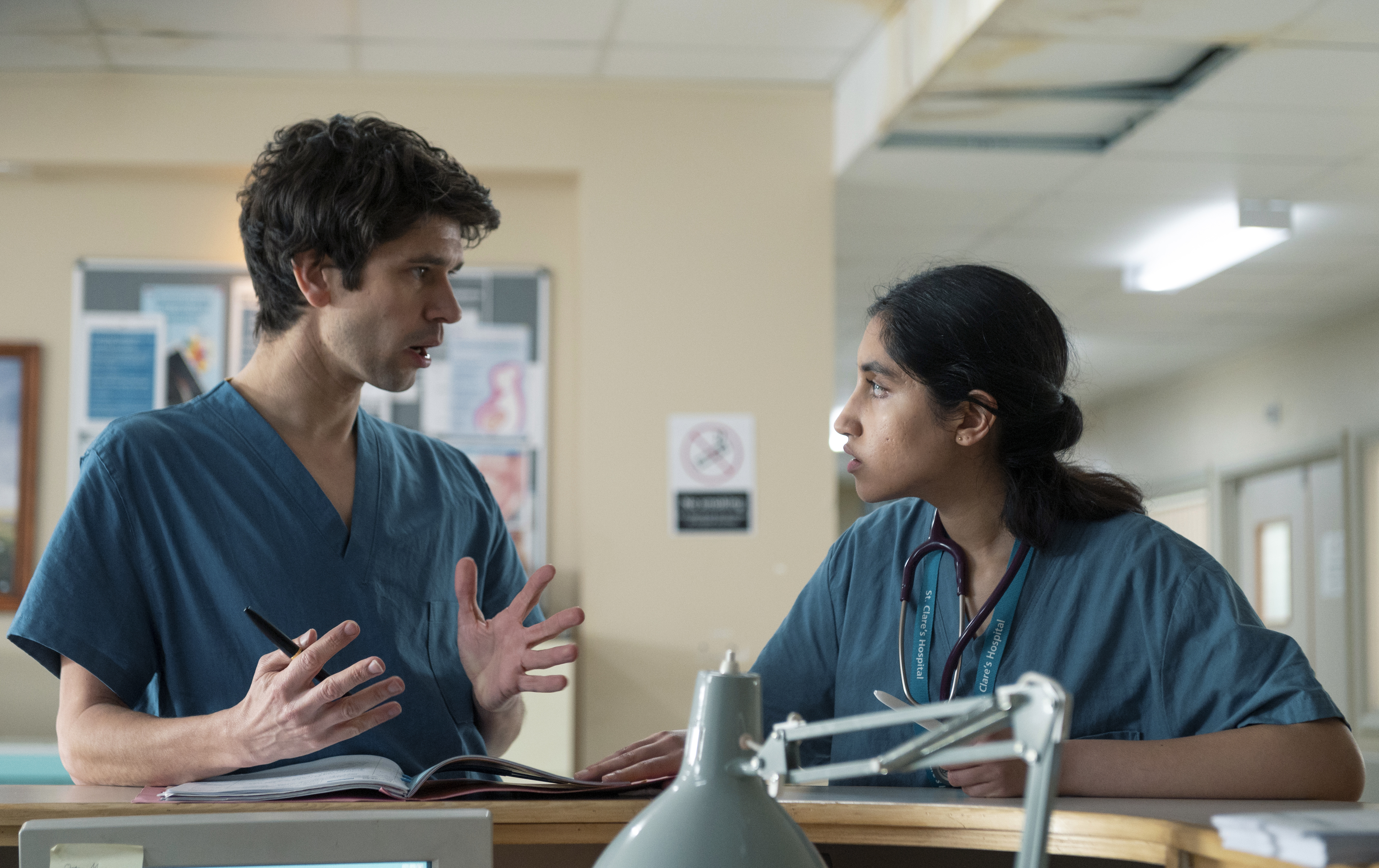
Set in 2006, This Is Going to Hurt stars Ben Whishaw as Adam Kay, a weary, sharp-tongued doctor working on a labour and delivery ward in a National Health Service hospital.
Adam is joined by his colleague Shruti Acharya, played by Ambika Mod, a junior doctor struggling to navigate the relentless demands of obstetrics and gynaecology. Together, they face exhausting shifts, difficult cases and the daily challenges of working in a healthcare system under considerable strain.
One of the show’s defining features is its use of the fourth wall. Adam regularly addresses the audience directly, sharing his dry observations and frustrations as events unfold around him. These moments provide much of the comedy, allowing viewers to see the absurdities of hospital life through his often cynical perspective.
But the humour is rarely comfortable for long.
Beneath the sarcastic remarks and chaotic situations lies a story about exhaustion, responsibility and the emotional toll of caring for vulnerable patients. The series does not shy away from the devastating consequences that can accompany medical mistakes, difficult births and the limitations of an overstretched system.
Why the Comedy Makes the Drama Hit Harder
Unlike many medical dramas that build towards a crisis in every episode, This Is Going to Hurt also spends time on the less glamorous aspects of hospital work.
Administrative burdens, workplace frustrations and seemingly mundane responsibilities become significant obstacles for doctors already struggling to keep up with their workload. The result is a portrait of healthcare in which the pressures do not disappear when an emergency ends.
The show’s dark humour makes these experiences easier to approach, but it also sharpens their impact. A scene that initially seems ridiculous can quickly become distressing, while a moment of apparent relief may give way to a much more serious development.
That tonal contrast is central to the series. It captures how medical professionals can be forced to move between humour, exhaustion and grief without having much time to process any of them.
For viewers who appreciate The Pitt for its unflinching portrayal of hospital pressures, this approach offers a different perspective on many of the same challenges.
Adam Kay’s Personal Life Adds Another Layer

The series is not solely concerned with the demands of medicine. Adam’s relationships and personal struggles form an important part of the story, giving the character a life beyond the hospital ward.
His attempts to become more open about his sexuality with his family introduce another source of tension, while his relationship with his partner, Harry, highlights the difficulties of maintaining a personal life when work consistently threatens to consume everything else.
These storylines help explain the emotional distance and sharp humour that Adam often uses to navigate his professional world.
Meanwhile, Shruti’s experiences provide another perspective on the pressures faced by doctors, particularly those still finding their footing in a demanding medical environment. Her storyline adds to the series’ exploration of what happens when the expectations placed on healthcare workers become increasingly difficult to bear.
Rather than presenting doctors as endlessly capable heroes, This Is Going to Hurt portrays them as complicated people who must confront their own vulnerabilities while trying to care for others.
How It Compares With The Pitt
The two series differ in their settings, storytelling styles and tone, but they share an interest in the realities behind the medical profession.
The Pitt places viewers in the middle of an unfolding emergency department shift, where time pressure and a steady stream of patients drive the narrative. This Is Going to Hurt takes a more personal approach, using Adam’s perspective and dark humour to explore the everyday pressures of working in the NHS.
Neither presents hospital work as a simple succession of dramatic victories. Both examine the strain placed on medical professionals and the difficult balance between their responsibilities to patients and their own lives.
Seven Episodes That Make Every Minute Count
One advantage of This Is Going to Hurt is its compact format. The miniseries consists of just seven episodes, giving its story a focused structure without requiring viewers to commit to multiple seasons.
Across those episodes, the series balances workplace comedy, personal drama and increasingly serious developments. Its shorter run also allows the consequences of earlier events to remain central rather than being lost amid an endless stream of new cases.
The result is an absorbing watch for anyone who enjoys character-driven television that can shift from funny to heartbreaking without losing sight of its central characters.
Is This Is Going to Hurt Worth Watching After The Pitt?
For viewers searching for a medical series with a sharper comic edge and a distinctly British perspective, This Is Going to Hurt offers a compelling alternative.
Ben Whishaw delivers a memorable performance as a doctor whose wit often masks his exhaustion, while Ambika Mod brings depth to Shruti’s struggle to survive the demands of hospital life. Together, their stories expose the personal cost of a profession built around caring for others.
The series may not replicate the minute-by-minute urgency of The Pitt, but it explores a similarly difficult question: what happens to the people expected to keep going when the system around them places them under constant pressure?
With its combination of biting humour, intimate character development and heartbreaking medical drama, This Is Going to Hurt is a strong choice for viewers who want their next hospital series to be as emotionally challenging as it is entertaining.