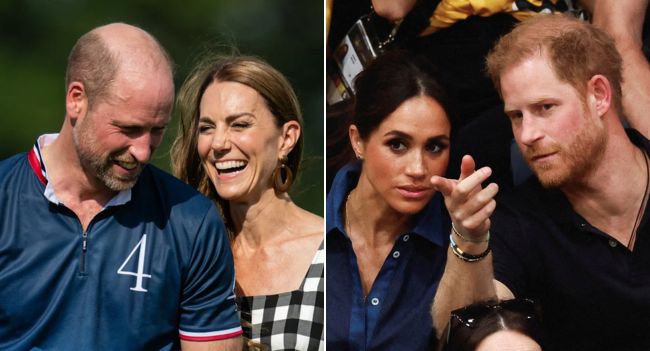
Prince William and Princess Kate are increasingly attracting the kind of celebrity attention once closely associated with Prince Harry and Meghan Markle, according to royal commentator Chris Riches. From William’s relaxed television appearances to Kate’s encounters with Hollywood stars, the Prince and Princess of Wales appear to be building a public image that combines approachability, confidence and royal tradition.
Riches argues that the couple have found a way to connect with famous figures without appearing to chase celebrity approval. Their growing visibility alongside well-known entertainers could mark a shift in the royal family’s relationship with the world of showbusiness — and, in the commentator’s view, may leave the Sussexes frustrated.
Before Harry and Meghan stepped away from their senior royal roles, the so-called “Fab Four” of William, Kate, Harry and Meghan appeared to occupy different positions in the celebrity stakes. The Sussexes often seemed particularly comfortable among Hollywood’s biggest names.
Their 2018 wedding at St George’s Chapel brought together an impressive guest list, including George Clooney and Amal Clooney, Idris Elba, David and Victoria Beckham, Serena Williams, Tom Hardy, Oprah Winfrey, Carey Mulligan, James Blunt and James Corden.
Riches questions whether some of those celebrity connections were as close as the wedding guest list suggested. He recalls reports that George and Amal Clooney had overlapping charitable interests with the couple but did not actually know Harry and Meghan personally when they attended the ceremony.

William is taking on Harry at his own game (Image: AP Photo/Martin Meissner)
Harry and Meghan’s Celebrity Connections Become Part of Their Public Image
The commentator suggests that cultivating relationships with famous people became a defining feature of the Sussexes’ approach to public relations.
After leaving royal duties, Meghan continued to invite celebrity guests into her lifestyle projects, including her Netflix series With Love, Meghan. The programme featured American personalities joining her for cooking, entertaining and conversations about friendship and everyday life.
Harry and Meghan also attracted enormous attention through their interview with Oprah Winfrey, in which they made a series of claims about their experiences within the Royal Family. Their decision to speak so publicly about their difficulties became one of the most significant moments in their post-royal media career.
Riches argues that the couple have continued to pursue a celebrity-focused public profile, particularly through their connections in the United States and their reported links to the Cotswolds.
However, he believes William and Kate have increasingly demonstrated that they can connect with famous people just as effectively, while maintaining a more understated approach.

Eugene Levy and the Prince of Wales having a drink (Image: PA)
William Shows His Relaxed Side on The Graham Norton Show
One recent example was William’s appearance on BBC’s The Graham Norton Show, where he discussed his Earthshot Prize and its environmental mission.
The Prince also gave viewers a glimpse of his personality beyond royal responsibilities. He spoke about supporting Premier League club Aston Villa, joked about friends hoping to secure free tickets to matches and revealed that he had secretly posted on online forums dedicated to the team.
William also joined in the laughter with fellow guests Cate Blanchett, Hannah Waddingham and Robert Irwin Jr when the conversation turned to a 12-foot crocodile named after him.
Another clip, in which he discussed his fantasy of becoming a DJ despite the expectations attached to his royal position, proved particularly popular online. It reportedly received 1.2 million likes on Instagram, with viewers responding positively to his humour and willingness to share something personal.
Riches contrasts this approach with Harry’s memoir, Spare, which explored the difficulties he associated with growing up as the younger son of the future king.
In the commentator’s interpretation, William has turned his own unfulfilled ambitions into an opportunity to pursue environmental work through Earthshot, while Harry has focused more heavily on the personal challenges of his royal upbringing.

Prince William, Catherine and Tom Cruise (Image: Getty Images for Warner Bros.)
Eugene Levy and Tom Cruise Add to William and Kate’s Hollywood Appeal
William’s appearance on The Graham Norton Show was not an isolated example of his growing connections with entertainment figures.
The Prince of Wales also made a cameo in Eugene Levy’s Apple TV+ travel series, The Reluctant Traveller. Levy was invited to Windsor Castle, where William personally showed him around the historic residence.
During their conversation, William spoke about what he described as “the hardest year I’ve ever had”, reflecting on the cancer battles faced by both his father, King Charles, and his wife, Catherine.
The meeting offered a more personal glimpse into the Prince’s life, while allowing viewers to see him interacting with a well-known entertainer in a relaxed setting.
Kate, meanwhile, has continued to make an impression on prominent visitors and celebrities attending events in Britain. Among those who have spoken warmly about the Prince and Princess of Wales is Hollywood star Tom Cruise.
After meeting the couple, Cruise described them as: “They’re just beautiful people – and fun!”
Their interactions with high-profile figures have helped reinforce an image of the Waleses as approachable and confident without appearing overly focused on celebrity connections.

Harry and Meghan moan on Oprah (Image: N/A)
Kevin Sinfield Offers Another Example of Quiet Leadership
Riches also points to the example of former rugby league star Sir Kevin Sinfield, whose charitable work and understated approach to public life reflect the kind of leadership he believes the Prince and Princess of Wales should embody.
Rather than making themselves the centre of attention, figures such as Sinfield demonstrate how influential people can use their public standing to support important causes.
The commentator suggests that this approach has helped shape the way William and Kate present themselves: focusing on meaningful work while allowing their personalities to emerge naturally during public appearances.
For Riches, the contrast with Harry and Meghan is becoming increasingly noticeable. He argues that William and Kate are winning the celebrity public-relations contest not by trying to imitate the Sussexes, but by developing their own style of engagement.
Whether that assessment reflects a genuine rivalry between the couples or simply different approaches to public life, the Waleses’ recent appearances have demonstrated their ability to attract attention from both audiences and entertainment stars.
And, as Riches concludes, William may have given his brother another reason to feel overshadowed — although the suggestion that Harry might respond by writing another book is clearly a pointed joke from the commentator.