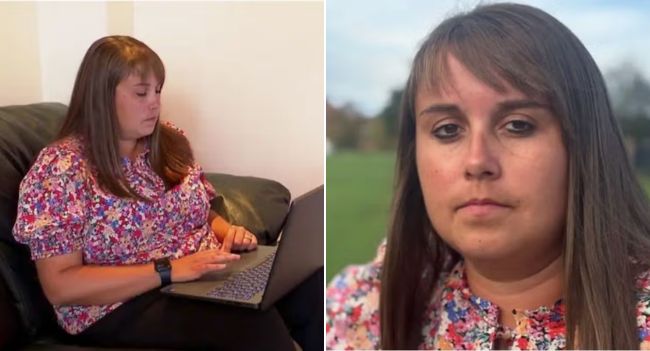
Becky Jones was just 21 and a mother of two when doctors told her she had a terminal brain tumour and only months to live. Terrified by the diagnosis, she agreed to years of intensive chemotherapy — only to discover more than a decade later that she had never had cancer at all.
Instead, Jones had been suffering from tumefactive demyelination, an inflammatory condition affecting the brain that could have been treated with steroids.
Now 34, Jones says the consequences of the misdiagnosis have shaped almost her entire adult life.
“I was told time and time again that without the chemotherapy I would die,” she told the BBC.
“I never had a brain tumour. I was misdiagnosed, and I’ve gone through all this treatment for the main part of my adult life, for no reason.”

View 5 Images
Becky Jones was just 21 when she was told she had a terminal brain tumour and months to live. She was misdiagnosed, which went unchecked for 11 years by the NHS
‘Horrendous’ Years of Treatment
Jones first became seriously ill in 2012 after experiencing severe migraines. She was diagnosed with a grade four glioblastoma — one of the most aggressive forms of brain cancer.
She alleges that Professor Ian Brown, a consultant at University Hospital Coventry who has since retired, told her she would need the chemotherapy drug temozolomide, commonly known as TMZ, for the rest of her life.
According to the account given by Jones, this continued for 11 years.
ult life, for no reason.”

View 5 Images
The misdiagnosis, by an experienced NHS cancer consultant, led to 11 years of unnecessary chemotherapy treatment, which left her constantly ill, ruining her career and leaving the young woman feeling constantly “on eggshells”.
The treatment brought a catalogue of debilitating side effects, including persistent nausea, stomach pain and overwhelming fatigue.
Her fear of infection also forced her to change the way she lived. She avoided the gym, stopped going out for meals with her partner and missed social and family events.
Her driving licence was also taken away and later restricted.
Jones says she was repeatedly warned that stopping chemotherapy could cost her life, leaving her convinced that the aggressive treatment was necessary to survive.
She was also told that she would not be able to have children. When she subsequently became pregnant, she and her partner were told their two children were “miracles”.

View 5 Images
GV of University Hospital (UHCW) in Coventry(Image: Coventry Live/Tristan Potter)
‘He’s Just Ruined My Life’
Jones became increasingly troubled by her diagnosis, particularly because she says she could not see evidence of a tumour on her scans.
She claims her concerns were dismissed by Professor Brown, who allegedly told her the tumour would not be “visible to the naked eye”.
She says she was eventually told her chemotherapy was ending in 2024, without being given a medical explanation beyond the fact that Professor Brown was retiring.
It was only after her lawyers sought independent opinions from neurosurgeons and radiologists that the diagnosis was fundamentally questioned.
In May 2025, Jones was told that she had never had cancer. Instead, the specialists concluded that she had tumefactive demyelination.
“He’s just ruined my life, essentially,” Jones said of the treatment she says she received unnecessarily.

View 5 Images
Now 34, she has recently learned she never had cancer at all but an inflammation of the brain that could have been treated with steroids.
More Than 40 Patients Raise Concerns
Jones is not the only former patient to raise allegations about treatment at University Hospitals Coventry and Warwickshire NHS Trust.
More than 40 patients are understood to have made similar allegations involving prolonged or unnecessary cancer treatment, and they have joined together to take legal action against the trust.
One patient who spoke to the BBC said she believed years of TMZ treatment had left her infertile.
Another alleged that they had undergone 100 unnecessary cycles of the drug and ultimately developed leukaemia.
The cases emerged after concerns about Professor Brown’s treatment of patients were announced in 2025.
A preliminary review by the Royal College of Physicians found significant problems in the cases examined. Of 20 cases reviewed, 15 were judged “unsatisfactory overall”.
The review suggested that patients had been given prolonged courses of TMZ with “little or no evidence of benefit”.
It also raised concerns about a lack of “clinical curiosity” and insufficient collaboration between medical professionals, potentially allowing diagnostic errors to continue.
The report described the failures as amounting to a “betrayal of patient trust” and questioned how oral chemotherapy had been repeatedly supplied to some patients for periods of 10 to 15 years.

View 5 Images
Sign for the NHS National Health Service(Image: Mike Kemp/In Pictures via Getty Images)
Trust Orders Independent Review
The RCP review did not name Professor Brown directly, instead referring to him as “Dr Y”.
Jones has accused the NHS trust of failing to provide sufficient oversight of his work.
“It’s almost like he was running his own show and no one was there to monitor what he was doing,” she said.
Fiona Tinsley, a partner at law firm Brabners, said Jones had originally been diagnosed with a grade four glioblastoma following her severe migraines in 2012.
The NHS trust has commissioned an independent review by the Royal College of Physicians following concerns about the use of extended adjuvant TMZ chemotherapy in patients with high-grade brain tumours, including glioblastomas, and the care provided by Professor Brown.
The trust said the full review is expected to be published later in the autumn.
A spokesman said measures had already been introduced based on initial feedback to strengthen oversight of TMZ prescriptions and improve patient safety.
All patients who were receiving TMZ when Professor Brown retired have been reviewed by senior clinicians, with individual care plans put in place where necessary.
The trust is also conducting a separate independent review of its “speak-up” procedures to ensure staff feel able to raise concerns.
The spokesman said the organisation would assess the full RCP findings once published and take any further appropriate action.
The trust said it could not comment on individual patients because of privacy obligations, but encouraged anyone concerned about their treatment or care to contact its patient relations service.
For Jones, however, the consequences of the original diagnosis cannot simply be undone. More than a decade of chemotherapy, restrictions and fear were built around a cancer diagnosis that independent specialists later concluded she never had.