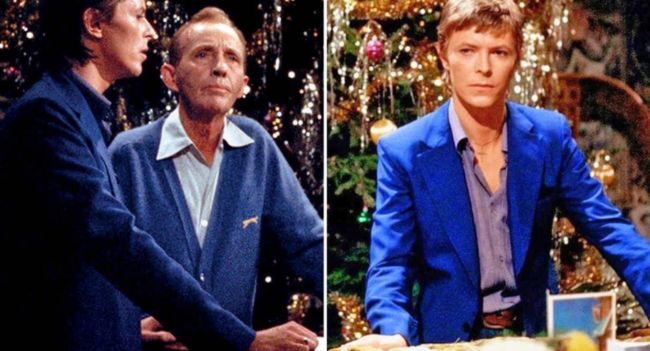
In 1977, two cultural titans from completely different eras—the legendary pop chameleon David Bowie and the classic crooner Bing Crosby—came together for a Christmas television special. The script called for a duet, but the resultant song, “Peace on Earth/Little Drummer Boy,” almost didn’t happen because of Bowie’s profound aversion to the original material. The result was a stunning, bizarre, and ultimately iconic musical performance.

Bowie’s Firm Refusal: “I Hate That Song”
Bowie was asked to appear on Bing Crosby’s Merrie Olde Christmas special. The original plan was for a duet of the traditional holiday song “Little Drummer Boy.” Despite the prestige of singing alongside a cultural institution like Crosby, Bowie adamantly refused. According to the show’s writers, when Bowie was presented with the arrangement, he was blunt, stating, “I hate that song. Is there something else I can sing?” He found the song too saccharine and far beneath his contemporary musical tastes. David Bowie refused to sing “Little Drummer Boy” with Bing Crosby.
The 75-Minute Creation of “Peace on Earth”
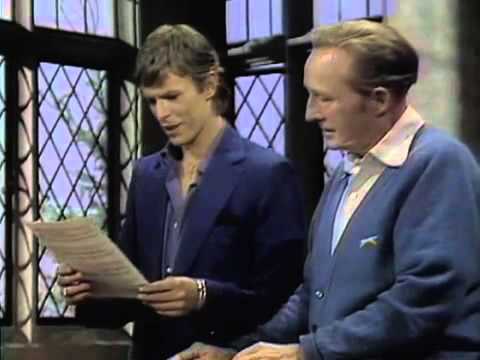
To save the historic segment and keep the coveted rock superstar, the show’s musical team—including composers Ian Fraser and Larry Grossman and scriptwriter Buz Kohan—were forced into a last-minute, high-stakes improvisation. They had to create an entirely new, contrasting piece of music that could be woven into the original carol. Working under immense pressure backstage, the musicians and writers crafted a counter-melody and lyrics that Bowie would accept. This new section was titled “Peace on Earth.” The composition of the new, more modern melodic line and lyrics took place in a frantic, creative burst of approximately 75 minutes, right before the recording was scheduled to begin. This forced a new melody to be written in 75 minutes.
The Result: A Classic for a Laughable Reason
The final duet featured Crosby singing the familiar, traditional melody of “Little Drummer Boy.” Bowie sang the new, more philosophical counterpoint, “Peace on Earth.” Their voices then merged in an unexpected harmony for the final verses, creating the most surreal Christmas duet ever. Bowie ultimately agreed to the compromise, not because he suddenly loved Christmas duets, but due to a famously touching, personal reason. David Bowie agreed to participate in the entire segment because his mother, Margaret Mary “Peggy” Jones, was a huge, lifelong fan of Bing Crosby. The juxtaposition of the aged, traditional Crosby and the avant-garde, glam-rock Bowie created a genuinely surreal moment in television history. The single, officially released in 1982, became a perennial Christmas hit, peaking at Number 3 on the UK Singles Chart and remaining Crosby’s best-selling single since his death. The duet is now hailed as one of the greatest, most unlikely holiday performances, a testament to quick-thinking composers and the enduring influence of a mother’s affection.