Lindsay Clancy Jurors Reveal How Close Trial Came to an Insanity Acquittal Before Mistrial

Judge William Sullivan declare a mistrial Friday after the jurors sent out its third note that they were at an impasse.NBC10 Boston
Three jurors from Lindsay Clancy’s closely watched murder trial are revealing what happened inside the deliberation room — including a moment when the foreperson believed the panel was finally on the verge of reaching a verdict.
According to the jurors, the breakthrough appeared to come when one male juror acknowledged that he had reasonable doubt. The foreperson said she was so convinced the impasse had ended that she began completing the verdict paperwork.
Then, she said, everything stopped.
Despite acknowledging reasonable doubt, the juror still would not agree to find Clancy not guilty by reason of insanity, according to the foreperson. The disagreement ultimately remained unresolved, and the seven days of deliberations ended without a unanimous verdict.
Foreperson Says She Had Already Started Filling Out the Forms

The Lindsay Clancy murder trial ended in a mistrial last week.NBC10 Boston
The 36-year-old former labor and delivery nurse was on trial over the January 24, 2023 deaths of her three children — Cora, 5, Dawson, 3, and Callan, 8 months — at the family’s home in Duxbury, Massachusetts.
Clancy did not dispute that she killed the children. Instead, the central question at trial was whether she was criminally responsible at the time.
Her defense argued that she was suffering from severe postpartum psychosis and was not legally responsible for her actions. Prosecutors maintained that Clancy understood what she was doing and deliberately planned the killings.
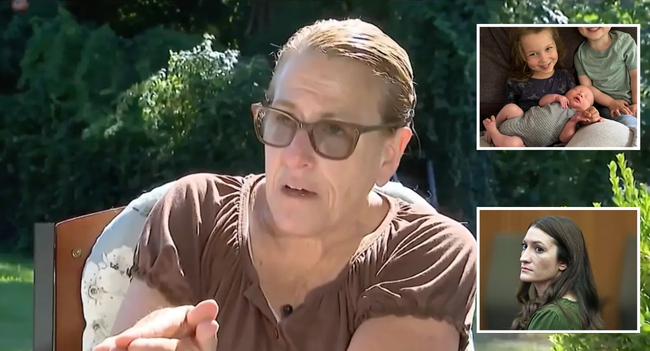
After the trial ended in a mistrial, three jurors — identified as Ronnie, Paula and Kelly — spoke publicly about their experience.
Ronnie, the jury foreperson and a retired fifth-grade special-needs teacher, described a dramatic moment during deliberations when she believed an agreement had finally been reached.
The holdout juror, she said, acknowledged having reasonable doubt after the panel reviewed video evidence.
Ronnie began filling out the three forms she was responsible for completing and signed each one.
But according to her account, the man then said he still would not agree that Clancy was not guilty by reason of insanity.
That reversal left the jury at an impasse.
Jurors Describe Growing Frustration Behind Closed Doors

The three women said the disagreement became increasingly frustrating as deliberations continued.
They accused the holdout juror of being unwilling to meaningfully engage with the other members of the panel or reconsider his interpretation of the evidence.
One juror recalled other panelists repeatedly getting out of their seats, walking around the room and returning to exhibits as they worked through the case. The holdout, she claimed, rarely did the same.
They also said the jury repeatedly reviewed Judge William Sullivan’s instructions explaining reasonable doubt.
The dispute became serious enough that the foreperson eventually alerted Sullivan, telling the court that one juror was refusing to follow the legal instructions concerning reasonable doubt.
Sullivan subsequently questioned the jurors individually under oath and repeated his instructions on the law.
A Trial Centered on Clancy’s Mental State

Lindsay Clancy, 32, allegedly strangled her daughter Cora, 5, and son Dawson, 3, to death and tried to suffocate her baby son inside their Duxbury, Massachusetts, home before jumping from a second-floor window on Tuesday.Facebook / Lindsay Marie Clancy
The central dispute throughout the case was not over what happened to the three children, but Clancy’s mental condition at the time.
Her defense presented her as a mother whose mental health had deteriorated dramatically in the months before the killings.
Jurors heard evidence about insomnia, anxiety, depression, suicidal thoughts and thoughts of harming her children. Defense attorney Kevin Reddington argued that Clancy had been suffering from severe postpartum psychosis and had experienced a command hallucination.
The defense also challenged the psychiatric care she received before the killings, arguing that medical providers failed to properly diagnose her condition. Reddington maintained that Clancy had been prescribed 13 psychiatric medications during the four months leading up to the deaths.
Prosecutors presented a fundamentally different interpretation.
They argued that Clancy’s behavior demonstrated planning and awareness rather than a psychotic break, and disputed the defense’s contention that she was legally insane at the time.
The competing accounts left jurors facing a difficult legal question: not simply whether Clancy had suffered from serious mental illness, but whether that illness meant she could not be held criminally responsible for killing her children.
Some Jurors Say Prosecution’s Approach Worked Against Its Case

Lindsay Clancy seated in court during her trial.via REUTERS
In their post-trial interview, the three jurors also criticized the prosecution’s approach to Clancy.
One described it as “very, very harsh,” saying she believed prosecutors failed to demonstrate that Clancy had previously been a bad mother.
The foreperson said the testimony and evidence instead convinced her that Clancy had loved her children.
For those jurors, that evidence contributed to their belief that something profound had happened to Clancy’s mental state.
The women offered a more favorable assessment of defense attorney Kevin Reddington, describing different aspects of his courtroom style as entertaining, compassionate, funny and at times arrogant.
One juror specifically pointed to the compassion he displayed toward Clancy.
Roughly 38 Hours of Deliberations End Without a Verdict
The jury of nine women and three men deliberated for approximately 38 hours over seven days.
They first informed Sullivan that they were deadlocked on Tuesday, September 1. A second deadlock notice followed Wednesday, and the dispute over the holdout juror became a major issue as deliberations continued.
By Thursday, the foreperson had raised concerns that one juror was acknowledging reasonable doubt while still refusing to agree to the insanity verdict.
The defense sought to have the juror removed or subjected to further questioning. Sullivan declined to remove him, instead reinstructing the entire panel on reasonable doubt.
On Friday, September 4, the jury sent its third notice saying it could not reach a unanimous decision.
Sullivan concluded that the panel was at an impasse and declared a mistrial after an emergency effort by the defense to stop that outcome failed.
What Happens to Lindsay Clancy Now?
The mistrial did not acquit or convict Clancy.
She remains charged, and prosecutors can seek another trial with a new jury.
Judge Sullivan has scheduled a hearing for September 29. Reddington is expected to seek a finding of not guilty from the judge, although legal experts have described such an outcome as unlikely. The hearing could also provide the first clear indication of whether prosecutors intend to retry the case.
For now, the case remains legally unresolved.
But the accounts from the three jurors have revealed just how narrow the divide inside the deliberation room may have become. After weeks of testimony and approximately 38 hours of deliberations, the foreperson says she had reached the point of signing the verdict forms.
One juror’s refusal to agree meant those forms were never completed — and one of the most closely watched trials in Massachusetts ended without a verdict.