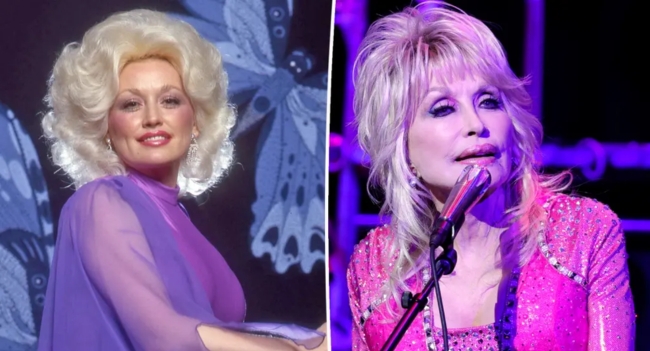
Dolly Parton Dies at 80 After Private Battle With Cancer, Leaving Behind a Monumental Music and Philanthropic Legacy


Dolly Parton, the country music trailblazer whose songs, unmistakable voice and generosity made her one of America’s most beloved cultural figures, died on Aug. 25, 2026, at the age of 80 after a brief battle with cancer.
Parton died at Vanderbilt-Ingram Cancer Center in Nashville surrounded by loved ones, according to a statement from her representatives. Her team did not disclose the specific type of cancer she had been facing. The circumstances of her death have also been independently reported by PEOPLE and the Associated Press.
The revelation provided new context for the health difficulties Parton had spoken about in the months and days before her death. Although she had publicly acknowledged medical problems, she had not previously announced a cancer diagnosis.
A private illness behind months of health concerns


Parton’s representatives said she had faced a brief battle with cancer before her death. In their tribute, they emphasized not only her extraordinary entertainment career but also the generosity that became inseparable from her public legacy.
Among the causes highlighted was the Imagination Library, the literacy program Parton launched to provide free books to children. Her representatives also pointed to her support for medical research, including funding that contributed to vaccine research.
The cancer diagnosis had remained private even as concerns about Parton’s health became increasingly visible.
Earlier in 2026, she had explained that her immune and digestive systems had been affected by health problems and that treatments were preventing her from returning to full stage performance. She nevertheless told supporters that she was responding well to treatment and improving.
Five days before her death, Parton was reportedly admitted to Vanderbilt University Medical Center with kidney and autoimmune issues.
Those problems followed other disruptions to her schedule. She had canceled a planned Dollywood appearance after being advised by her doctor not to travel.
Yet Parton continued working and communicating with fans.
Her final public appearance came just days before her death


On Aug. 19, six days before she died, Parton appeared virtually at the ACM Honors to accept the ACM Poet’s Award.
During the appearance, she reflected on the importance of songwriting to her identity and career. Despite the health difficulties she was experiencing, she appeared upbeat during what became her final public appearance.
Two days later, in an interview published Aug. 21, Parton spoke candidly about the physical struggles she had experienced.
She explained that some of her own health concerns had gone unattended while she was focused on caring for her husband, Carl Thomas Dean. Dean died in Nashville on March 3, 2025, at age 82 after nearly six decades of marriage to Parton.
His death marked an enormously difficult period in Parton’s personal life. The pair had married in 1966, but Dean famously preferred privacy while his wife became one of the most recognizable entertainers in the world.
Bryan Seaver announces the news Parton had prepared him to deliver
Parton’s nephew and longtime head of security, Bryan Seaver, announced her death on behalf of the Parton and Owens families.
Seaver said Parton had asked him years earlier to be the person who would eventually make the announcement, although he had struggled to imagine the moment actually arriving.
His role carried particular significance because security for Parton had long been a family responsibility. Seaver served as her head of security for more than two decades, following his father, Larry, in the position.
Seaver also revealed that Parton had discussed how she wanted to be laid to rest. Her request was characteristically personal: after a lifetime associated with elaborate rhinestones and glamorous costumes, she wanted comfort in the end, asking for what she described as a “beautiful bed of plush cotton.”
Parton had previously spoken about music she wanted associated with her funeral as well. She identified the hymn “If We Never Meet Again” as the song she wanted sung.
From rural Tennessee to an American cultural institution
Parton’s death closes a career that stretched across country music, pop culture, film, television, business and philanthropy.
Born Jan. 19, 1946, in Tennessee, she grew up in a large family with limited financial means. Music became part of her life early, and she performed at the Grand Ole Opry while still a teenager.
Her rise accelerated through her professional partnership with Porter Wagoner before she established herself as a solo star.
Songs including “Jolene,” “Coat of Many Colors,” “9 to 5” and “I Will Always Love You” eventually became inseparable from her career. “I Will Always Love You,” written by Parton, reached another generation when Whitney Houston recorded a hugely successful version for The Bodyguard.
Across decades of recording, Parton accumulated 55 Grammy nominations and became one of country music’s most influential songwriters and performers.
Her ambitions extended well beyond recording studios.
She became a successful actress, starring alongside Jane Fonda and Lily Tomlin in 9 to 5 and later appearing in Steel Magnolias with an ensemble that included Sally Field and Julia Roberts.
She also built an entertainment and business presence closely associated with her Tennessee roots, most famously through Dollywood.
The legacy that extended far beyond entertainment
For many admirers, Parton’s philanthropy became as important as her celebrity.
Her Imagination Library grew from a literacy initiative in Tennessee into an enormous international book-gifting program. The project was inspired partly by Parton’s father, who could not read or write.
She also contributed to disaster-relief efforts and supported medical research, while maintaining a public persona that often crossed political and generational divisions.
That combination — superstar entertainer and unusually accessible philanthropist — helped make Parton a rare figure whose appeal endured across more than half a century.
Even as health problems increasingly limited her ability to perform, she remained focused on future creative projects.
Her death therefore came at a moment when Parton had not presented herself as someone preparing to disappear from public life. Instead, she continued discussing songwriting, work and the projects she still hoped to pursue.
Tributes follow the death of a Steel Magnolias favorite
Parton’s death prompted tributes from across the entertainment world.
Her Steel Magnolias colleagues were among those remembering her. Julia Roberts described knowing Parton as something she treasured, while Sally Field and other former co-stars also honored her following the announcement.
Longtime friend and fellow country star Reba McEntire also reflected on their decades-long relationship, remembering Parton’s generosity, creativity and singular personality.
The response reflected the unusual breadth of Parton’s career. To some, she was the songwriter behind standards that had become part of American music. To others, she was an actress, businesswoman, philanthropist or the woman responsible for millions of books arriving in children’s homes.
Her representatives’ announcement finally clarified the illness she had kept private: Parton had been living with cancer during the final period of her life.
What remains undisclosed is the specific form of cancer she faced.
Parton died surrounded by loved ones in Nashville, the city at the center of the career she began pursuing as a teenager and transformed into one of the most enduring legacies in country music history.