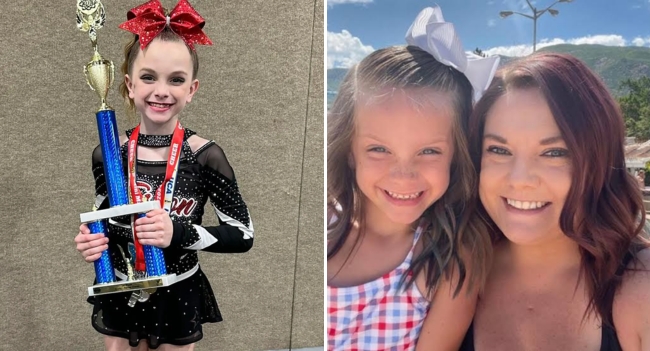
Toxicology Reports Reveal New Details in Deaths of Utah Mother and 11-Year-Old Daughter at Las Vegas Hotel

Tawnia Hope McGeehan, 34, of Utah, killed herself after murdering her daughter Addilyn Smith, 11, at the Rio Hotel and Casino in Las Vegas on Feb. 15, 2026.Wasatch Lawn Memorial Park and Mortuary
Newly released coroner’s reports have provided a clearer account of the deaths of a Utah mother and her 11-year-old daughter inside a Las Vegas hotel room, revealing that both had multiple medications in their systems and that several handwritten notes were left behind.
Tawnia Hope McGeehan, 34, and her daughter, Addilyn “Addi” Smith, were discovered at the Rio Hotel and Casino on February 15, 2026. Authorities concluded that McGeehan fatally shot Addilyn before taking her own life.
The Clark County Office of the Coroner/Medical Examiner ruled Addilyn’s death a homicide and McGeehan’s a suicide. Gunshot wounds were listed as the cause of death for both; the medications detected during toxicology testing were not identified as the cause.
Welfare check requested after missed competition

Tawnia Hope McGeehan, 34, of Utah, killed herself after murdering her daughter Addilyn Smith, 11, at the Rio Hotel and Casino in Las Vegas.Facebook/Tawnia McGeehan
McGeehan and Addilyn had traveled from Utah to Las Vegas on February 13 so Addilyn could compete with Utah Xtreme Cheer.
Concern grew when the pair failed to appear at the competition and relatives and team members could not reach them. Addilyn’s father, Brad Smith, contacted Las Vegas police on February 15 and requested a welfare check.
Officers initially received no response at the hotel room. According to the coroner’s report, they did not have sufficient grounds to force entry at that stage.
Police received another call later that afternoon. Hotel security subsequently entered the room and discovered McGeehan and Addilyn.
Near the entrance, investigators found a handwritten warning taped to a chair that partially blocked the doorway. The message instructed anyone entering to call 911 and stated that two bodies, including that of an 11-year-old, were inside.
Authorities said several additional notes were recovered from the room.
Multiple medications detected

McGeehan gave her daughter Addilyn Smith a cocktail of prescription medications before shooting the girl and herself in a grisly murder-suicide.Facebook/Tawnia McGeehan
The toxicology results showed that Addilyn had quetiapine, gabapentin, lorazepam and diphenhydramine in her system.
Quetiapine is an antipsychotic medication, while gabapentin is commonly used to treat seizures and certain forms of nerve pain. Lorazepam is prescribed for anxiety and sedation, and diphenhydramine is an antihistamine. Caffeine was also presumptively detected.
McGeehan’s results listed the same medications, along with other substances. These included eszopiclone or zopiclone, which are sedatives used for insomnia; citalopram or escitalopram, medications used to treat depression and anxiety; cannabinoids; and desmethyl loperamide, a metabolite associated with the anti-diarrheal drug loperamide.
Investigators recovered several prescription bottles bearing McGeehan’s name from the hotel room. They also found an opened package of THC gummies, broken or empty gabapentin capsules and a clear cup containing white residue.
The available reports did not identify any prescription medication belonging to Addilyn at the scene.
Notes described Addilyn as “very medicated”
One of McGeehan’s notes stated that Addilyn had been “very medicated” before her death and had slept beside her mother.
Another passage explained that Addilyn’s phone had intentionally been left open so that her photographs and videos would remain accessible.
Although the notes provided details about the circumstances inside the room, the coroner’s report did not identify a definitive motive expressed in them.
First responders found McGeehan and Addilyn lying beside each other on one of the room’s beds. A semiautomatic handgun was recovered from McGeehan’s chest.
Report references mental-health history and custody dispute
The investigative documents also described McGeehan’s history of severe depression and previous suicidal thoughts.
Family members told investigators that she had previously received prescription treatment for depression. They were reportedly aware of past suicidal ideation but said they did not know of any previous attempts. McGeehan’s mother was also described as being unaware that her daughter possessed a firearm.
The report stated that McGeehan had been severely depressed over relationship breakups and an ongoing custody dispute with her former husband. It did not establish those issues as a definitive motive.
McGeehan and Brad Smith divorced after beginning proceedings in 2015, and court records document years of disputes involving custody of Addilyn. The arrangements reportedly changed several times, with joint custody restored by 2024.
Cheer community mourns Addilyn
Addilyn was a member of Xtreme Cheer in Utah. Following her death, the organization remembered her as a deeply loved part of its community.
“No words do the situation justice,” the team said in a statement. “She was so beyond loved, and she will always be a part of the UXC family.”
The newly released toxicology findings add important detail to the timeline inside the hotel room, but they do not change the coroner’s central conclusions: Addilyn’s death was ruled a homicide, McGeehan’s death was ruled a suicide, and the fatal injuries—not the medications—were recorded as the causes of death.
If you or someone you know is experiencing suicidal thoughts or a mental-health crisis in the United States, call or text the 988 Suicide & Crisis Lifeline. Support is available 24 hours a day.