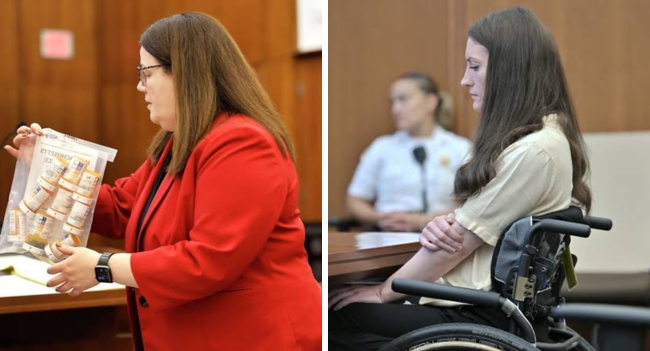
Prosecution Continues Presenting Evidence in Lindsay Clancy Trial After Emotional Opening Week
The prosecution is expected to continue presenting its case in the Lindsay Clancy murder trial as the legal proceedings move into another important phase. Prosecutors are preparing to introduce additional testimony and evidence in an effort to convince the jury that Clancy was mentally capable of understanding her actions on the day her three children died.
The trial’s first week ended after an emotionally difficult series of hearings, including testimony from witnesses and a visit by the judge, jurors and attorneys to locations connected to the case. The court proceedings have focused heavily on the events surrounding January 24, 2023, the day prosecutors allege Clancy killed her three young children inside the family’s home in Duxbury, Massachusetts.
Before the jury visited the former Clancy family residence, they followed the route that Lindsay Clancy’s husband, Patrick Clancy, took after leaving the house that day. The journey included stops at a CVS pharmacy and a restaurant in Plymouth, locations where Patrick had been sent while his wife remained at home with their children.
The visit was intended to help jurors better understand the timeline of events and the physical locations connected to the case. By seeing the places involved firsthand, the jury was able to gain a clearer picture of the movements and circumstances surrounding the tragedy.
Lindsay Clancy faces charges related to the deaths of her three children: five-year-old Cora, three-year-old Dawson and eight-month-old Callan. Prosecutors allege that she strangled the children while Patrick was away completing errands.
The case has attracted significant public attention because the central issue is not only what happened but also Clancy’s mental state at the time of the deaths. The prosecution and defence have presented completely different interpretations of her psychological condition.
The defence team is expected to argue that Clancy was suffering from severe postpartum psychosis, a serious mental health condition that can occur after childbirth. They are expected to claim that she was not legally responsible for her actions because she was experiencing a mental illness that affected her ability to understand what she was doing.
Meanwhile, prosecutors are expected to challenge that argument. Their case will focus on proving that Clancy was legally sane on January 24, 2023, and that she understood the consequences of her actions.
Retired District Court Judge Jim Barretto explained that expert psychiatric testimony could become one of the most important elements of the trial. He noted that both sides are expected to present specialists who will offer opposing opinions about Clancy’s mental condition.
According to Barretto, the defence will likely bring in experts who support the claim that Clancy experienced postpartum psychosis and should not be held criminally responsible. The prosecution, however, is expected to present experts who disagree with that conclusion and argue that she remained legally accountable.
Because the case depends heavily on questions of mental responsibility, psychiatric experts may play a decisive role in helping the jury determine the outcome.
The prosecution carries the responsibility of proving that Clancy was sane when she allegedly killed her children. Under Massachusetts law, prosecutors must establish that she had the required criminal intent.
The Commonwealth is expected to rely on one of two legal theories: that the killings were committed with premeditation or that they involved extreme atrocity or cruelty.
Premeditation would require prosecutors to show that Clancy planned the actions before carrying them out. The alternative theory of extreme atrocity or cruelty focuses on the nature and circumstances of the alleged crimes.
The jury will ultimately have to evaluate the evidence presented by both sides and decide whether prosecutors have proven their case beyond a reasonable doubt.
The emotional nature of the trial has been evident from the beginning. Testimony involving the family home, emergency responders and the events of that day has provided jurors with a detailed look at the circumstances surrounding the deaths.
The jury’s visit to the former family residence represented one of the most significant moments of the opening week. Such visits are uncommon but can be important in cases where the location itself plays a major role in understanding the evidence.
As the prosecution continues presenting its arguments, jurors are expected to hear more testimony from witnesses and experts who can provide insight into Clancy’s actions and mental state.
The defence will later have the opportunity to present its own evidence and witnesses. Their argument will focus on demonstrating that Clancy’s psychological condition prevented her from being criminally responsible.
The outcome of the trial may depend largely on how jurors interpret the competing medical opinions. Cases involving mental health defences often require jurors to carefully consider expert testimony, medical history and the circumstances surrounding the alleged crime.
The proceedings are expected to continue for several weeks as both sides build their arguments. Prosecutors will attempt to prove that Clancy understood her actions, while the defence will seek to show that she was experiencing a severe psychiatric episode.
For the jury, the challenge will be separating emotion from legal responsibility while carefully examining the evidence presented in court.
The trial remains focused on one central question: whether Lindsay Clancy was legally sane and accountable for the deaths of her children on January 24, 2023. The testimony and evidence presented in the coming weeks will play a crucial role in determining the final verdict.