Family of 22-Year-Old College Graduate Heads Toward Trial Over Fatal Injury After Six Flags X2 Ride

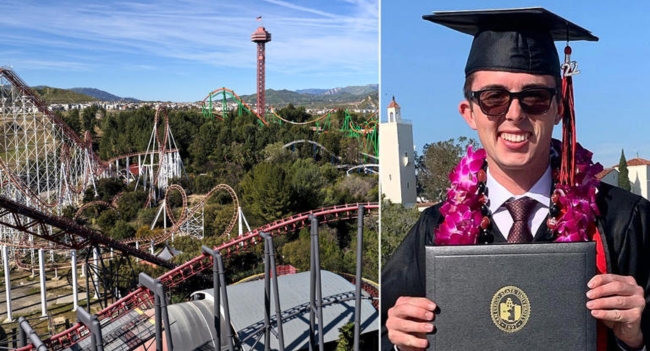
An aerial view of roller coasters at Six Flags Magic Mountain. Christopher Hawley, 22, reportedly suffered fatal injuries following a ride on the X2 roller coaster. Getty Images© Christopher Hawley/Facebook
A family’s long-running effort to hold Six Flags Magic Mountain accountable for the death of their 22-year-old son is moving toward a jury trial, more than four years after he collapsed shortly after riding one of the California park’s most intense roller coasters.
Christopher Hawley, a recent San Diego State University graduate, died on June 24, 2022, one day after riding X2 at Six Flags Magic Mountain in Valencia. His parents, Anne and William Hawley, allege that the coaster subjected their son to forces that caused catastrophic head and brain injuries.
The Los Angeles County Medical Examiner determined that Christopher died from blunt head trauma and classified his death as an accident associated with a park ride. His family’s wrongful-death lawsuit alleges negligence, a defective design and inadequate warnings about the attraction’s potential risks. Six Flags Magic Mountain has denied the allegations in the litigation.
A Family Trip Took a Sudden Turn

The X2 ride, which allegedly caused Christopher Hawley to sustain fatal head trauma, features seats that rotate 360 degrees. Getty Images© Getty Images
Christopher visited Magic Mountain on June 23, 2022, with his younger brother, Alex, and a cousin.
According to the family’s lawsuit, Christopher was healthy when the group arrived at the park. They later boarded X2, an extreme coaster whose seats rotate independently as the train moves through the course.
The complaint portrays the ride as exceptionally rough and alleges that riders were repeatedly thrown around in their seats. As X2 approached the end of its run, the lawsuit says there was a sudden and forceful jolt.
Alex later described feeling his head move forward before being driven backward against the headrest.
After leaving the attraction, Christopher’s condition quickly became alarming. His brother recalled that his face appeared unusually red and that something seemed wrong.
Christopher reportedly began walking unsteadily, used a railing for support and complained of pain in his head. He then collapsed and lost consciousness.
Paramedics transported him to a nearby hospital, where doctors discovered severe brain trauma. He never regained consciousness and died the following day.
Christopher had recently graduated from San Diego State University and was only weeks away from turning 23. His family has said he had no known health problems that would explain what happened.
Medical Examiner Ruled Death an Accidentư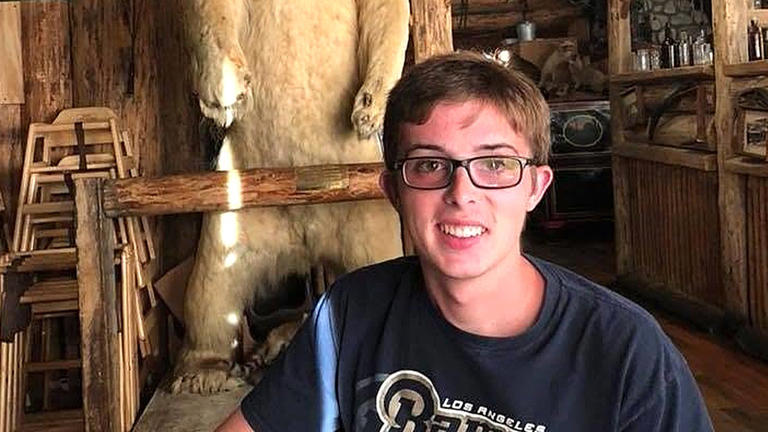
Christopher Hawley was a recent San Diego State University graduate when he died following a roller coaster ride. Fox News© Fox News
The medical findings became central to the family’s case.
According to court filings and reporting on the lawsuit, the Los Angeles County Medical Examiner listed blunt head trauma as Christopher’s cause of death and characterized the circumstances as a park ride accident. The lawsuit says medical imaging revealed a catastrophic subdural hematoma.
Christopher’s father, William, has also described being told by a surgeon that the forces involved in his son’s injuries were comparable to the type of violent movement associated with shaken baby syndrome.
The Hawleys argue that the timing of Christopher’s symptoms — appearing immediately after he left X2 — supports their claim that the fatal injury occurred during the ride.
Their attorneys maintain that Christopher was healthy beforehand and that the severity and sudden onset of his condition point directly to what happened on the coaster.
Lawsuit Targets Six Flags and the Coaster’s Design
Anne and William Hawley filed a wrongful-death lawsuit against Six Flags Magic Mountain and other defendants connected to X2.
The case alleges negligence, product and design defects, and failure to adequately warn visitors about potential dangers.
The family contends that the forces generated during the ride were capable of causing serious injuries and that visitors were not sufficiently informed about those risks.
Six Flags Magic Mountain has denied the family’s allegations. The company has also declined to discuss the substance of the pending litigation publicly.
S&S Worldwide, which supplied replacement trains for X2, is also involved in the litigation. In August 2026, attorneys for S&S asked a judge to approve a confidential settlement with Christopher’s parents.
In those court papers, S&S disputed responsibility and argued that evidence could lead a jury to conclude that the company was either not liable or responsible for only part of the alleged damages. Its attorneys also maintained that testing had determined the acceleration forces produced by X2 were not hazardous and that the trains operated as designed.
A hearing concerning that proposed settlement is scheduled for Oct. 22.
The portion of the lawsuit involving Magic Mountain, meanwhile, is scheduled for a jury trial beginning Sept. 8, according to the latest court-related reporting.
X2 Closed After Separate 2026 Incident
The litigation has attracted renewed attention because X2 has also been closed following an unrelated incident this summer.
Emergency crews were called to Six Flags Magic Mountain on July 5, 2026, after receiving a report involving a person who was reportedly unconscious. Los Angeles County Fire Department officials transported the individual to a hospital, although officials could not confirm whether the person had actually lost consciousness aboard the coaster.
Six Flags subsequently closed X2 on July 12.
California’s Division of Occupational Safety and Health, Cal/OSHA, opened an inspection into the reported July 5 incident. As of mid-August, the investigation remained ongoing and X2 had not reopened.
That investigation is separate from Christopher Hawley’s death and should not be interpreted as evidence supporting the allegations in his family’s lawsuit.
An Extreme Ride Known for an Unusual Design
X2 has long been marketed as one of Magic Mountain’s most intense attractions.
Unlike a conventional roller coaster, its seats can rotate 360 degrees independently of the train, creating additional movement as riders travel through drops and inversions. The attraction reaches speeds of approximately 76 mph.
For Christopher’s family, however, the case is ultimately about far more than the mechanics of a roller coaster.
They are seeking answers about how a healthy 22-year-old could spend a day at an amusement park with his brother and cousin, step off a ride suffering from catastrophic injuries, and die less than a day later.
More than four years after Christopher’s death, the approaching trial could determine whether jurors agree with the Hawley family’s allegation that X2 and those responsible for the attraction played a legal role in the fatal injuries — or accept the defendants’ arguments disputing liability.