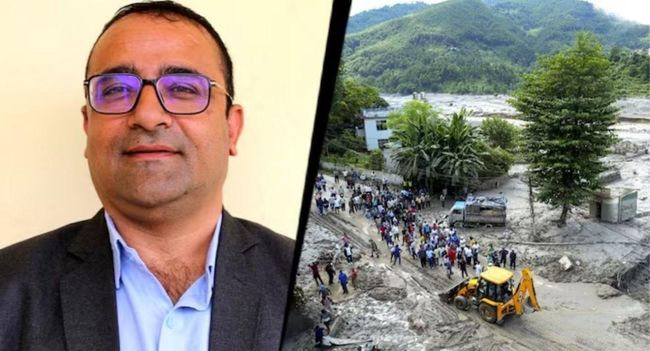
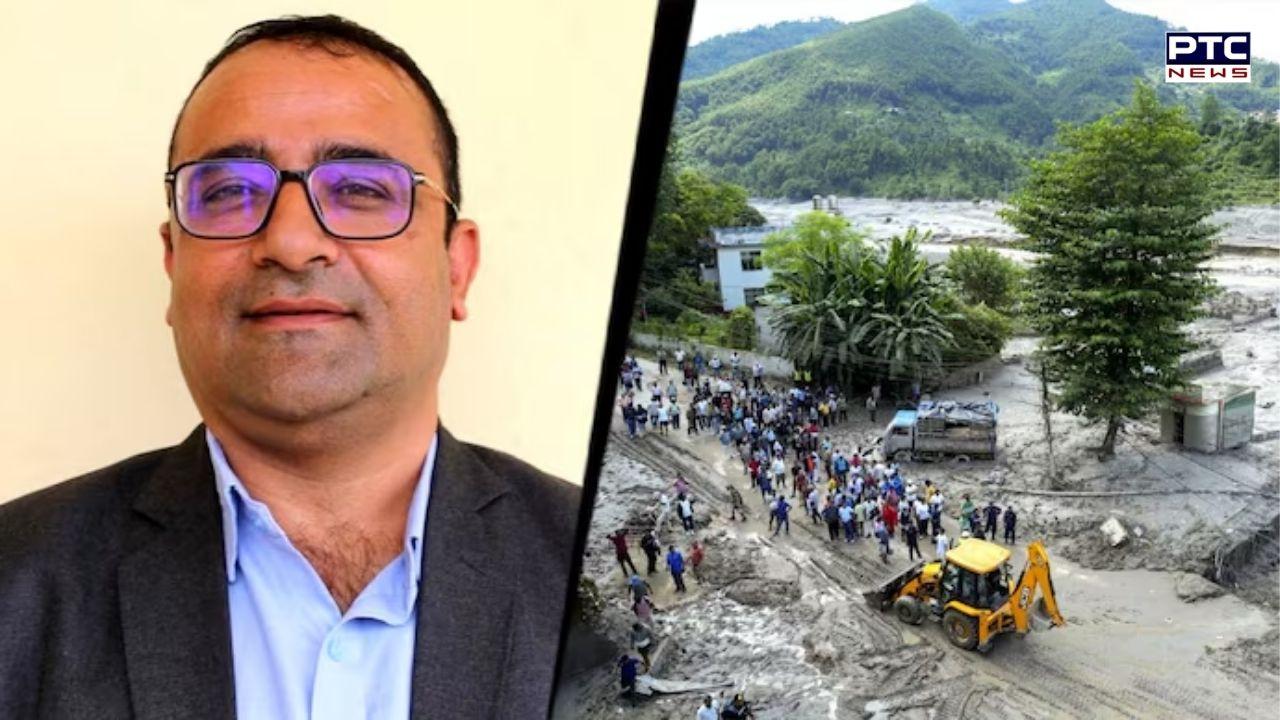
How a Nepali Teacher’s Split-Second Decision Helped Save 1,643 Students

When a warning reached Rajendra Dawadi at around 9:20 a.m. on Wednesday, the principal of Tribhuvan Trishuli Secondary School in Nepal’s Trishuli Valley had only minutes to respond.
Inside and around the school were 1,643 students and staff. Outside, a devastating flash flood was moving through the mountainous region, turning rivers into powerful channels carrying water, rocks, ice, mud and debris.
Dawadi, a 47-year-old English teacher, was suddenly faced with the responsibility of getting everyone to safety as conditions deteriorated.
A Race Against the Rising Water
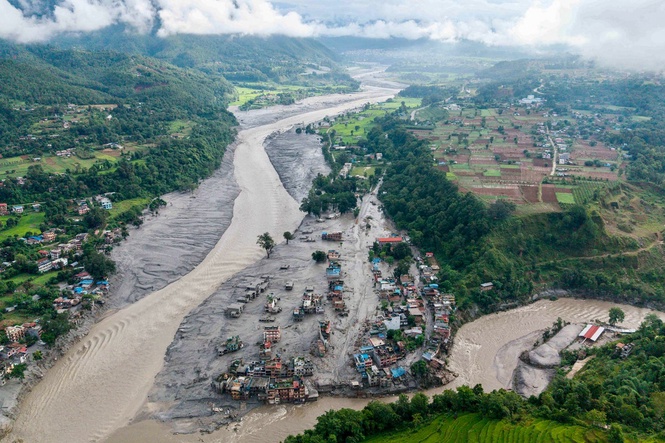
The concrete school building stood about 60 metres above the river and, at first, Dawadi believed the site was safe. The school was positioned at roughly the same elevation as a steel bridge connecting the village with the eastern bank, according to The Times.
But the situation changed rapidly as the water level began to rise.
With little time to assess what was happening, Dawadi acted to protect the children and staff under his care. His quick response has since earned widespread praise from residents, who credit him with helping save the students from the disaster.
Yet Dawadi himself rejects the description of hero.
“What else could I do?” he said while looking over what remained of the muddy school grounds.
A Catastrophic Flash Flood
The flood was reportedly triggered by the collapse of a massive section of ice and rock from Langtang Lirung peak.
The material is believed to have fallen roughly 1,200 metres into the steep upper section of the Lhende Khola river, close to the border with Tibet. The resulting surge swept through river systems across the region.
Daniel Shugar, a geomorphologist at the University of Calgary, estimated that the collapsed mass covered almost 50 acres — an area comparable in size to Green Park in London.
The disaster caused widespread destruction, damaging or destroying roads, bridges, buildings and power stations.
More than 750 people were reported killed in Nepal and another 16 in Tibet. Around 2,498 people remain missing in Nepal, while 546 others are still unaccounted for in Tibet’s Gyirong County, according to the latest figures cited in the report.
A Region Familiar With Disaster

The scale of the devastation has once again exposed the vulnerability of communities in Nepal’s mountainous regions.
The area has endured catastrophic natural disasters before. In April 2015, a magnitude 7.8 earthquake struck South Asia, killing 8,962 people across the region.
That earthquake also triggered an avalanche that buried all 300 residents of Langtang, a settlement in Rasuwa district.
Rasuwa has once again been among the areas severely affected by the latest flooding.
Against that backdrop, Dawadi’s actions at Tribhuvan Trishuli Secondary School have become one of the human stories emerging from a disaster marked by enormous loss.
For the students and families who escaped the flood, his decision-making in those crucial minutes may be remembered long after the muddy waters recede.