Two Children Hospitalised After Falling Seriously Ill Following Swims Near Christchurch Harbour

Two families have spoken out after their young children were hospitalised with bacterial infections following swimming or paddleboarding in waters around Christchurch Harbour in Dorset.
Ivy Foster, 3, became seriously unwell after paddleboarding with her mother at Christchurch Harbour in Bournemouth, while 8-year-old Keeva Hollow was taken to hospital after swimming near Avon Beach, close to the harbour entrance.
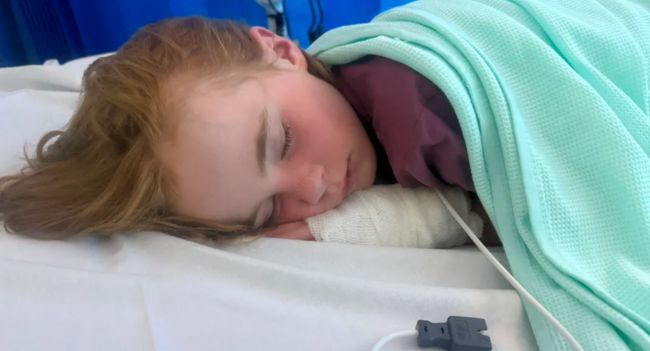
Both children developed high fevers and gastrointestinal symptoms after being in the water. Their parents have now shared photographs from their hospital stays as part of growing concerns about pollution levels in and around Christchurch Harbour.
Ivy Foster, 3, Became Seriously Ill

Ivy fell ill with an E. coli infection after paddleboarding with her mother at Christchurch Harbour.
Her condition was particularly concerning because the infection proved resistant to several courses of antibiotics. She suffered vomiting, diarrhoea and severe abdominal pain, while her temperature reached 39.2C.
Her family became so worried about her condition that they feared she might die.
Ivy was initially treated at Poole Hospital and discharged after a short stay. But her health later deteriorated, and she was admitted to hospital again on August 21.
During the second admission, which lasted four days, she was given fluids through an IV drip and another course of antibiotics.
Doctors eventually became confident that the latest treatment was working. Ivy was discharged on August 25 and has since been monitored at home.
Her mother, Kimberley Foster, 34, a hairdresser who lives in Mudeford, described the experience as frightening.
She said the family had been paddleboarding at Mudeford Quay when the tide went out and they noticed a “horrendous smell”. They got out of the water because they found the conditions so unpleasant.
A few days later, Ivy became seriously unwell.
Kimberley said doctors believed the water was the likely source of the infection. According to her, Ivy was initially given courses of Celalexan, co-Amoxiclav and Trimethopim Amoxicillin, but the E. coli was resistant to all of them.
Before Ivy’s second hospital admission, her condition became significantly worse. She was unable to keep food or fluids down and developed abdominal pain, vomiting, diarrhoea and a temperature of 39.2C.
“She had abdominal pain, sickness, a temperature of 39.2C and diarrhoea,” Kimberley said. “She couldn’t hold anything down so they put her on an IV drip and gave her fluids.”
She described the period as “scary” and “horrendous”, saying she genuinely feared for her daughter’s life.
Fortunately, doctors believed the stronger antibiotics were finally working, and Ivy began recovering.
Kimberley said the experience had changed the family’s attitude towards the local water.
She said the beach had normally been the family’s first choice for a day out because they live in Mudeford, but she no longer felt comfortable taking her children there and would advise others to stay out of the water.
Keeva Hollow Fell Ill After Swallowing Seawater

Eight-year-old Keeva Hollow was also hospitalised after becoming ill following a swim near the entrance to Christchurch Harbour.
Keeva had been swimming between Avon Beach and Friars Cliff in Mudeford, Dorset, on August 3 when a wave hit her and she swallowed a significant amount of seawater.
At first, her mother Aisling McCarthy did not believe anything serious had happened. Keeva complained after getting out of the water, but the family went for ice cream and carried on with their day.
Within the following days, however, her condition deteriorated.
Two days later, Keeva had become lethargic and withdrawn. She did not want to eat, get out of bed or take part in her usual activities. Her temperature continued to rise, and Calpol did not appear to help.
Initially, Aisling thought her daughter might simply have a stomach bug.
But when Keeva became difficult to wake, the family took her to an out-of-hours doctor. Medical staff discovered blood in her stool.
Keeva was later diagnosed with campylobacter and was admitted to hospital on August 7.
Her condition required treatment with an IV drip after she lost a significant amount of weight. A month later, Aisling said her daughter had still not fully recovered.
Family Questions Whether Pollution Was Responsible

Aisling, 46, a teacher, believes Keeva’s infection may have been linked to the seawater she swallowed.
Campylobacter can be associated with both contaminated food and polluted water. Chicken is a common source, but Aisling said Keeva rarely eats meat and that the family eats together, making her question whether contaminated food was responsible.
She therefore contacted the council, the Environment Agency and Wessex Water to raise her concerns.
Aisling said she was disappointed with the responses she received.
According to her, the replies from the Environment Agency and Wessex Water were generic and did not include questions about Keeva’s illness or the circumstances surrounding her swim.
She said she felt the possibility of the infection being connected to swimming had not been taken seriously enough and called for the matter to be properly investigated.
Aisling also questioned claims that Avon Beach has excellent water quality, asking when the water had last been tested and arguing that testing should take place every day during the high season.
Concerns Over E. Coli Levels in Christchurch Harbour
The families’ concerns come as volunteers who regularly monitor Christchurch Harbour reported recording what they described as massive levels of E. coli in the water last week.
Christchurch Harbour has previously been described as the “toilet bowl of Bournemouth” because the Rivers Stour and Avon both drain into it.
The River Stour passes around heavily populated areas of Bournemouth and Christchurch before reaching the harbour. Along its route are agricultural land containing cattle, building sites and sewage treatment plants.
That means there are a number of potential sources of bacteria entering the wider water system.
The reports of elevated E. coli levels have therefore intensified questions about the quality of the harbour water and what may be contributing to the bacterial readings.
Environment Agency Responds
The Environment Agency said its own sampling had not identified unusually high E. coli levels outside the range it would expect to see in Christchurch Harbour.
A spokesperson said:
“Our officers’ sampling showed E. coli levels to be within the range we would expect to see in Christchurch Harbour.”
The agency said it had checked water company discharges and investigated other potential sources connected with the elevated E. coli readings, but had not yet identified a specific source.
It also stressed that bacterial concentrations in natural water can change considerably depending on conditions including weather, tides, water conditions and the time of day.
The agency pointed out that Christchurch Harbour has a wide variety of possible bacterial sources, including birds, urban run-off, agriculture and private treatment systems.
Wessex Water Says Its Assets Were Not Responsible
Wessex Water also rejected the suggestion that its infrastructure was responsible for the reported readings.
A spokesperson said the high E. coli readings reported in the River Stour last month did not relate to Wessex Water or its assets.
The company said Christchurch Harbour serves a largely rural catchment where water quality can be affected by wildlife, agricultural run-off, private sewage sources and other factors.
It also referred to Environment Agency data, saying that the available information did not identify discharges from water-industry assets as the reason the harbour had failed to achieve a higher ecological status.
Families Left Wanting Answers

For Ivy and Keeva’s families, however, the issue remains deeply personal.
Both children became seriously ill after spending time in waters around Christchurch Harbour, and both required hospital treatment for bacterial infections.
Ivy has now been discharged and is recovering after doctors found antibiotics that appear to be effective against her infection.
Keeva, meanwhile, was still not fully recovered a month after becoming ill.
Neither family has been able to establish conclusively from the information available to them that the children contracted their infections from the water.


But their experiences have prompted renewed concerns about pollution around Christchurch Harbour and calls from the families for the potential risks to be taken seriously and investigated properly.