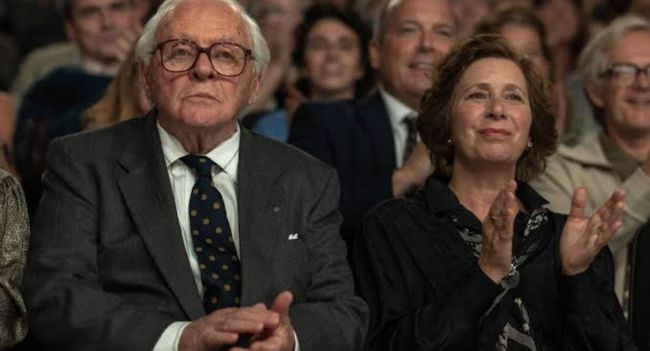
In the late 1930s, shortly before the outbreak of the second world war, a young British stockbroker named Nicholas Winton – played here by Johnny Flynn, and in later life by Anthony Hopkins – visited Czechoslovakia, to see with his own eyes the humanitarian crisis and rising panic among the exiled Jewish community in the country. So shocked was he by what he witnessed that, with the help of his indomitable mother, Babette (Helena Bonham Carter), he helped secure the rescue of 669 children, most of them Jewish, a feat for which later became known as “the British Schindler”.
It’s a stirring story, and one it’s impossible to watch without considering Britain’s present-day reluctance when it comes to offering shelter to those most in need of it. Winton, who was eventually knighted for his actions, is undoubtedly a hero worth celebrating. And this solidly workmanlike first feature from James Hawes (best known for TV work including Slow Horses and Snowpiercer) does just that, dutifully hitting all the expected emotional beats and piggybacking on a famous pair of episodes of the TV show That’s Life! from 1988 for a tearjerking crescendo of an ending.
But while Winton’s achievements and his dedication were remarkable, the film-making here is less so. There’s little to set One Life apart from the very crowded field of films exploring equally laudable tales of second world war heroism. And since the most obvious reference points for this story include Mark Jonathan Harris’s superb, Oscar-winning documentary Into the Arms of Strangers: Stories of the Kindertransport, which features the real-life Winton, and Steven Spielberg’s undisputed masterpiece Schindler’s List, the competition is tough. That’s not to say that One Life is poorly made; rather, that it’s just too predictably on the nose with its writing, and manipulative in its storytelling, to earn a place in the top tier of second world war movies.
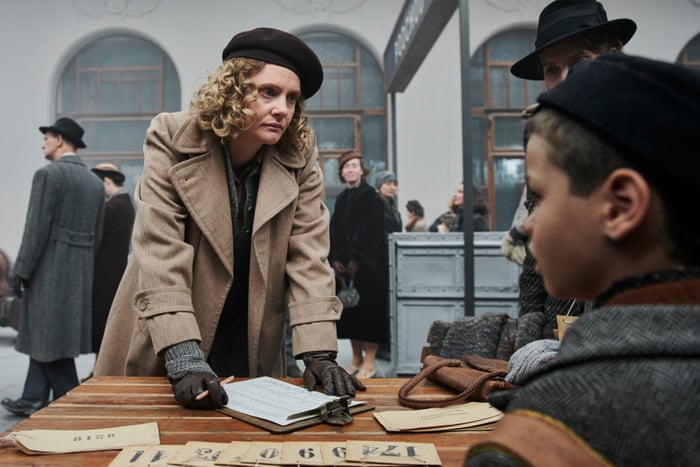
The film cuts between two key periods in Winton’s life. The first, during the late 1930s, follows him as a young idealist who takes holiday leave from his job in the City to travel to Prague. There he meets Doreen Warriner (Romola Garai), a crisply efficient British economist turned humanitarian who, on the strength of what we see here, would seem to be more than deserving of her own movie. A key member of the British Committee for Refugees from Czechoslovakia, Warriner is unflappable and inspiring, hair immaculate, heels clicking imperiously as she brazenly masterminds the covert movement of Jewish refugees under the noses of the Nazis. Garai is terrific – you rather wish there was more of her in the film. Equally good is Bonham Carter as the glamorous and tenacious Babette Winton, a woman who, equipped with just a fur coat and a withering look, can coax miracles out of browbeaten British government penpushers.
In the later section, set in the 1980s, Nicholas Winton has retired and, at the behest of his wife, Grete (Lena Olin), has started to clear out a lifetime’s accumulation of box files from their comfortable home in Maidenhead, all of which are filled with details of various charitable endeavours. Among them is a battered briefcase containing the names and pictures of the children whose escapes from Prague he engineered. Winton is not the kind of man who would blow his own trumpet, but he realises that this is an archive of historical significance. After a couple of false starts he meets Elisabeth Maxwell, wife of the newspaper magnate Robert Maxwell, and the story of Winton’s considerable contribution to the Kindertransport is taken up by the media.
Hawes adopts a distinct visual approach for each of the periods – the camerawork in the 1930s has more of a sense of rattled, handheld urgency; the colour palette, particularly in the Prague sections, favours cold and ominous greys. In contrast, the camera in the 1980s segments is steadier and more contemplative, and the colour tones grow warm and welcoming. But what links the two sections is the character of Winton, and the empathic kinship between the two lead performances. Flynn and Hopkins don’t look strikingly similar but they are recognisable as the same man through physical mannerisms and vocal quirks (“Home!”, he announces whenever he walks through a door, be it in 1930s Hampstead or 80s Maidenhead).
Both are excellent, although Flynn probably has the easier job, fronting the more conventionally exciting section of the story. Hopkins, meanwhile, bumbles through the picture in an unusually low-key performance that gathers force by stealth until he all but rips our hearts out with the scenes in the That’s Life! television studio.