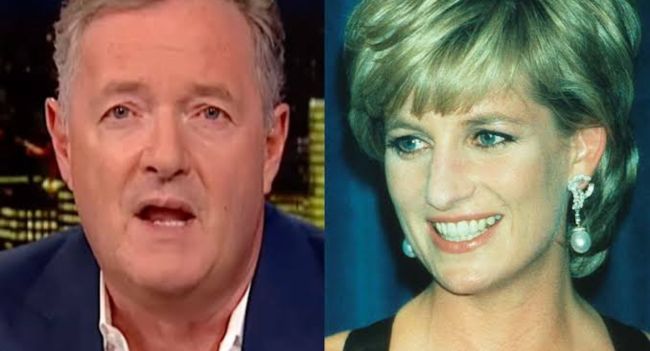
Piers Morgan demands Earl Spencer’s Diana memoir be withdrawn after disputed claims


Piers Morgan has escalated his dispute with Earl Spencer, calling for copies of Spencer’s memoir about Princess Diana to be withdrawn after the author admitted making an incorrect assumption about Morgan’s role in the publication of photographs of Diana.
Morgan has rejected Spencer’s apology and said he is pursuing legal action against the Earl and the publishers of Swan Song: Diana, My Sister.
The dispute centres on a passage in the memoir concerning photographs of Diana working out at a gym that were published by the Sunday Mirror on November 7, 1993.
Spencer admits his assumption about Morgan was wrong


In Swan Song, Spencer described Morgan as sounding “surly” and “annoyed” when he was contacted about being excluded from Diana’s 1997 funeral.
The Earl then wrote that he assumed Morgan’s reaction was connected to the publication of the gym photographs four years earlier.
However, Morgan has pointed out that he was not working for the Daily Mirror when those photographs were published. He was at The Sun at the time and did not join the Daily Mirror until October 1995.
Spencer subsequently issued a public apology, acknowledging that his assumption was incorrect.
A statement on his behalf said that Spencer’s account of the conversation itself remained accurate, but that he had wrongly assumed Morgan was the Daily Mirror editor responsible for the photographs. The statement added that, as a historian, “accuracy is important” to Spencer, and he therefore apologised to Morgan for the error.
Morgan, however, says the apology does not resolve the issue.
Morgan demands the book be withdrawn


Speaking on Piers Morgan Uncensored, Morgan strongly disputed Spencer’s account and argued that the error had serious implications for his reputation.
He has instructed lawyers to contact Spencer and Penguin, the publisher of Swan Song, demanding that the disputed claims be removed.
Morgan has also called for the book to be withdrawn, saying that an apology is insufficient while the claims remain available to readers.
In an interview with ITV News, he said he was continuing with legal action despite Spencer’s apology and questioned whether other parts of the memoir might contain inaccuracies.
The broadcaster has described the claims as defamatory and said he wants the disputed material removed and damages paid to the King’s Trust. Those are Morgan’s allegations and legal demands; they have not been established by a court.
What Spencer wrote about Diana’s funeral
The controversy began with Spencer’s account of the events surrounding Diana’s funeral in 1997.
According to the memoir, newspaper editors had initially been invited before the invitation was withdrawn. Spencer recalled Morgan reacting angrily when he was told he would no longer be welcome.
Spencer then connected Morgan’s reaction to the earlier publication of photographs of Diana at a gym.
That connection is the part Spencer has now acknowledged was based on an incorrect assumption.
Morgan has emphasised that the timeline makes the attribution impossible as written: the photographs were published in 1993, while he became editor of the Daily Mirror in 1995.
A wider controversy around Swan Song
The dispute with Morgan is only one part of the controversy surrounding Spencer’s memoir.
Swan Song: Diana, My Sister, published on September 22, contains Spencer’s account of his relationship with Diana, her marriage to Charles and the aftermath of her death in 1997.
Among the book’s most controversial claims is Spencer’s account of a conversation with the then Prince Charles, in which he says Charles told him, “we’ll forget her soon enough.” Spencer also described Charles as sounding “giddily elated” after Diana’s death.
Buckingham Palace has disputed the account, saying that “fraternal grief can cloud reason.” Spencer has stood by his recollection of the conversation.
The memoir has consequently triggered a wider public dispute over Spencer’s recollections and the way historical events surrounding Diana are presented.
Morgan says the legal fight is not over
Despite Spencer publicly apologising for the error involving the 1993 photographs, Morgan has made clear that he does not regard the matter as settled.
His legal action is focused on what he describes as false and defamatory claims in the memoir, while Spencer’s statement specifically acknowledged that his assumption about Morgan’s role in the newspaper publication was incorrect.
For now, the dispute remains a clash between Morgan’s account of what was published about him and Spencer’s broader recollection of his interactions with the broadcaster.
What began with one disputed passage in a book about Diana has now developed into a legal confrontation involving its author, one of Britain’s best-known broadcasters and the publisher behind the memoir.