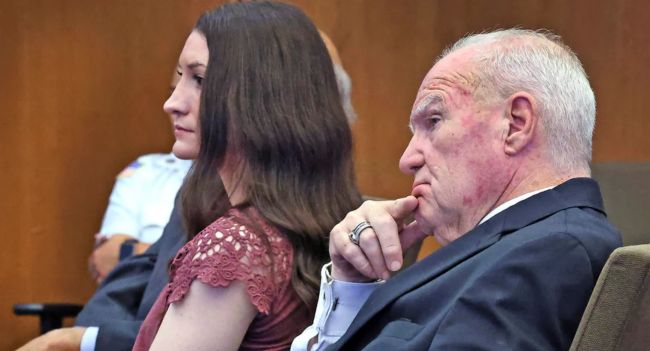
Lindsay Clancy Retrial Date Still Unclear as Defense Challenges Evidence in First Hearing Since Mistrial
Lindsay Clancy returned to Plymouth Superior Court on Tuesday, September 29, for the first hearing since her murder trial ended in a mistrial. Instead of setting a firm date for a possible retrial, Judge William Sullivan left several major issues unresolved, while Clancy’s defense made a significant shift in its argument.
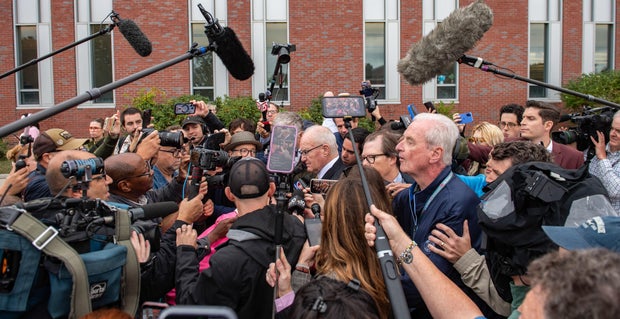 Kevin Reddington (C), attorney for Lindsay Clancy, speaks to the press as he leaves the courthouse. Joseph Prezioso / AFP via Getty Images
Defense attorney Kevin Reddington urged the judge to find Clancy not guilty, arguing that prosecutors failed to present sufficient evidence proving that she killed her three children. The prosecution strongly disputed that claim.
Meanwhile, Plymouth County District Attorney Timothy Cruz said his office has not yet decided whether to retry Clancy, despite continuing to prepare as though another trial could take place.
The next major hearing is scheduled for November 2, when the court is expected to address several outstanding motions and discuss a potential trial date.
Defense shifts its approach
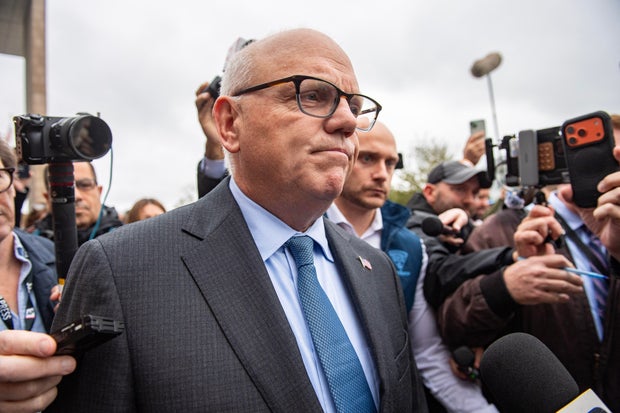 Plymouth County District Attorney Timothy Cruz leaves the courthouse following a status hearing in the Lindsay Clancy case. Joseph Prezioso /AFP via Getty Images
During Clancy’s original trial, her defense did not dispute that she killed her children. Instead, Reddington argued that she was suffering from postpartum psychosis and should not be held criminally responsible for their deaths.
On Tuesday, however, Reddington challenged the prosecution’s underlying evidence and the police investigation itself.
He argued that investigators had effectively assumed Clancy was responsible rather than properly examining the evidence at the crime scene.
“There’s no evidence that she admitted she did this,” Reddington said, adding that Clancy has no memory of killing her children and was told by police that she had strangled them.
He also questioned why Clancy would have killed her three children.
Reddington asked Judge Sullivan to issue a required finding of not guilty, arguing that there was a “total and complete lack of evidence” that could convince a rational juror that Clancy was guilty.
He also criticized the investigation, saying police had failed to properly establish what happened.
“There wasn’t even a horrendous investigation, there was no investigation,” Reddington argued.
The defense’s new emphasis on the sufficiency of the evidence marks a notable change from the approach taken during the first trial. Reuters likewise reported that the defense moved away from its earlier focus on criminal responsibility and instead argued that prosecutors had not sufficiently established that Clancy committed the killings.
Prosecutors reject the defense’s argument
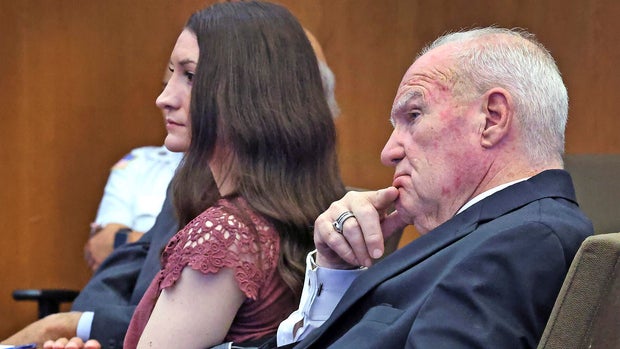 Lindsay Clancy and her attorney, Kevin Reddington, listen during the court hearing on Sept. 29, 2026. Greg Derr/The Patriot Ledger via AP, Pool
Prosecutor Shanan Buckingham pushed back forcefully against Reddington’s claims.
Buckingham argued that the defense was raising questions about the evidence in a way that had not previously been presented to the court. She said the prosecution had introduced a “voluminous” amount of evidence during the trial.
She characterized the defense argument that there was insufficient evidence connecting Clancy to the killings as “laughable.”
Buckingham also addressed the issue of Clancy’s mental health, acknowledging that the prosecution does not dispute that she was experiencing mental health problems before her children died.
But she said mental illness alone does not establish a lack of criminal responsibility.
“The case law is clear that not every defendant with a mental illness lacks criminal responsibility,” Buckingham told the court.
Judge Sullivan did not immediately rule on the defense motion for a required finding of not guilty. He took the matter under advisement.
No retrial date has been set
One of the central questions surrounding Tuesday’s hearing was whether Clancy would face a second trial.
That question remains unanswered.
Judge Sullivan initially indicated that he wanted the parties to establish a tentative trial date rather than allow the case to continue without a schedule. But prosecutors and defense attorneys agreed that it would be more practical to wait for rulings on several pending motions.
Sullivan emphasized that he wanted the case to move forward as quickly as legally appropriate.
Reddington said he could not be ready for another trial before June.
The parties are now expected to discuss a potential trial date at the November 2 hearing.
Cruz, speaking outside the courthouse, said prosecutors are still conducting a thorough review and have not made a final decision about whether to retry Clancy.
“We’re doing a very thorough review right now,” Cruz said, adding that his office would continue working in the interests of justice and the three children.
Double jeopardy motion remains pending
Clancy’s legal team is also seeking dismissal of the case on double jeopardy grounds following the mistrial.
Reddington previously said he intended to argue that there was no “manifest necessity” for the mistrial, which is a key issue in determining whether a defendant can be tried again after a case ends without a verdict.
Arguments on the motion to dismiss were not heard Tuesday because prosecutors requested additional time to prepare their response.
Judge Sullivan moved those arguments to November 2.
The same hearing will also address the defense’s request for an investigation into the lone holdout juror.
Holdout juror remains a major issue
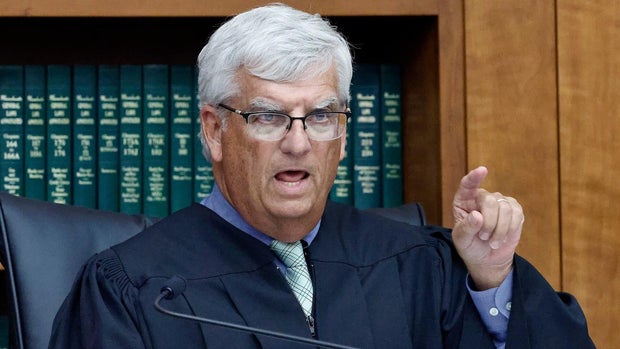 Judge William Sullivan admonishes a prosecution witness after their testimony during Lindsay Clancy’s murder trial at Plymouth Superior Court, Monday, Aug. 24, 2026. Greg Derr/The Patriot Ledger via AP, Pool
The original trial ended after the 12-member jury failed to reach a unanimous verdict.
The jury was reportedly split 11-1, with 11 jurors prepared to find Clancy not criminally responsible and one juror refusing to join them.
That juror has since been identified publicly as Michael Desronvil, although the court had previously kept juror identities sealed.
Clancy’s defense has asked the court to investigate the juror and examine whether information relevant to his eligibility or impartiality should have been disclosed during jury selection.
Judge Sullivan scheduled a hearing on that motion for November 2.
Desronvil’s attorney, Edward Paltzik, has defended his client’s position. In an interview, Paltzik said the juror’s decision was based entirely on the evidence and the law and described him as having resisted intense pressure during deliberations.
The juror himself has also said through his attorney that he had no doubt about Clancy’s guilt.
Defense seeks access to juror records
Another motion discussed Tuesday involved notes from jurors and sidebar discussions during the original trial.
Defense attorney Martin Weinberg asked Judge Sullivan to allow the defense to obtain material that remains under seal. The defense wants to use some of those records in support of its double jeopardy arguments.
Prosecutor Buckingham opposed the request, warning that releasing additional information could further expose jurors to public scrutiny.
She argued that what has happened outside the courtroom could discourage people from serving on juries in Massachusetts.
Judge Sullivan did not rule immediately and took the matter under advisement.
Prosecutors also seek a gag order
The prosecution has separately asked the court to restrict statements made publicly by attorneys involved in the case.
The proposed gag order would prohibit lawyers from making statements to the media that could have a substantial likelihood of materially prejudicing future criminal proceedings.
Prosecutors specifically criticized Reddington’s repeated comments to the media about witnesses, Clancy and the deliberating jurors. They also argued that his public reference to the holdout juror as “he” helped narrow down the juror’s identity.
WBZ-TV and Boston Globe Media Partners have opposed the proposed order.
Judge Sullivan reviewed the request Tuesday but did not rule on it. The issue will also be discussed at the November 2 hearing.
What happened during the first trial?
Clancy was charged in connection with the January 2023 deaths of her three children — 5-year-old Cora, 3-year-old Dawson and 8-month-old Callan — at the family’s home in Duxbury, Massachusetts.
Her defense argued throughout the trial that she had experienced postpartum psychosis and should not be held criminally responsible.
After weeks of testimony and seven days of deliberations, jurors were unable to reach a unanimous verdict. Judge Sullivan declared a mistrial on September 4, 2026.
Several jurors later spoke publicly about the deliberations. One juror who remained anonymous said there was “so much doubt” surrounding the case, while juror Paula Devlin confirmed that the jury had been divided 11-1.
The holdout juror subsequently issued a statement through his attorney saying, “I didn’t have any doubt.”
That split now sits at the center of several of the legal disputes following the mistrial.
Plea deal remains an open question
Another unresolved issue is whether the case could end through a plea agreement rather than another trial.
During a previous interview, Reddington was asked whether he would consider negotiating with District Attorney Tim Cruz. He said the decision ultimately rests with the prosecution.
A plea agreement was not possible during the original proceedings because Clancy was facing a first-degree murder charge.
After Tuesday’s hearing, Reddington again declined to discuss whether negotiations were taking place, saying that any plea discussions would remain private between the defense and the district attorney.
For now, Cruz has not announced whether prosecutors will pursue a retrial, pursue different charges or take another course.
The case now heads toward November
Tuesday’s hearing did not produce the definitive answer many had been expecting.
Judge Sullivan did not set a retrial date, did not rule on the defense’s request for a required finding of not guilty and did not decide the pending disputes over juror records or a possible gag order.
Instead, the case will return to court on November 2.
By then, the court is expected to consider the double jeopardy motion, the defense request concerning the holdout juror, the prosecution’s gag-order request and the possibility of setting a future trial date.
Until those issues are resolved, the question of whether Lindsay Clancy will face a second trial remains open.