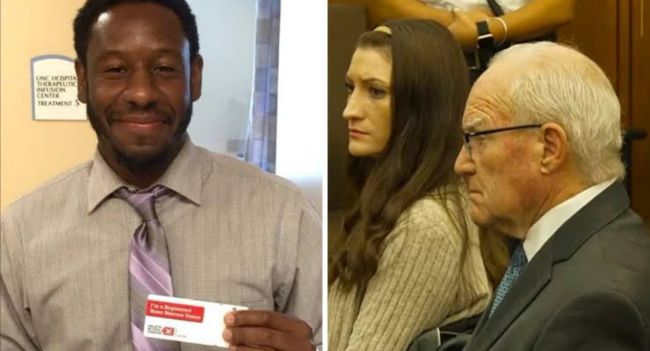
Lindsay Clancy Holdout Juror Pushes Back After Lawyer Seeks His Phone Records

The lone holdout juror whose refusal to join the rest of the panel led to a mistrial in Lindsay Clancy’s case is pushing back against allegations that he improperly used his cellphone during deliberations — with his spokesperson now claiming other jurors were also using their phones.
Michael P. Desronvil became the focus of renewed scrutiny after Clancy’s defense attorney, Kevin Reddington, filed a motion asking the court to investigate his cellphone activity during the seven days of jury deliberations.
But Desronvil’s spokesperson, Ray Marcel, says any investigation should not stop with him.
Spokesperson Claims Other Jurors Were on Their Phones

Desronvil, through his spokesperson, claimed some jurors posted to social media during the trial.Facebook/Elizabeth K
According to Marcel, Desronvil told him that jurors were allowed to keep their phones and that several members of the panel used them during deliberations.
“He said everybody had their phone on them,” Marcel said while discussing his conversations with Desronvil.
Marcel went further, alleging that some jurors may even have posted on social media while deliberations were underway. Those claims have not been established by the court.
He argued that if Desronvil’s phone records are examined, the same standard should be applied to every juror.
“Don’t single out one juror,” Marcel wrote. “If Michael’s communications are relevant, then the same standard should apply across the board.”
Questions Raised Over Online Searches

Defendant Lindsay Clancy looks at the jury as a mistrial is declared in her murder trial on Sept. 16, 2026.USA TODAY Network via Reuters Connect
The controversy intensified after Marcel previously acknowledged that Desronvil had searched online for terms connected to the case.
According to Marcel, the juror looked up “psychosis” to make sure he understood the term correctly and also searched for “altruistic filicide,” a phrase he had not previously encountered.
Marcel argued there was ambiguity over whether jurors were prohibited from looking up unfamiliar terminology after leaving court for the day.
However, under Massachusetts trial court rules, jurors may keep their phones unless a judge orders otherwise, but they are prohibited from using electronic devices during trial proceedings or deliberations.
There is no indication in the report that Judge William Sullivan required jurors in Clancy’s trial to surrender their phones before deliberating.
Clancy’s Lawyer Wants Desronvil’s Phone Examined

Reddington has asked Judge Sullivan to investigate whether Desronvil improperly used his phone and whether there were issues with information he provided during jury selection.
The defense attorney reportedly wants Desronvil’s phone carrier ordered to produce call and text records covering each day of deliberations.
He also requested that the phone itself be turned over to a neutral examiner so its data could be reviewed.
The motion cited fellow juror Nick Dargie, who publicly alleged that Desronvil was disengaged from discussions and spent time scrolling on his phone during deliberations.
Desronvil’s side is now responding by arguing that scrutiny should extend to the entire jury.
Mistrial Followed Seven Days of Deliberations


Clancy’s trial ended in a mistrial on September 16 after jurors were unable to reach a unanimous verdict.
The case concerned the deaths of her three children — Cora, 5, Dawson, 3, and Callan, 8 months.
The central dispute at trial involved Clancy’s mental state and whether she should be found not guilty by reason of insanity due to severe postpartum psychosis.

Marcel called on Reddington to look into other jurors cell phones.Josh Reynolds for NY Post
Desronvil was the lone juror who would not join the other panelists in reaching that conclusion, leaving the jury deadlocked.
Now, days after that mistrial, the battle has shifted from the evidence presented at trial to what may have been happening inside the jury room itself.
With Clancy’s defense seeking access to Desronvil’s phone records and his spokesperson alleging that other jurors also used their devices, questions surrounding the seven days of deliberations are continuing well beyond the courtroom.