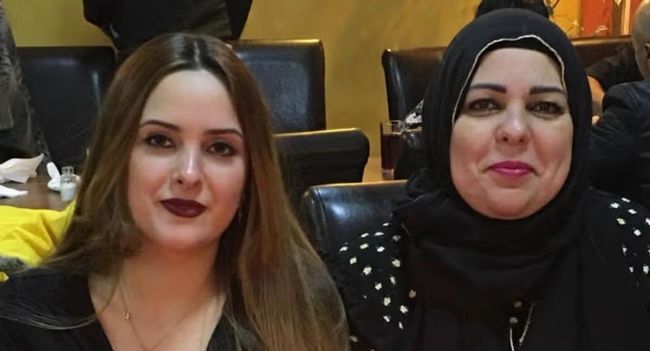
‘My Sister and Niece Were Failed’: Grieving Campaigner Says New Government Action Could Become a ‘Turning Point’ for Women at Risk

Eight years after her sister and niece were murdered following repeated warnings to police, Nour Norris is hoping the latest government promises will finally mark a genuine turning point in the fight against violence against women and girls.
Nour welcomed Prime Minister Andy Burnham’s decision to accelerate measures designed to protect victims, saying the changes could ultimately save lives if they are properly delivered.
Speaking on the eighth anniversary of the deaths of Raneem Oudeh, 22, and her mother Khaola Saleem, 49, Nour said she believed the new commitments could represent a crucial moment.

“I think this is a turning point,” she said, adding that if the promised measures were put into practice, “it will really save lives.”
The government has announced that every police force in England and Wales will have specialist rape and sexual offence teams in place by the end of next year — 18 months earlier than originally planned.
Police chiefs will also begin introducing specialist Protection Order Teams aimed at keeping victims safe and monitoring alleged perpetrators.
The proposed system will include measures such as electronic tagging, exclusion zones and compulsory programmes designed to address abusive behaviour.
Crucially, Domestic Abuse Protection Orders can be imposed by courts even when an alleged perpetrator has not been convicted of a criminal offence.
Burnham said the scale of violence and abuse experienced by women and girls was unacceptable and argued that measures originally scheduled for 2029 were simply moving too slowly.
For Nour, however, promises alone are not enough.
Her own family’s experience has become a painful example of what can happen when warnings are not acted upon quickly enough.
Raneem contacted police 13 times in the months before she was killed. On the night of August 27, 2018, she called 999 four times as the situation escalated.
She and her mother were later murdered in Solihull by Raneem’s former husband, Janbaz Tarin.

Despite repeated warnings that Tarin was dangerous, no arrest was made before the killings.
An inquest subsequently found that mistakes by West Midlands Police had contributed to the deaths.
Eight years later, Nour remains determined to make sure their deaths lead to lasting change.
She said she and her family had never stopped campaigning and would continue doing so because Raneem and Khaola’s story should not be forgotten.
For Nour, the issue goes beyond one police force or one tragic case.
She described what happened as a national failure and argued that victims still do not receive the protection they need.
A key Labour commitment is Raneem’s Law, named in memory of her niece. The measure would place domestic violence specialists within every 999 call centre so that emergency calls involving domestic abuse can receive specialist attention.
The system has already been piloted in some control rooms, but Nour wants it implemented nationally as quickly as possible.
Asked whether similar failures could still be happening today, she gave a blunt response: “It’s still happening. Absolutely.”
Although Raneem’s Law exists, she stressed that it has not yet been fully rolled out across the country.
“There are some successful cases,” she said, “but it doesn’t mean it has tackled everything.”
Her campaign, she insists, will continue.
“I’ll only stop when I die, and then someone else will have to take over,” Nour said.
Behind the campaign is a deeply personal loss.
Nour described Khaola as far more than a sister. Because she was older, Nour said she had always viewed her almost as a mother and as her “safety net”.
She remembered her as wonderful, beautiful and generous, adding that she still misses her every day.
She also spoke about Raneem with profound affection, describing her as an extraordinary person whose presence brought joy to the family.
Rather than allowing grief to consume her, Nour said she has tried to turn that loss into motivation for the campaign.
Meanwhile, Safeguarding Minister Satvir Kaur said victims and survivors remained at the centre of the government’s plans.
She said women affected by abuse deserved to be believed, supported and protected by a system that works effectively.
The government has also announced up to £13.3 million in funding for as many as 10 police forces to establish pioneering specialist Protection Order Teams.
Those who breach the new orders could face imprisonment.
The proposed Domestic Abuse Protection Orders are intended to cover a wide range of abuse, including physical violence, controlling or coercive behaviour, economic abuse and stalking.
There would be no maximum duration for the orders, meaning victims would not have to repeatedly return to court simply to maintain protection.
Police teams will test new methods of enforcing the orders, while another government programme will work directly with perpetrators in an attempt to change abusive behaviour.
For Nour, the significance of these measures will ultimately be judged not by announcements, but by whether they reach victims before it is too late.
Eight years after Raneem and Khaola were killed, she is still fighting for that change.
And her message to the government remains clear: the promises must now become action — because lives could depend on it.