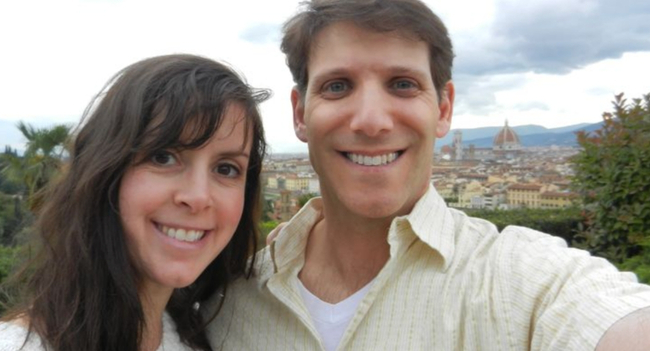
After My Wife Died, I Found Four Words She Left Behind — And They Changed the Way I Lived
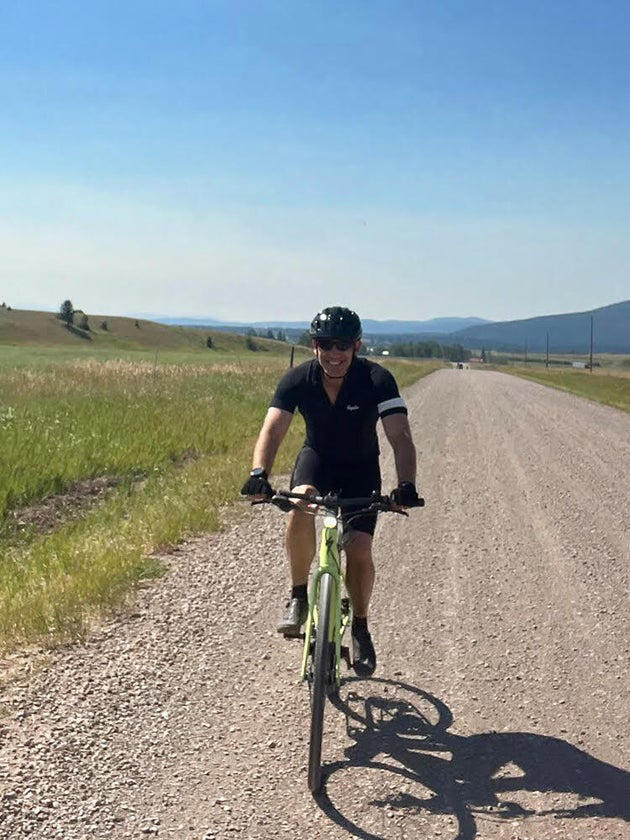
For the first time in three decades, Jon Kortmansky was learning how to meet new people as a single man. One woman in particular appeared in his phone under an unusual label: “NW Bike Trip Montana.”
The name was deliberately vague, part of the system he had adopted while navigating dating after becoming a widower. But the story behind that contact began with something far bigger than romance. It began with the loss of his wife, Lori, a message she left behind, and a promise that eventually carried him onto a gravel bike in Montana.
Nearly a year later, the woman behind that coded contact was still in his life — and Kortmansky had begun to recognize that the journey had changed something fundamental in him.
A trip he had no business taking

Kortmansky had never ridden a gravel bike when he agreed to accompany his brother on a demanding five-day trip covering 250 miles and roughly 25,000 feet of elevation.
Being generally fit, he quickly discovered, was nothing like being prepared to climb mountain roads, negotiate loose gravel and descend technical trails.
Only 10 miles into the first day, he was already struggling.
He stopped on a ridge, physically exhausted and emotionally overwhelmed. His brother had promised spectacular scenery, unforgettable experiences and the possibility of lifelong friendships. Instead, Kortmansky felt isolated among experienced cyclists who seemed completely at home in an environment that was defeating him.
Then a woman rode up beside him.
Wearing a blue cycling jersey, yellow helmet and pink-tinted glasses, she seemed effortlessly comfortable on her bike.
“What brings you here?” she asked.
For Kortmansky, it was a surprisingly difficult question.
The other cyclists had straightforward answers. They rode regularly. Trips like this were part of their lives.
Kortmansky didn’t ride.
He had never done anything like this.
And if someone asked why he was there, the real answer had almost nothing to do with cycling.
So he told her.
“My wife died,” he said. “And she told me to say ‘yes’ to everything, so here I am.”
Her response was equally concise.
“This is my Divorce Camp.”
For a moment, the two simply stood together beneath the enormous Montana sky.
Then she rode away.
The life before Montana

To understand why Kortmansky was on that mountain, he had to go back decades.
His wife, Lori, had been diagnosed with a brain tumor at 28 and initially faced a prognosis measured in months. Instead, she lived with the disease for 23 years.
Their life became structured around three-month intervals, with regular MRI scans punctuating everything else.
Some scans brought temporary relief. Others delivered devastating news.
Yet Kortmansky remembers that uncertainty did not stop them from living. They traveled, skied, hiked and went out to eat, trying to fill the time available to them rather than waiting for certainty that might never arrive.
Lori approached life with an enthusiasm Kortmansky found extraordinary. Her illness repeatedly took things from her, but he remembered her continuing to look for humor, adventure and reasons to enjoy being alive.
Then, during the COVID pandemic, Lori died.
The loss left Kortmansky with an emptiness he struggled to describe.
He continued functioning, but internally he felt as though he had forgotten how to live without the person whose appetite for life had helped carry them both for so many years.
The writings Lori left behind

During the first year after Lori’s death, one of Kortmansky’s few sources of comfort was the enormous collection of writing she had left behind.
There were diaries and thousands of notes.
Because Lori’s short-term memory had deteriorated, he had once assumed many of those notes were simply reminders. After her death, he discovered something much richer.
There were messages for friends, poems, quotations, fears, hopes, promises and private reflections.
He spent mornings and evenings sitting on his couch, reading and organizing them.
While Lori was alive, he says he never would have invaded the privacy of her diaries. After she was gone, however, reading them began to feel like another stage in a conversation that had started when they met on a college quad.
He rediscovered the beginning of their relationship through her words.
He read about the men who had come before him and about Lori’s certainty that Jon was the man she wanted to marry, have children with and grow old beside.
He also watched, through her writing, as optimism collided with the reality of her diagnosis.
At one point she reflected that people often don’t recognize their own strength until something threatens to take it away.
Other entries were less composed. She wrote about her fear of life ending and her longing for happier days still to come.
Some memories even made Kortmansky laugh.
But among all those pages and scraps of paper was one tiny message that affected him differently.
Four words:
“Say Yes to Everything!”
The phrase stopped him cold.
Turning four words into a promise
Kortmansky could not know whether Lori had written the message for herself or intended anyone else ever to see it.
To him, however, it sounded like her speaking directly to him.
He began to understand just how much of their shared resilience had come from Lori’s willingness to embrace life despite everything happening to her.
So he made a promise to try to do the same.
That proved far more difficult than simply agreeing with four words on a piece of paper.
Kortmansky started accepting invitations he instinctively wanted to decline. He traveled to places he did not particularly want to visit. He accepted opportunities that frightened or exhausted him. And he made himself meet people when isolation felt easier.
Eventually, his brother invited him on a brutal cycling adventure in Montana.
Everything in him could have said no.
Instead, he said yes.
The woman on the trail
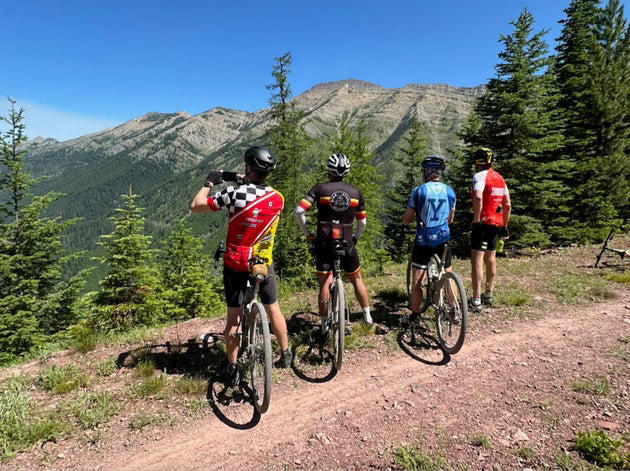
By the third evening of the Montana trip, Kortmansky found himself explaining that promise to the woman he had met on the ridge.
She listened.
Then she did something he wasn’t accustomed to.
Rather than focusing on Lori’s disease or asking for details about her death, she wanted to know who Lori had been.
Where had Jon and Lori met?
What had they loved doing together?
What made Lori special?
The questions opened a different door.
As Kortmansky began telling stories about his wife, he realized he was sharing himself with another person in a way he had not known he was ready to experience again.
It wasn’t about replacing Lori.
It was evidence that a capacity for emotional connection he thought might have disappeared with her was still there.
Something began changing on the bike
Meanwhile, the cycling didn’t get easier.
The rides became longer. The climbs became steeper. The group descended narrow trails filled with rocks, branches and difficult terrain.
But Kortmansky began changing.
He stopped fighting the bike quite so much.
His brother had earlier encouraged him to relax his pedal stroke, loosen his arms and stop resisting the terrain. Kortmansky gradually found a rhythm.
He began attempting more difficult trails and pushing harder on climbs.
Other riders would pull alongside him, encourage him and talk until the terrain separated them again.
The solitude that had felt unbearable at the beginning of the trip gradually became something different.
He started noticing the landscape.
Mountains and enormous stretches of sky could still bring him to tears, but now the tears didn’t always come from the same place.
At one point, he spotted a smiley face drawn into the dirt.
He smiled back.
The conversations changed too
After riding each day, the group would change into bathing suits, grab beers and float together on a glacial lake.
The conversations slowly moved beyond bicycles.
People stopped comparing their longest rides and steepest climbs and began talking about relationships, disappointments, dreams and the experiences that had brought them to Montana.
Kortmansky mostly listened at first.
Then he began sharing more.
His brother noticed.
The two clinked bottles, a small moment carrying more significance than the people around them might have realized.
Kortmansky was beginning to participate in life rather than simply move through it.
On the second-to-last evening, he finally asked “NW Bike Trip Montana” about herself.
He wasn’t particularly interested in dissecting the mechanics of her divorce. He wanted to know who she was.
What struck him most was not merely the difficult experiences she described, but her tendency to search for something worthwhile even inside events that had been painful or unfair.
It reminded him of something familiar.
Something Lori had taught him, and grief had temporarily made him forget.
More than friends, but not quite something serious
Almost a year after Montana, the coded name still occasionally lights up Kortmansky’s phone.
Sometimes it is a text. Sometimes a FaceTime call.
He describes their relationship carefully: more than friendship, but less than something serious.
Their circumstances are complicated.
Kortmansky is a widower living in New York City. She is divorced and lives in Vermont. Both arrived at this point in life carrying histories, responsibilities and relationships that make dating far less simple than it might once have been.
Still, they connect.
And perhaps the larger significance of Montana is not whether that relationship eventually becomes something more.
It is that Kortmansky is interested in finding out.
Learning to loosen his grip
Kortmansky doesn’t claim that five days riding through Montana somehow erased his grief.
It didn’t.
But the trip helped.
Cycling offered him an unexpectedly fitting lesson: gripping harder does not necessarily give you more control. Sometimes navigating difficult terrain requires relaxing your body, trusting yourself and allowing the bike to move beneath you.
He has tried to carry that lesson beyond the trail.
There are now moments when he catches himself holding too tightly and knows he can loosen his grip.
More importantly, saying yes no longer feels entirely like a performance carried out because of a promise to Lori.
Curiosity has begun replacing obligation.
Kortmansky can imagine a future without feeling that imagining one somehow diminishes the life he shared with his wife.
As he puts it, he is not merely pretending to be okay anymore.
Sometimes, he realizes he actually is.
And after years in which the future seemed defined primarily by loss, he has reached a place he once struggled to imagine: at peace, curious about what comes next, and ready for the ride.
Jon Kortmansky is a New York City lawyer who is working on a memoir about his life with Lori and the ways her enduring influence helped him rediscover hope, connection and joy after her death.