Duncan Laurence’s Eurovision Victory Proved That Sometimes One Voice Is More Than Enough

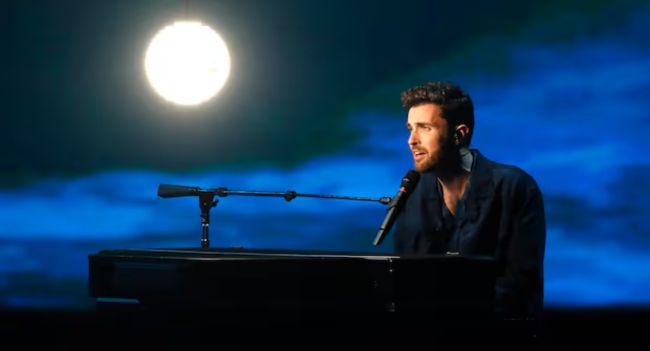
When Duncan Laurence stepped onto the Eurovision stage in Tel Aviv to represent the Netherlands in 2019, there were no elaborate dance routines, no dramatic costume changes, and no overwhelming visual spectacle competing for attention.
Instead, there was a piano.
A single spotlight.
And a song that quietly captured the hearts of millions.
Looking back today, it’s easy to forget just how risky that approach was. Eurovision has long been known for embracing the biggest, boldest performances imaginable, where larger-than-life staging often dominates the conversation.
“Arcade” chose vulnerability instead.
From the opening notes, Duncan created an atmosphere that felt unusually intimate for a competition watched by hundreds of millions around the world. Sitting alone at the piano, his calm presence immediately shifted the energy inside the arena. Rather than demanding attention, he simply invited people to listen.
And they did.
His vocals carried a rare honesty that can’t be manufactured. Every lyric felt personal, every phrase carefully delivered without unnecessary embellishment. There was no attempt to overpower the audience with vocal acrobatics. Instead, Duncan trusted the song itself—and that confidence became one of the performance’s greatest strengths.
Visually, the staging mirrored the emotional journey of the music.
The dark stage, soft lighting, and subtle effects never distracted from the performance. Everything existed to support the story rather than overshadow it. The result was cinematic without becoming theatrical, emotional without becoming sentimental.
As “Arcade” built toward its soaring chorus, the emotion inside the arena became almost tangible.
It wasn’t simply another Eurovision entry anymore.
It had become a shared experience.
By the final chorus, the audience was completely invested. Long before the votes were announced, there was already a growing sense that this performance had connected in a way few Eurovision songs ever manage.
When the Netherlands was finally crowned the winner, it felt less like a surprise and more like the natural conclusion to an unforgettable evening.
But perhaps the most remarkable chapter of “Arcade” came after Eurovision ended.
Years later, the song experienced an extraordinary second life through streaming platforms and social media, reaching audiences who had never even watched the competition. It climbed charts around the world, earned billions of streams, and became one of Eurovision’s greatest global success stories.
That enduring popularity says everything about the performance.
It wasn’t built around a trend.
It wasn’t dependent on a stage gimmick.
It succeeded because genuine emotion has no expiration date.
Watching Duncan Laurence perform “Arcade” today feels just as powerful as it did on Eurovision night. The vulnerability remains authentic, the melody remains unforgettable, and the message continues to resonate with listeners across generations.
Many Eurovision winners are remembered.
Very few become timeless.
“Arcade” belongs firmly in that second category—a performance that proved one heartfelt song, delivered with sincerity, can outshine even the biggest spectacle.