Chapter 1: The Invisible Thread
The grandfather clock in the hallway of the Greenwich, Connecticut home chimed seven times. On cue, the front door clicked open. Richard stepped inside, shaking the autumn rain from his designer umbrella, his eyes immediately scanning the pristine hardwood floors for any stray drop of water.
Eleanor stood by the kitchen island, adjusting a platter of braised beef short ribs with rosemary. She had spent five hours perfecting the jus, polishing the silver, and ensuring the house smelled of warm vanilla and cedar. It was their twenty-fifth anniversary.
“You’re late,” Eleanor said softly, offering a warm smile. “But the food is still hot.”
Richard didn’t look at her. He tossed his briefcase onto the entryway table and loosened his silk tie. “Traffic on the Merritt was a nightmare. And please, Eleanor, don’t start with the guilt trips. I’ve had a million-dollar merger hanging over my head all day.”
“I’m not guilt-tripping you, Rich. I just wanted us to have a nice dinner. It’s twenty-five years.”
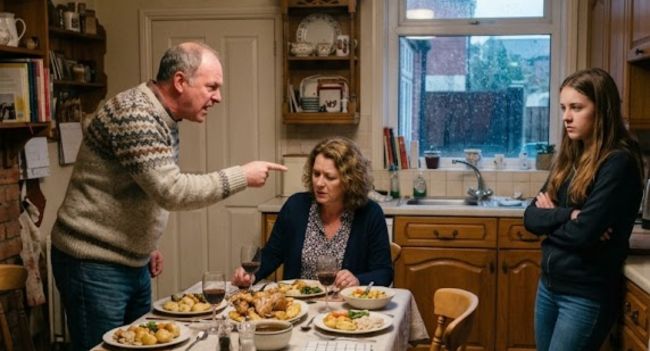
Richard sat down at the head of the table, immediately pulling out his phone. He took a bite of the beef, chewed mechanically, and grunted. “A bit dry tonight. You must have left it in too long. Then again, it’s not like you had a busy schedule today to distract you.”
Eleanor felt a familiar, cold ache in her chest. “I had to drive across two counties to get the organic herbs you like, Richard. I cleaned the gutters, managed the contractors for the roof, and prepared this.”
Richard let out a soft, patronizing chuckle, his eyes still glued to his screen. “Eleanor, please. You bought groceries and supervised men who actually do manual labor. Let’s not pretend you had a hard day at the office. I pay the mortgage, the insurance, and your credit card bills. You stay home and play house. It’s a comfortable arrangement, but let’s not call it work.”
For twenty-five years, Eleanor had swallowed those words. She had swallowed them when she gave up her art history scholarship to support him through business school. She had swallowed them through decades of being “the wife who hosts,” the silent partner, the invisible thread holding his perfect life together while her own identity slowly evaporated.
But tonight, looking at the silver-plated anniversary frame she had bought—empty, because Richard hadn’t bothered to print a photo—something snapped. It wasn’t a violent explosion; it was the quiet, terrifying sound of a glass cracking right down the middle.
“A comfortable arrangement,” Eleanor repeated. Her voice was dangerously calm.
“What?” Richard looked up, annoyed.
“For twenty-five years, I built a sanctuary for you. I raised our daughter, kept your secrets, managed your life, and gave up my own. And you think my only contribution is spending your money.” Eleanor stood up, her hands steady. “I’m done, Richard.”
“Done? What does that mean? Are you going on strike? Who’s going to make dinner tomorrow?” He laughed, expecting her to back down as she always did.
“I am leaving you.”
Richard’s smirk faded, replaced by cold arrogance. “Don’t be ridiculous. You’re fifty years old, Eleanor. You have no resume, no career, and no money of your own. What are you going to do? Sleep on the street? You wouldn’t last a week without my checkbook.”
Eleanor looked at the man she had loved for half her life, realizing she didn’t recognize him at all. “I would rather sleep on a park bench than spend another night being invisible in my own home.”
She walked upstairs, packed a single suitcase with her clothes and her grandmother’s old recipe journal, and walked out into the rain.
Chapter 2: A Tiny Kitchen in Brooklyn
The air in Brooklyn smelled of wet asphalt, roasting coffee, and endless possibility.
Eleanor woke up on the pull-out couch in her daughter Chloe’s cramped, one-bedroom apartment in Williamsburg. The elevated subway train rumbled in the distance. It was loud, chaotic, and completely different from the sterile silence of Greenwich.
And for the first time in decades, Eleanor breathed.
“Morning, Mom,” Chloe said, stepping out of her tiny bathroom in her scrubs. At twenty-four, Chloe was a pediatric nurse—fierce, independent, and fiercely protective of her mother. She placed a mug of freshly brewed coffee in Eleanor’s hands. “How did you sleep?”
“Like a log, actually,” Eleanor smiled, though she looked at her hands, suddenly feeling the weight of her reality. “Chloe… I need to find a job. Any job. I can’t live off you, and the divorce lawyers say the asset division will take months because your father is hiding his accounts.”
Chloe sat next to her, taking her mother’s hands. “Mom, look at me. You are not a burden. You raised me. Now, it’s my turn to help you find you again. What do you actually want to do? Not for Dad, not for the house. For you.”
Eleanor looked around the tiny apartment. Her eyes landed on the kitchen counter, where she had baked a simple loaf of lemon-lavender bread the night before using Chloe’s mismatched baking tools.
“I used to love baking,” Eleanor whispered. “Before it became a chore to impress Richard’s partners. I loved the science of it. The botanical infusions. Mixing elderflower, rosewater, and chamomile into pastries. It was my art.”
Chloe’s eyes lit up. “Mom, those lemon-lavender loaves you make are literally heaven. The girls at the hospital would pay twenty dollars a slice for them. Why don’t we sell them?”
“At my age? Chloe, people my age are retiring, not starting businesses. I don’t even know how to use Instagram.”
“You don’t need to know,” Chloe grinned, pulling out her phone. “You do the baking. I’ll do the marketing.”
That afternoon, The Botanical Crumb was born.
Using Chloe’s tiny, temperamental oven, Eleanor baked ten loaves of her signature organic, flower-infused cardamom and pear bread. Chloe took aesthetic, sun-drenched photos of Eleanor—her silver-streaked hair tied back in a linen scarf, her face dusted with flour, her eyes shining with a quiet focus they hadn’t seen in years.
Chloe posted them with the caption: “My 50-year-old mom just left a toxic marriage to chase her dream. Taste the resilience in every bite.”
Within forty-eight hours, the post went viral.
Chapter 3: Rising from the Flour
The demand was overnight and overwhelming.
Initially, it was local Brooklyn hipsters wanting to try the “flower bread.” But Eleanor’s recipes weren’t just a gimmick; they were masterfully crafted. She utilized her decades of home-cooking precision to create pastries that were low in sugar, rich in natural herbal aromatics, and visually stunning—each loaf decorated with pressed, edible pansies and marigolds.
“Mom, we have three hundred orders for this weekend,” Chloe gasped, looking at her laptop screen one Friday evening. “We can’t do this in this kitchen. The landlord is going to evict us if the hallway smells like yeast for one more day.”
Eleanor, her apron covered in flour, wiped her brow. She felt exhausted, her knees ached, but for the first time in her life, she felt a burning electric current of adrenaline. “Then we rent a commercial kitchen space. I’ve been calculating the margins, Chloe. If we secure a micro-loan, we can lease a shared kitchen in Queens.”
“Look at you, Business Woman,” Chloe teased, hugging her.
Eleanor’s transformation wasn’t just commercial; it was physical and mental. She stopped dyeing her hair to hide the grey, embracing a stunning, chic silver bob. She traded her conservative Greenwich country-club cardigans for comfortable, elegant linen jumpsuits. When she spoke, her voice no longer carried the hesitant tremor of a woman waiting to be interrupted.
Three months into the venture, a popular New York lifestyle influencer posted a video of Eleanor’s Earl Grey and lavender scones. The video gained five million views.
The next morning, Eleanor received an email that made her gasp. A prominent boutique hotel chain in Manhattan, The Avery, wanted to partner with The Botanical Crumb to provide exclusive morning pastries for their guests.
But with success came the ghosts of her past.
While packing an order, Eleanor’s phone rang. It was an unknown number. She answered.
“Eleanor?”
It was Richard. His voice sounded different—less sharp, almost frantic.
“Richard,” Eleanor said, her voice cool and level. “If this is about the divorce papers, you should speak to my attorney.”
“Eleanor, wait. Don’t hang up,” he pleaded. “I… I saw the article about you in the New York Post. You look… different. Beautiful. Honestly, the house is a disaster. The cleaning service doesn’t know how to handle the dry rot in the basement, and I’ve been eating takeout for three months. I made a mistake, El. You made your point. You proved you can do it. Can we please just stop this nonsense and come home? I’ll even let you keep your little baking hobby.”
Eleanor listened to him, feeling a profound sense of pity. He still didn’t get it. He thought her life’s passion was a “little hobby” meant to punish him.
“Richard,” Eleanor said softly. “I didn’t do this to make a point to you. I did this to find myself. And now that I have, I am never letting her go again. Have a good life.”
She hung up, turned back to her flour-dusted table, and smiled.
Chapter 4: The Pinnacle
Two years later.
The morning sun streamed through the floor-to-ceiling glass windows of The Botanical Bistro on the Upper West Side of Manhattan. The space was a masterpiece of Eleanor’s own design—warm oak tables, lush hanging ferns, and the rich, comforting scent of fresh espresso and baked rosemary.
A line of eager customers stretched down the block.
Eleanor, now fifty-two, stood behind the marble counter, greeting her regulars. She wore a tailored white chef’s coat with her name embroidered in green silk: Eleanor Vance. She was no longer “Mrs. Richard Vance.” She was simply herself.
Chloe walked in, carrying a freshly printed copy of The New York Times. She didn’t say a word; she just placed it on the counter with a triumphant grin.
On the front page of the Style section was a large, gorgeous photo of Eleanor, looking radiant, confident, and undeniably powerful. The headline read:
“Blooming at Fifty: How Eleanor Vance Turned Heartbreak into a Culinary Empire.”
“We did it, Mom,” Chloe whispered, tears shining in her eyes. “You did it.”
Eleanor looked at her reflection in the glass of the pastry case. She saw the fine lines around her eyes, but they no longer looked like the marks of sorrow—they were the proud lines of a woman who had laughed, struggled, and won.
Her phone buzzed. It was a notification from her bank. The final divorce settlement had cleared. She was officially free, wealthy in her own right, and the sole owner of a thriving, multi-million-dollar brand.
Just then, a young woman walked into the bistro. She looked tired, her eyes red-rimmed, clutching a cheap purse, staring at the beautiful pastries as if she were completely lost.
Eleanor recognized that look instantly. It was the look of a woman who had forgotten her own worth.
Eleanor walked out from behind the counter, carrying a warm plate of fresh orange-blossom madeleines and a cup of tea. She placed them on a table and pulled out a chair for the young woman.
“On the house,” Eleanor said with a warm, steady smile. “Take a breath. It’s a beautiful day, and trust me—your story is just getting started.”