Afew bars into the world premiere of Sir Alexander Lermontov’s new work, which isn’t actually called Lugubrious Fire in a Pet Shop but sounds like one, the Oxford Concert Orchestra’s leader, Margeaux Quincannon, falls dead across the stage.
Someone has doctored the violinist’s rosin with nuts, prompting a fatal anaphylactic reaction.
Clearly the killer knew their victim well, but who are they? It probably wasn’t Lermontov, who would have wanted his premiere to continue to its denouement; nor guest solo violinist Christina Poole, who hadn’t even got to her first cadenza before Margeaux collapsed.
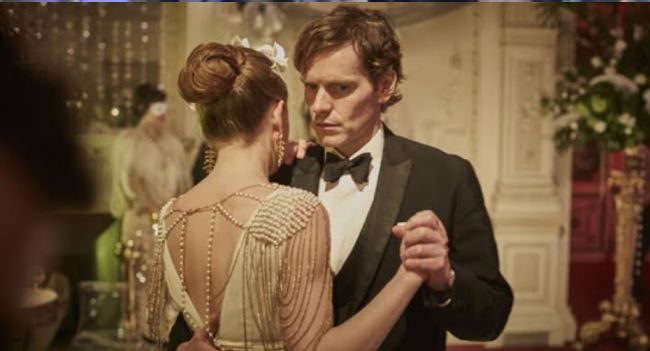
Fortunately our hero, music-loving DS Endeavour Morse, who is having a decorous flirtation with Poole, is in the audience. He finds an incriminating note written on sheet music with an alto clef – which, as he knows and you really should, suggests the viola player may have ground the fateful nuts. But, as it’s an hour before the end credits, it’s safe to assume it wasn’t them.
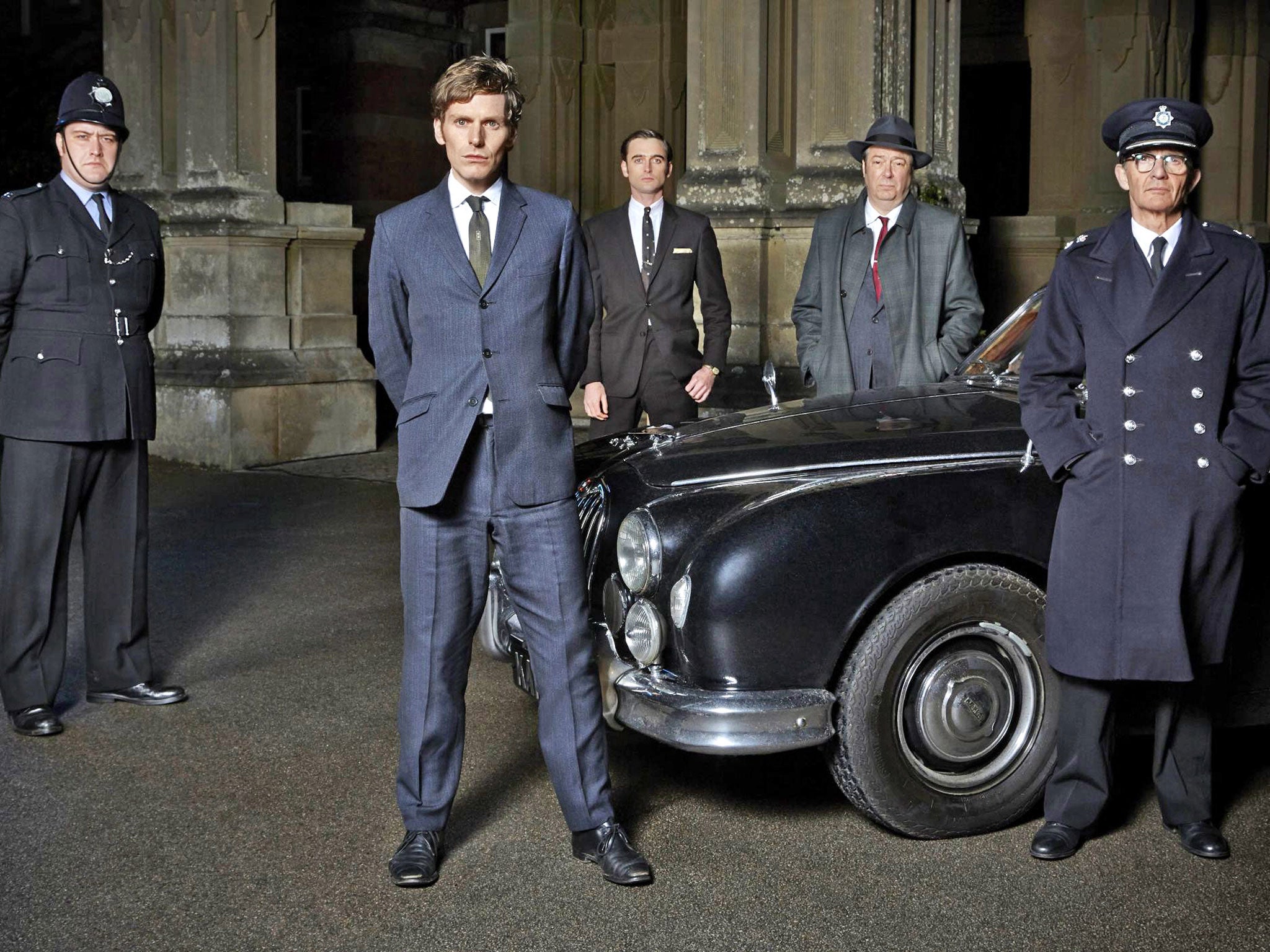
This ninth and final series of Endeavour, prequel to the adaptation of Colin Dexter’s Morse novels, starts with an intricate and sure-footed episode directed by Shaun Evans, who also plays our hero. The scene is Oxford, 1972, and Morse is a man out of temper with the times. Watching Endeavour you would never think that this was the year of Slade’s orthographically challenged Gudbuy T’Jane and Gilbert O’Sullivan’s by no means forgivable Ooh-Wakka-Doo-Wakka-Day. It’s an oasis of sophistication amid the swelling tide of barbarism and gassy lagers.
The tailor of Morse’s elegant suit is a stranger to flares, his barber intolerant of mutton-chop sideburns. Although later in the series Morse sports a moustache as jarringly upsetting as Don Draper’s in the same era, here he is a model of decade-defying good taste.
This episode, entitled Prelude, is like being happily trapped for an hour and half with escapees from an Iris Murdoch novel. Everybody, not just the violinists, is highly strung, has a silly name, and expresses themselves with rococo hubris or self-contempt.
Not that I’m complaining. There’s a satisfyingly puzzling new corpse before pretty much every ad break. Roger Allam’s DCI Fred Thursday steals every scene he’s in. And the murder weapon is nuts.
This kind of barmy plot device is regularly the fate of classical musicians in TV and cinema. Three years ago in the Parisian drama Philharmonia, an embittered french horn player (there is no other kind) glued together pages of the conductor’s score just before she raised her baton. In Michael Haneke’s The Piano Teacher, Isabelle Huppert put broken glass in a rival pianist’s handbag to lacerate her fingers.
Here too, Margeaux’s killer is motivated by revenge. Margeaux is a graduate of the Belasco Academy, a kind of classical music St Trinian’s, where she beguiled the hours sending poison pen letters to less fortunate students.
Years later, she is still at it, painting lipstick slurs on the mirror in Christina Poole’s dressing room. Whether she is envious of the latter’s talent or imagines Poole is having an affair with Lermontov (Nicholas Farrell) is unclear. Either way, Morse and Thursday surmise, she wasn’t going to play (if you’ll excuse the term) second fiddle to Christina Poole. And then somebody bumped her off for her temerity. But who?
Lermontov denies that he’s having it off with Poole. He tells Allam’s sad-eyed plod that a mere copper can’t understand that his thing with Poole is on a plane infinitely higher than sexual dalliance.
“As a composer, I view Christina as my instrument, an extension of my physical and spiritual self. I express my innermost being through her playing.”
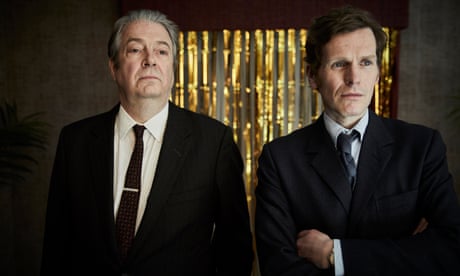
“I’m sure,” says Allam’s Thursday with understated sarcasm from under his trilby, “that must have been a great comfort to Miss Quincannon.” Russell Lewis has written all 36 episodes of Endeavour over the past decade and become virtuosic at such delicate eviscerations. Better, Lewis has become more accomplished at exploring Morse’s troubled persona than the detective’s creator, Colin Dexter.
In this episode, Morse has returned to work after going to Lyme Regis to dry out following the alcoholic debacles of the last series. Thursday, surrogate father to this brilliant son he never had (his real son, Sam, comes out of military jail halfway through the episode), wants to help Morse maintain his sobriety. Which, given that this is 1972 and lunchtime pints and chasers are all but obligatory among law enforcers, is a tough gig.
Near the end, we see Morse alone in a pub with a pint of Morrell’s bitter – driven to drink because the woman he loved, Thursday’s daughter Joan, has got engaged to DS Jim Strange and his unacceptable sideburns. Two things, Joan: one, keep your maiden name. Two: you could have done better.
DCI Thursday comes into the pub and ruefully notices his Morse is boozing again, turns round and wanders out, more in sorrow than anger. Future episodes will deepen that division between the onetime bromantics. It’s not just love that will tear us apart. Real ale will do that too.
SOURCE: THE GUARDIAN