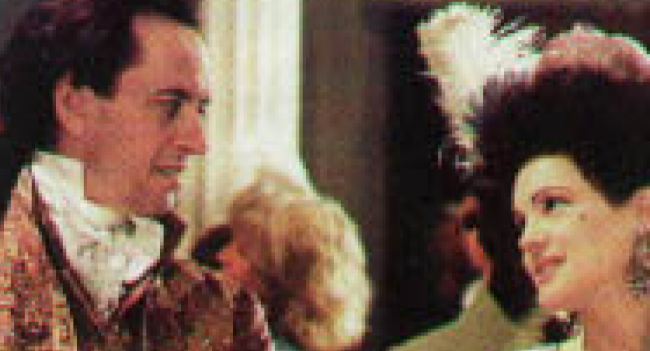
In the late 1990s, historical television was undergoing a massive identity shift. Audiences wanted the lush, atmospheric period accuracy of traditional British drama, but they also craved the high-octane, tongue-in-cheek cinematic energy of Hollywood blockbusters. Enter the BBC’s 1999 mini-series adaptation of Baroness Orczy’s classic novel, The Scarlet Pimpernel. Starring Richard E. Grant as the elusive, swashbuckling vigilante and Elizabeth McGovern as his sharp-witted French wife, Marguerite, this late-90s gem struck a rare, delicious balance between historical gravity and camp entertainment.
While purists of the original literature frequently debate its loyalty to the books, the 1999 series stands out today as an exceptionally fun, politically tense, and romantically electric piece of television. If you have ever wondered where this mini-series ranks in the pantheon of adventure cinema, it sits comfortably at the crossroads of swashbuckling espionage and aristocratic satire.
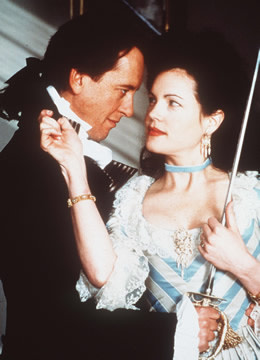
The Ultimate Vigilante: On Par with ‘Zorro’ and ‘Monte Cristo’
When it comes to pure entertainment value and the thrill of a secret identity, the 1999 version of The Scarlet Pimpernel punches in the exact same heavyweight class as Hollywood’s The Mask of Zorro (1998) or The Count of Monte Cristo (2002).
The series thrives on one of the most beloved tropes in fiction: the dual-persona hero. By day, Sir Percy Blakeney is the most useless, bumbling, and absurdly preening fop in the British upper class, obsessed with the cut of his frilly sleeves and the quality of his snuff box. By night, however, he strips away the shallow aristocratic mask to become the Scarlet Pimpernel—a lethal swordsman, master of disguise, and tactical genius rescuing French aristocrats from the jaws of the guillotine.
+-------------------------------------------------------------------+
|               THE DUALITY OF SIR PERCY BLAKENEY                   |
+--------------------------+----------------------------------------+
| The Daytime Fop          | The Nighttime Vigilante                |
+--------------------------+----------------------------------------+
| • Obsessed with fashion  | • Master of disguise and stealth       |
| • Bumbling and harmless  | • Lethal, calculated swordsman         |
| • Feigns social apathy   | • Politically charged rescuer of souls |
+--------------------------+----------------------------------------+
Richard E. Grant plays this duality with absolute perfection, shifting from high-pitched comedic whining to low-registered, heroic commanding in a single breath. The cat-and-mouse dynamic and psychological warfare between Grant’s Sir Percy and his ruthless French rival, Chauvelin (played with icy, menacing brilliance by Martin Shaw), provides a relentless narrative drive. The breathless escape sequences and fencing duels evoke the exact same cinematic adrenaline that made Antonio Banderas’ Zorro a global phenomenon.

Aristocratic Wit and Romance: A Dash of ‘Austen’ Meets ‘The Princess Bride’
Beyond the flashing blades and late-night rescues, the series shines just as brightly in its quieter, domestic moments. The romantic tension and social commentary of the show feel like a brilliant cocktail of Jane Austen’s Pride and Prejudice (1995) and the satirical fantasy of The Princess Bride (1987).
At the heart of the series is a deeply dysfunctional, intensely passionate marriage. Sir Percy and Marguerite are trapped in a web of secrets, mutual distrust, and political misunderstandings. Because Percy cannot reveal his secret identity to his wife—fearing her past political ties in France—he must continue to act like an arrogant idiot in her presence, breaking her heart while secretly adoring her. This complex emotional tug-of-war is deeply addictive to watch.
Furthermore, the show’s sharp, cynical dialogue cuts through the lavish production values like a knife. The series does an excellent job satirizing the bloated, hyper-extravagant lifestyle of the English elite during the late 18th century, delivering a level of sophisticated social irony that rivaled the finest Austen adaptations of the decade.

The Dark Backdrop: Reign of Terror Tensions
What prevents The Scarlet Pimpernel from becoming a purely ridiculous comedy is its heavy historical grounding. In terms of sheer political drama, atmospheric dread, and historical high stakes, the 1999 adaptation shares its DNA with Charles Dickens’ masterpiece, A Tale of Two Cities.
The series is set during the absolute height of the French Revolution’s Reign of Terror. The directors do not shy away from the suffocating, dangerous atmosphere of Paris under Robespierre’s rule. The ominous clanking of the guillotine, the muddy, blood-stained streets, and the constant paranoia of citizens turning on one another create a dark, grim reality. This gritty historical texture creates a perfect, high-stakes contrast to the lighthearted, witty banter of the British characters, raising the stakes of every single rescue mission.
The Critical Split: Liberated Adaptations vs. Period Purists
Despite its immense charm, the 1999 series remains a point of division among period drama communities, drawing a clear line between casual viewers and literary purists.
+-------------------------------------------------------------------+
|                RECEPTION AND CRITICAL ANALYSIS                    |
+--------------------------+----------------------------------------+
| 1999 BBC Series (Grant)  | 1982 Classic Film (Andrews)            |
+--------------------------+----------------------------------------+
| • Tongue-in-cheek score  | • Strict adherence to Orczy's novel    |
| • High comedic action    | • Iconic status among literary purists |
| • Divergent plotlines    | • Traditional romance focus            |
+--------------------------+----------------------------------------+
Many purists of Baroness Orczy’s classic novel openly voice their preference for the iconic 1982 adaptation starring Anthony Andrews and Jane Seymour, criticizing the 1999 version for taking massive creative liberties with the original source text.
Additionally, historical costuming circles have offered mixed reviews regarding the visual execution of the female leads. While the overall production values are lavish, period drama enthusiasts frequently point out the historical inaccuracies and sometimes poorly fitted anglaise gowns worn by Elizabeth McGovern, contrasting sharply with the immaculate tailoring of Richard E. Grant’s dandy wardrobe.
Conclusion: A Masterpiece of 90s Television
Ultimately, if you look past the strict rules of historical costume design and accept the story as a loose, highly energetic adaptation, the 1999 BBC mini-series is a triumphant success.
It remains one of the finest representations of 90s adventure television—offering a rare blend of British drawing-room wit, intense political espionage, and swashbuckling romanticism. For anyone who loves a hidden-hero narrative wrapped in sharp, tongue-in-cheek humor, Richard E. Grant’s turn as the Pimpernel is an unforgettable ride that deserves to be celebrated.
SEASON 1:
SEASON 2: