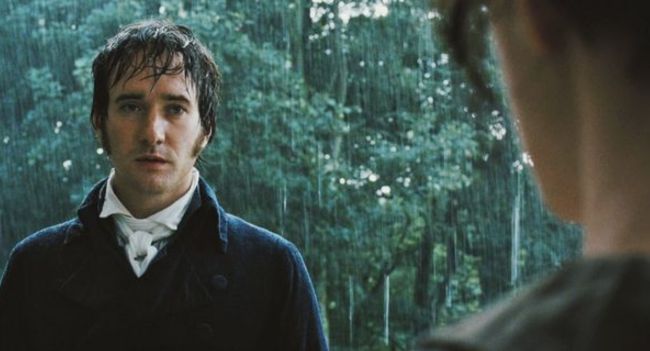
The Rain Scene in Pride & Prejudice (2005): When Love Sounds Almost Like an Insult

The rain scene in Pride & Prejudice (2005) is unforgettable because it refuses to make love look comfortable. This is not a soft confession. It is not a romantic speech delivered with perfect timing. It is messy, proud, wounded, and almost unbearable to watch — because both characters are saying too much and not enough at the same time.
The setting already tells us what the characters cannot. The rain is violent. Their clothes are soaked. Their hair is undone. Everything polished about society has been stripped away. This is no longer a ballroom where manners can hide emotion. This is a place where both of them are exposed, and neither knows how to survive that exposure gracefully.
His confession is shocking because it begins like a surrender, but sounds like an accusation. When he admits that he loves her “most ardently,” the words should be beautiful. But he surrounds that love with pride, shame, and class judgment. He cannot simply say he loves her. He has to explain that loving her goes against his reason, his family expectations, and his sense of social superiority.

That is the wound inside his confession.
He is not only fighting for her. He is fighting against himself for wanting her.
For him, love feels like a loss of control. He has spent his life protected by rank, wealth, and emotional restraint. Then she appears — intelligent, sharp, unimpressed — and suddenly none of those protections work. He does not know how to love without making it sound like he is lowering himself. So even in the moment he is most vulnerable, he still wounds her.
And she hears every wound.
Her rejection is not simply anger. It is self-respect. She is not rejecting love because she is cold; she is rejecting the way that love is being offered. She hears the insult beneath the confession. She hears him say, in effect: I love you despite your family, despite your status, despite everything that should make you unworthy of me.
That is why her response has such force. She is furious because he has mistaken desire for generosity. He thinks his love is a gift. She makes him understand that love offered with contempt is not love she can accept.
Her line about him being the last man she could ever marry cuts so deeply because it attacks the one thing he still has left: his pride. Until this moment, he may have believed that his struggle to love her was the central tragedy. But she forces him to see another truth: he has hurt her, misjudged her, and underestimated her dignity.
What makes the scene so powerful is that both of them are right and wrong at the same time.
He is right that his feelings are real. He is not pretending. His love is intense, even painful. But he is wrong in the way he delivers it, because he has not yet separated love from superiority.
She is right to defend herself. She is right to be angry. She is right to refuse a proposal that comes wrapped in insult. But she is also speaking from prejudice, from misinformation, and from the hurt she has been carrying since the moment she believed he looked down on her.
So the scene becomes more than a rejected proposal. It becomes a collision between two inner worlds.
He walks into the scene believing love should be enough to overcome every objection. She shows him that love is not enough if it does not come with humility.
She walks into the scene believing she understands him completely. He will later force her to confront the possibility that her judgment, too, has been flawed.
The close-ups make the tension almost physical. His face is pale, soaked, and desperate, but still tightly controlled. He looks like a man whose pride is cracking in real time. Her eyes are wide, bright, and furious, but there is pain beneath the anger. She is not untouched by him. That is what makes her rejection so electric. If she felt nothing, the scene would be simple. But she feels enough to be shaken.
The rain turns their conversation into something almost primal. Every sentence lands harder because there is no social softness left. They are not performing politeness anymore. They are saying the ugly truths that have been building for half the film.
And yet, strangely, this is the scene that makes their love possible.
Not because it brings them together immediately, but because it destroys the false versions they have built of each other. He can no longer hide behind arrogance. She can no longer hide behind certainty. After this scene, both of them must change.
That is why the rejection matters. It is not the end of the romance. It is the beginning of honesty.
The beauty of this scene is that it understands something very mature about love: sometimes the first confession is not the right one. Sometimes love arrives before humility. Sometimes desire appears before understanding. And sometimes two people have to hurt each other with the truth before they can meet again with tenderness.
In this scene, he tells her he loves her. But what she hears is pride.
She tells him she cannot accept him. But what he receives is the first real lesson in how to become worthy of her.
That is why the rain scene remains iconic. It is not romantic because it is perfect. It is romantic because it is painful, unfinished, and alive. It shows two people standing close enough to kiss, but still separated by pride, prejudice, and everything they have not yet learned.
Love is there.
But it is not ready yet.