Congratulations!
You've earned 1 point
The Horse Is Built for Endurance, Not Spectacle — Which Is Why It Moves Slowly, and Why Speed Would Cheapen Everything It Represents
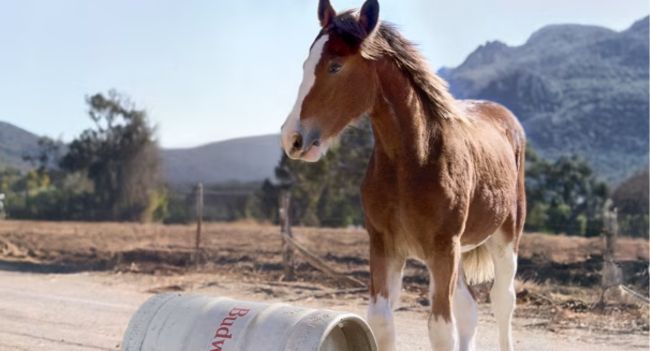
The horse in Budweiser’s Super Bowl ad does not rush.
It does not rear, charge, or explode across the frame the way modern advertising so often demands. There is no sprint, no triumphant crescendo timed to a dramatic leap. Instead, it advances with weight. With patience. With a pace that feels almost stubborn in its refusal to entertain.
That slowness is not accidental. It is the entire point.
Because this horse is not meant to impress you. It is meant to remind you of something older than spectacle.
Endurance Is Not Loud
Endurance has never been flashy. It does not announce itself. It does not seek attention. It shows up again and again, carrying the same weight through changing conditions, asking for no applause in return.
The Budweiser horse embodies that idea with unsettling clarity. Every step lands deliberately, as if the ground itself matters. You feel the mass of the body. The pull of gravity. The time it takes to move something this powerful forward.
Speed would betray that truth.
Speed would turn the horse into a trick. A moment. A highlight. And endurance is the opposite of a highlight — it is what remains after the highlights fade.

Why the Horse Never Hurries
A rushing horse would suggest urgency. Panic. A destination that matters more than the journey. But this horse does not appear to be running toward anything.
It is moving through something.
Through weather. Through history. Through repetition.
This is a working animal, not a performer. Its power comes from consistency, not acceleration. From showing up in the same posture, with the same discipline, regardless of what surrounds it.
The slowness signals trust — trust that meaning does not need to be chased.
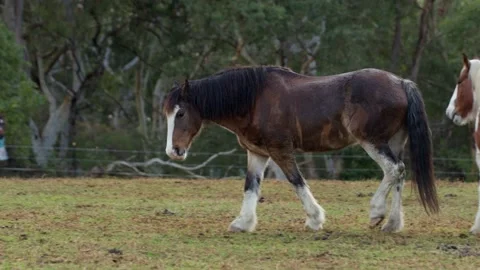
Spectacle Consumes. Endurance Sustains.
Spectacle burns bright and disappears. Endurance stays.
That is why the horse is framed the way it is: solid, grounded, unbothered by the need to be extraordinary. The ad does not ask you to marvel at what the horse can do. It asks you to sit with what the horse has always done.
Pulled.
Carried.
Waited.
Continued.
Speed would reduce that legacy to motion. Slowness preserves it as presence.
The Weight Is the Message
Look closely, and you notice something else: the horse is never light.
Even in motion, it feels heavy — not burdened, but substantial. As if its very existence resists being skimmed over.
That weight is symbolic. It represents labor that cannot be outsourced. Responsibility that cannot be skipped. Time that must be lived rather than edited out.
In a culture addicted to immediacy, the horse insists on duration.
Why This Still Works in 2026
In a Super Bowl filled with fast cuts, loud jokes, and urgency engineered to hold shrinking attention spans, the horse does something radical.
It takes its time.
And instead of losing the audience, it captures them — precisely because it refuses to compete on speed.
Viewers don’t lean forward because something explosive is about to happen. They lean in because something real is unfolding. Something steady. Something trustworthy.
The Horse Is Not a Metaphor for Victory
This is crucial.
The horse is not celebrating a win. It is not claiming dominance. It is not framed as a conqueror.
It is framed as a carrier.
Of tradition.
Of labor.
Of continuity.
Victory is loud. Endurance is quiet.
And quiet lasts longer.
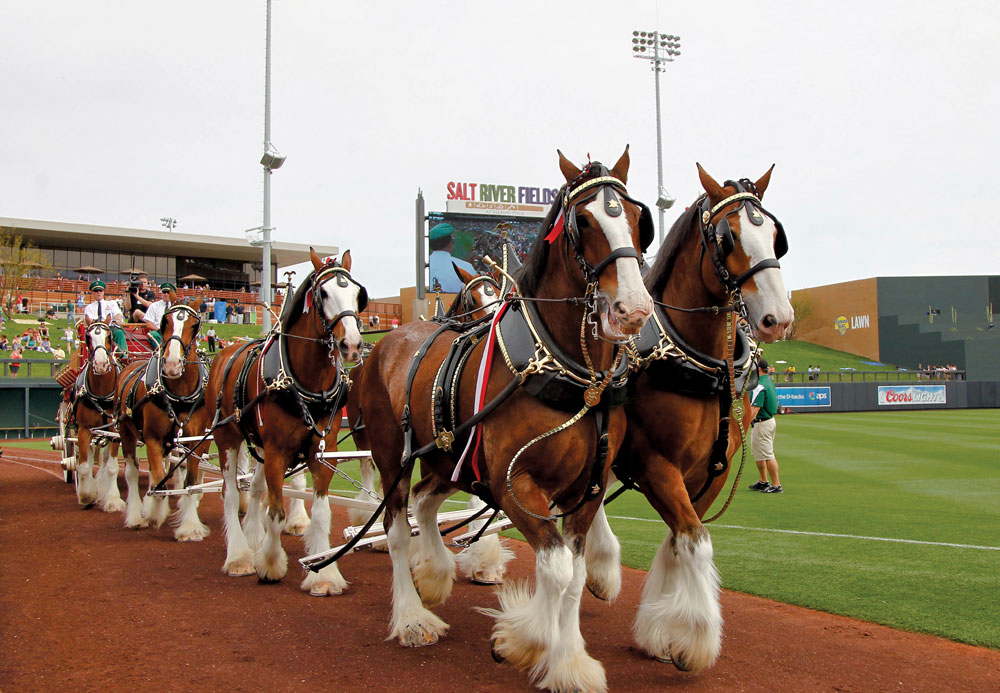
Why Speed Would Cheapen It All
Speed would turn endurance into performance.
Performance into consumption.
Consumption into forgettability.
By moving slowly, the horse protects its meaning. It refuses to be skimmed. It demands to be witnessed, not consumed.
That is why the image lingers long after the ad ends.
Not because it shouted —
but because it stayed.
In the end, the horse teaches the same lesson it always has:
Some things are powerful not because they move fast,
but because they keep moving at all.